
Palaceside Building 60th Anniversary

60TH ANNIVERSARY

SINCE 1966

SCROLL

In October 2026, Palaceside Building
marks the 60th anniversary of its opening.

From its opening in 1966 to this day,
sixty years walked alongside the town of Takebashi.

1963–1989

A New Landscape Is Born

1963

A Giant Building Before the Imperial Palace

On October 26, 1963, the Mainichi Shimbun ran a large front-page notice in its morning edition under the headlines “Tokyo Head Office Moves to a New Building” and “Giant Building Near the Imperial Palace.”

The new building, to be developed by three owners including Reader’s Digest, was named the Palaceside Building. With construction costs alone reaching 10 billion yen, a major project was set in motion.
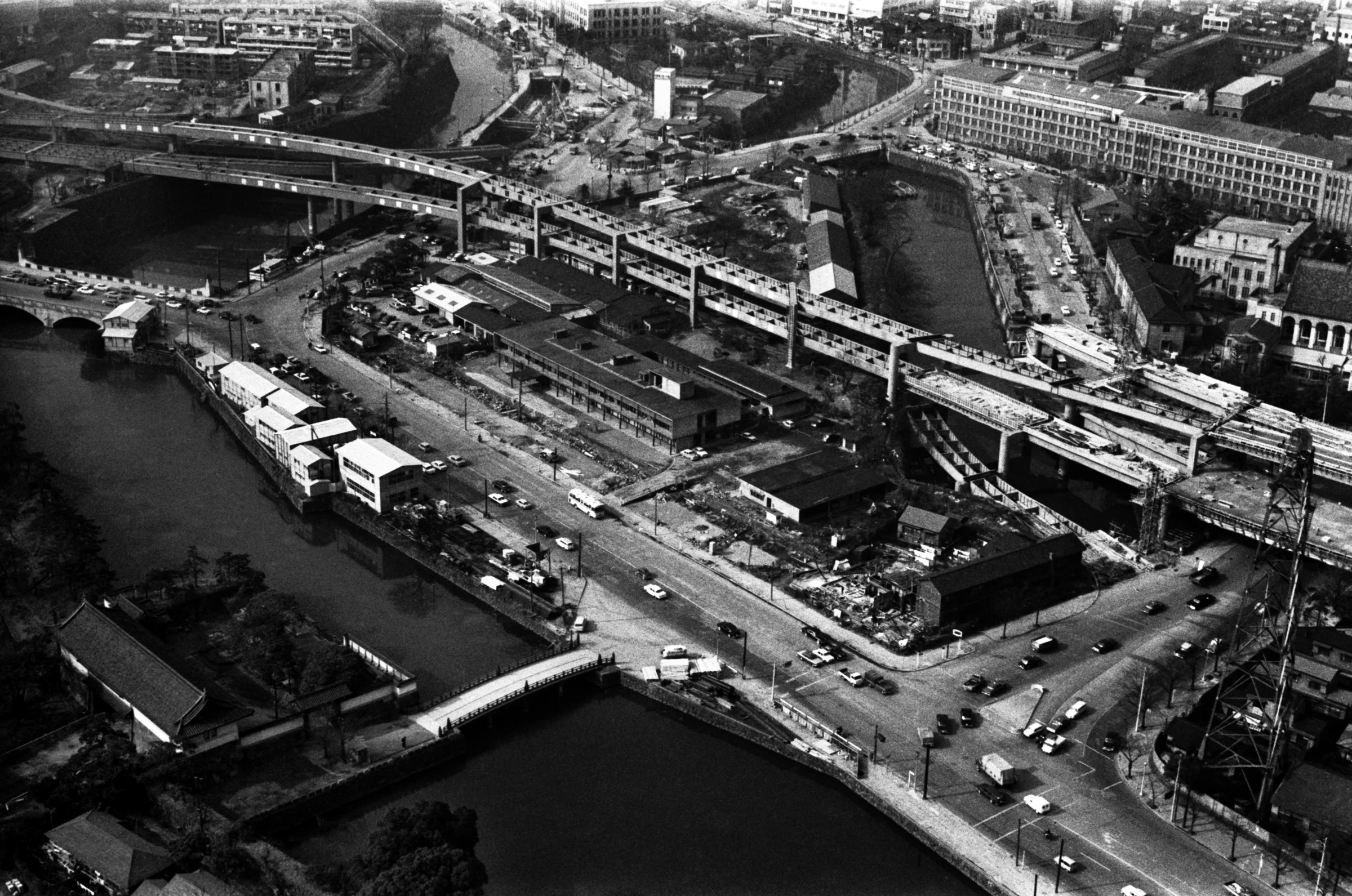
Aerial view of the Takebashi area before construction
The planned site (from right: the Imperial Guard quarters, the Tokyo branch of Reader’s Digest, and the Taiyo Motors repair shop). Around it, construction of the Metropolitan Expressway was also under way.
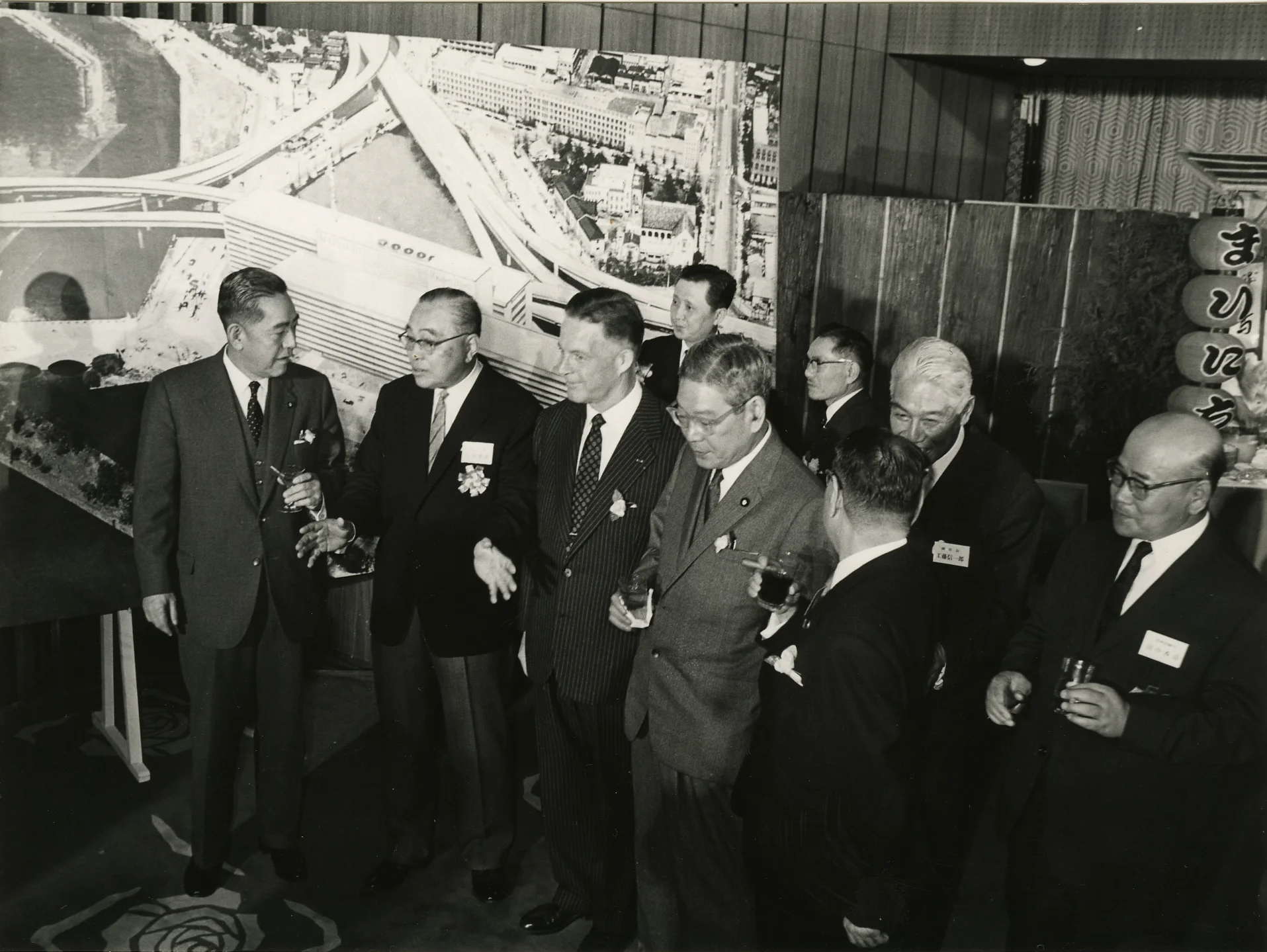
Post-groundbreaking reception with a rendering displayed behind the guests
At the reception following the groundbreaking ceremony on April 17, 1964, Prime Minister Hayato Ikeda (second in the front row) chats with Eisaku Sato (far left), who would succeed him. The rendering of the building seen behind them differs from the building as built.
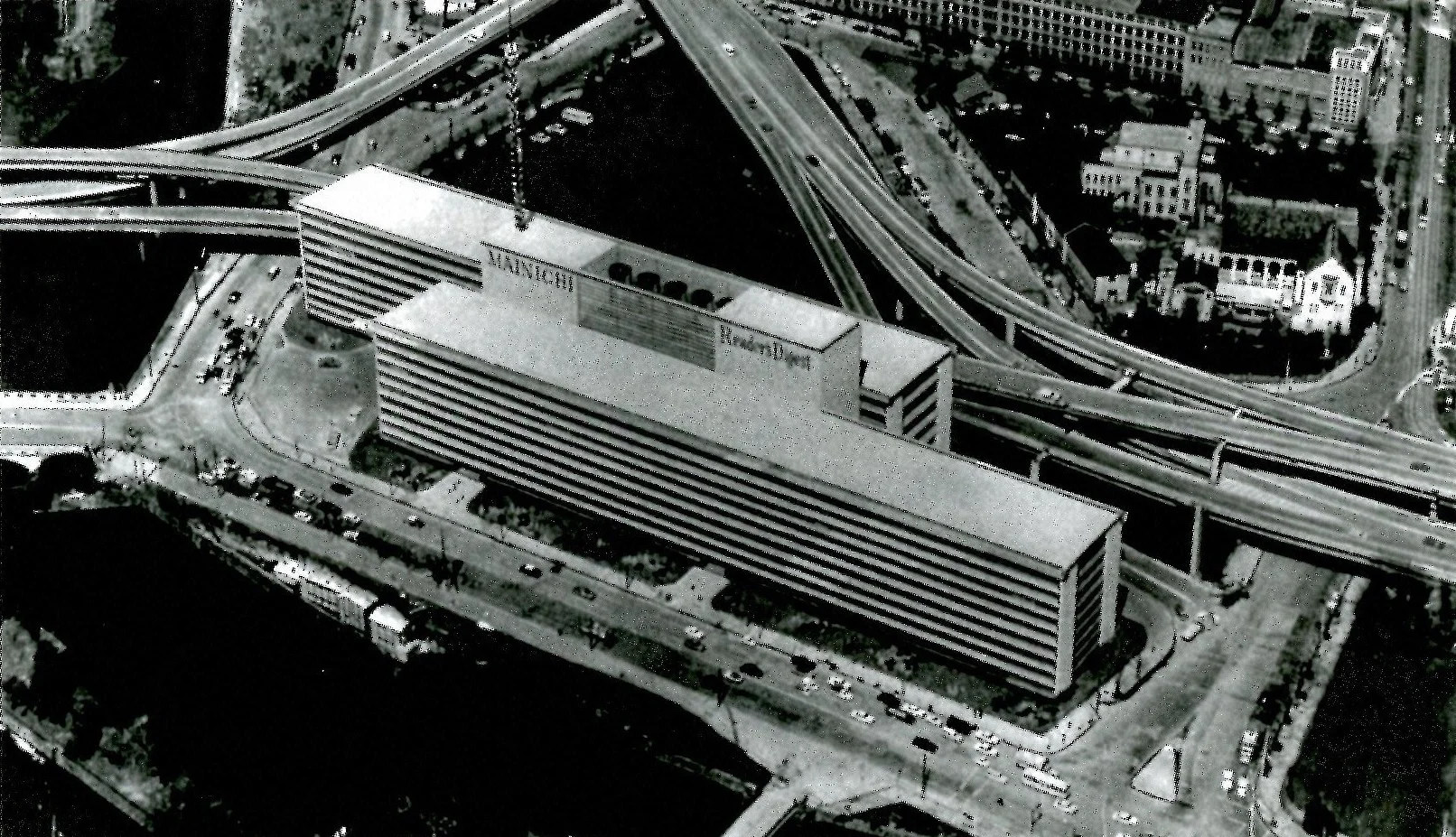
Unbuilt rendering of Palaceside Building
An early rendering of Palaceside Building that was never realized. It lacked the two cylindrical cores of today’s building.

1964-1966

Hammers Ring Out

The building was designed by a young team at Nikken Sekkei led by Shoji Hayashi, then 35 and head of the planning department. Construction was carried out by a joint venture of Obayashi Corporation and Takenaka Corporation.

Completion was fixed for September 30, 1966. Under the demanding condition of a 27-month schedule—little more than two years—construction began on July 1, 1964.

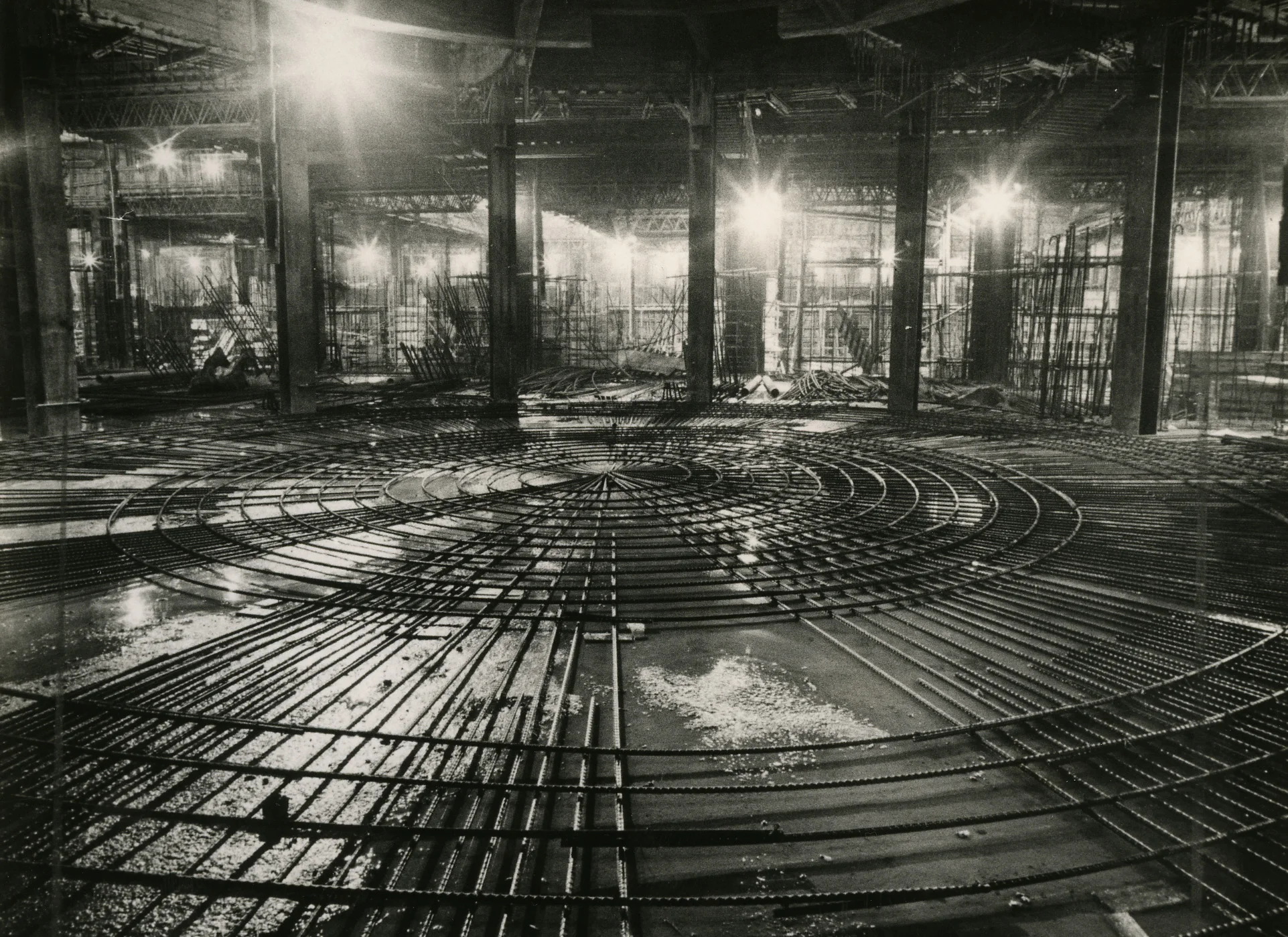
Concentric rebar laid on the floor of a cylindrical core
The cylindrical cores, the building’s signature feature, gradually take shape. Concrete is poured at the deepest level, the fifth basement, July 1965.
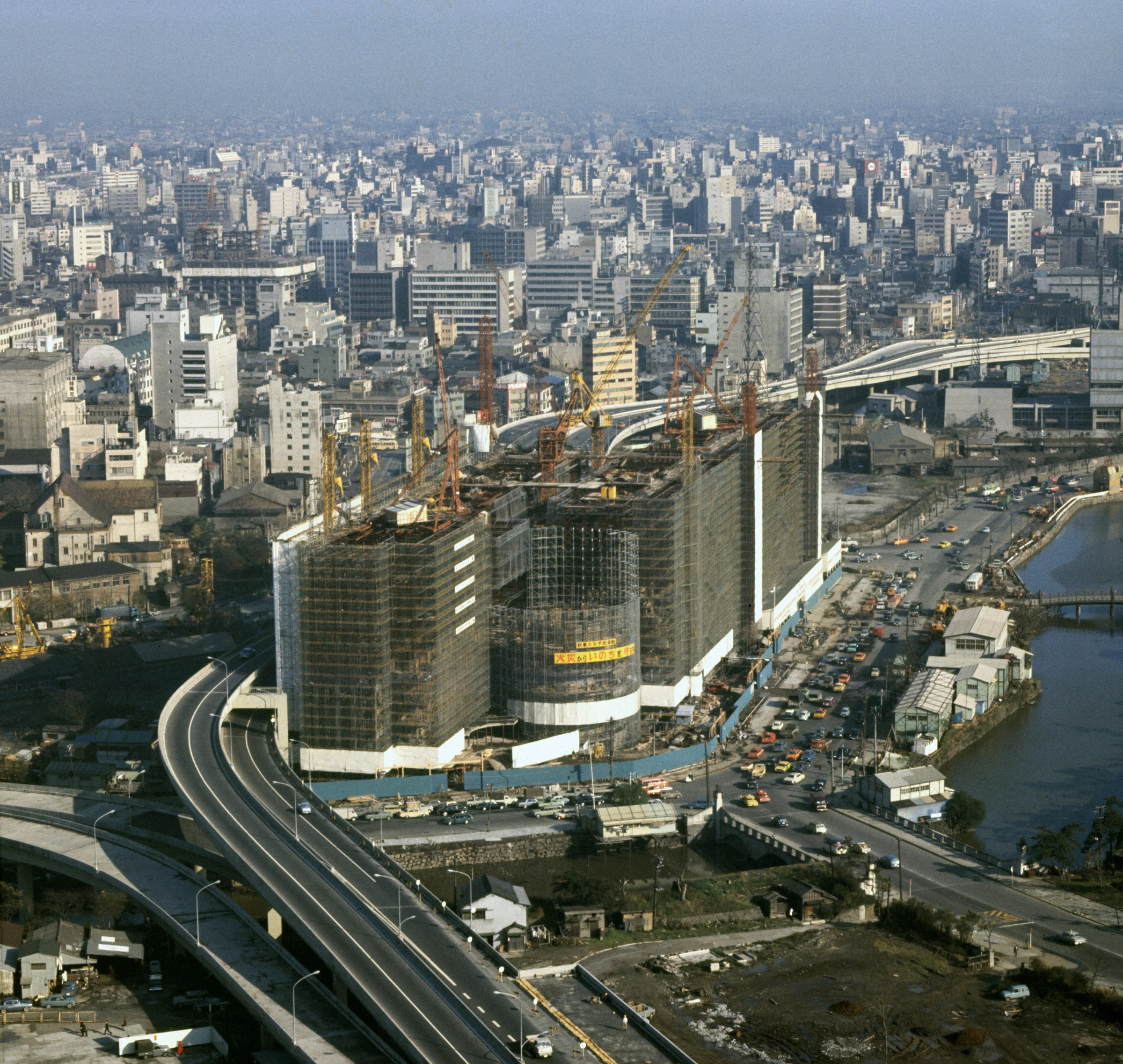
Palaceside Building under construction, surrounded by the Metropolitan Expressway
A forest of cranes as construction reaches its peak, December 1965.
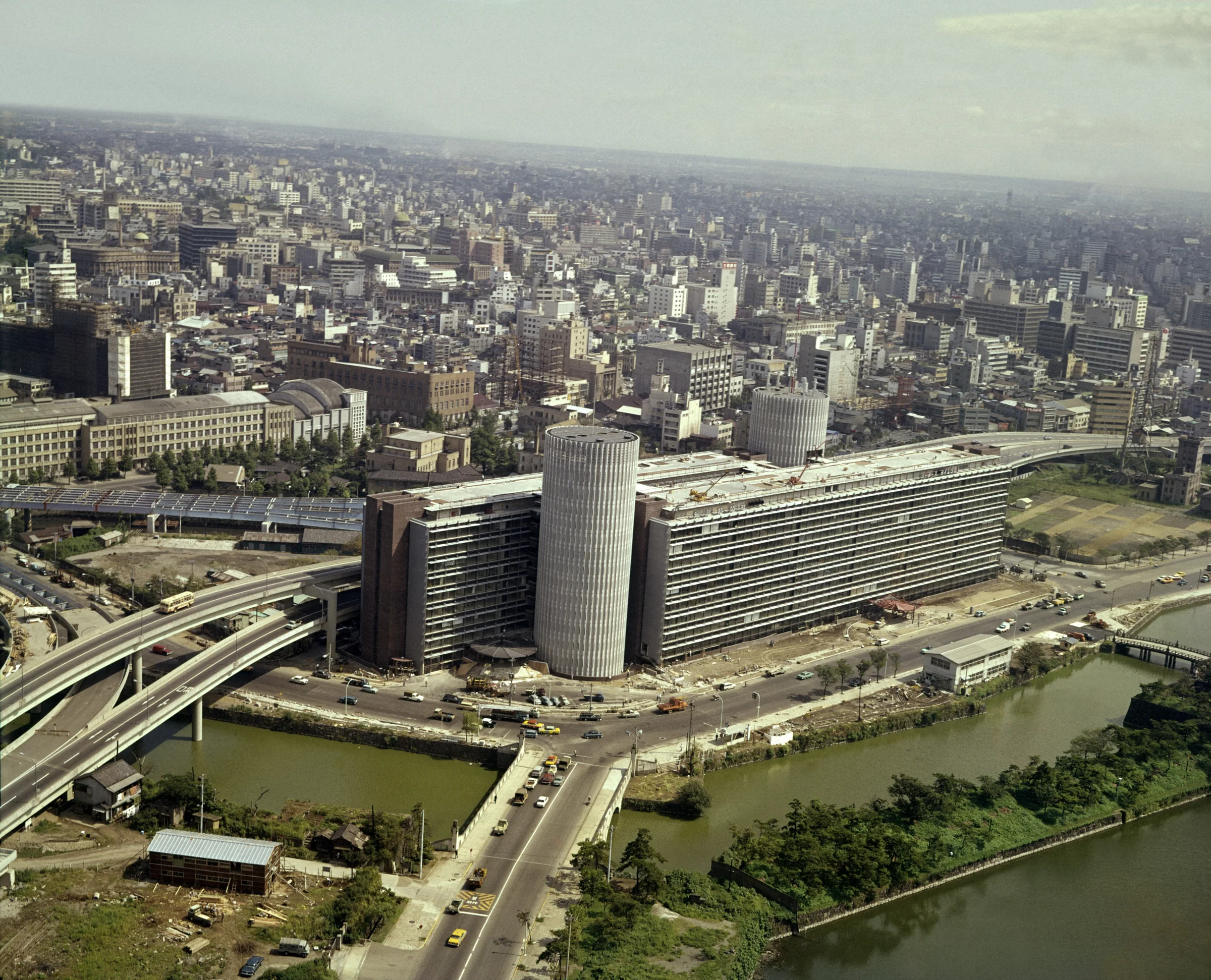
Palaceside Building with exterior work continuing before opening
With work continuing nearby, including the sidewalk along Uchibori-dori, the giant building’s exterior takes shape.

1966

A Landmark for the District

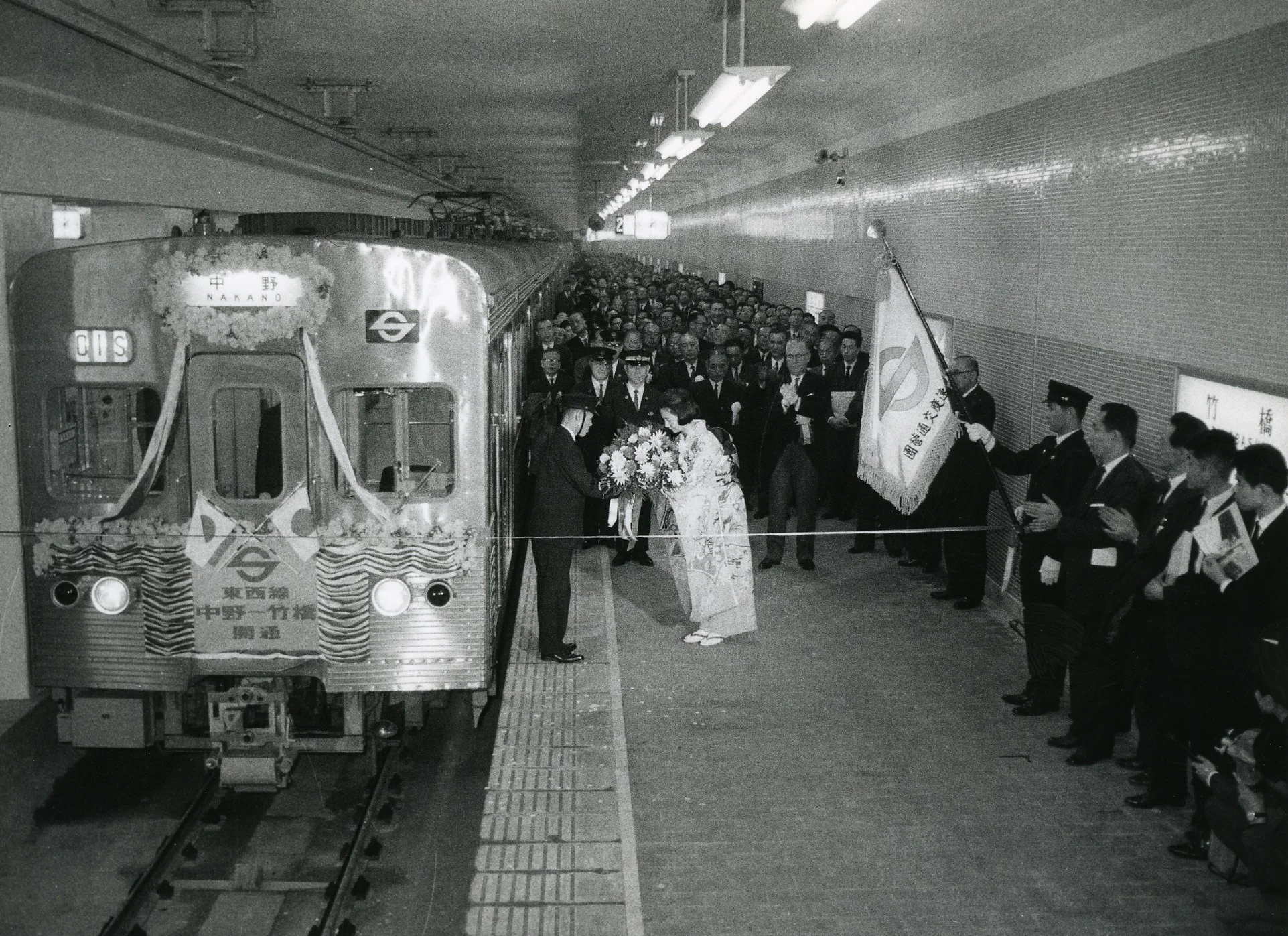
Takebashi Station on the Tozai subway line, connected directly to Palaceside Building, opened in March 1966. It was the long-awaited birth of a terminal not only for those connected with the building but for people commuting to nearby offices and schools.

About half a year later, on October 1, Palaceside Building opened. Under a cloudless autumn sky, an opening reception was held for some 4,000 invited guests.

Celebratory Tozai Line train welcomed on the Takebashi Station platform
At the opening ceremony held at Takebashi Station, a member of the Mainichi Shimbun secretarial section presents a bouquet to the driver of the first train, March 15, 1966.
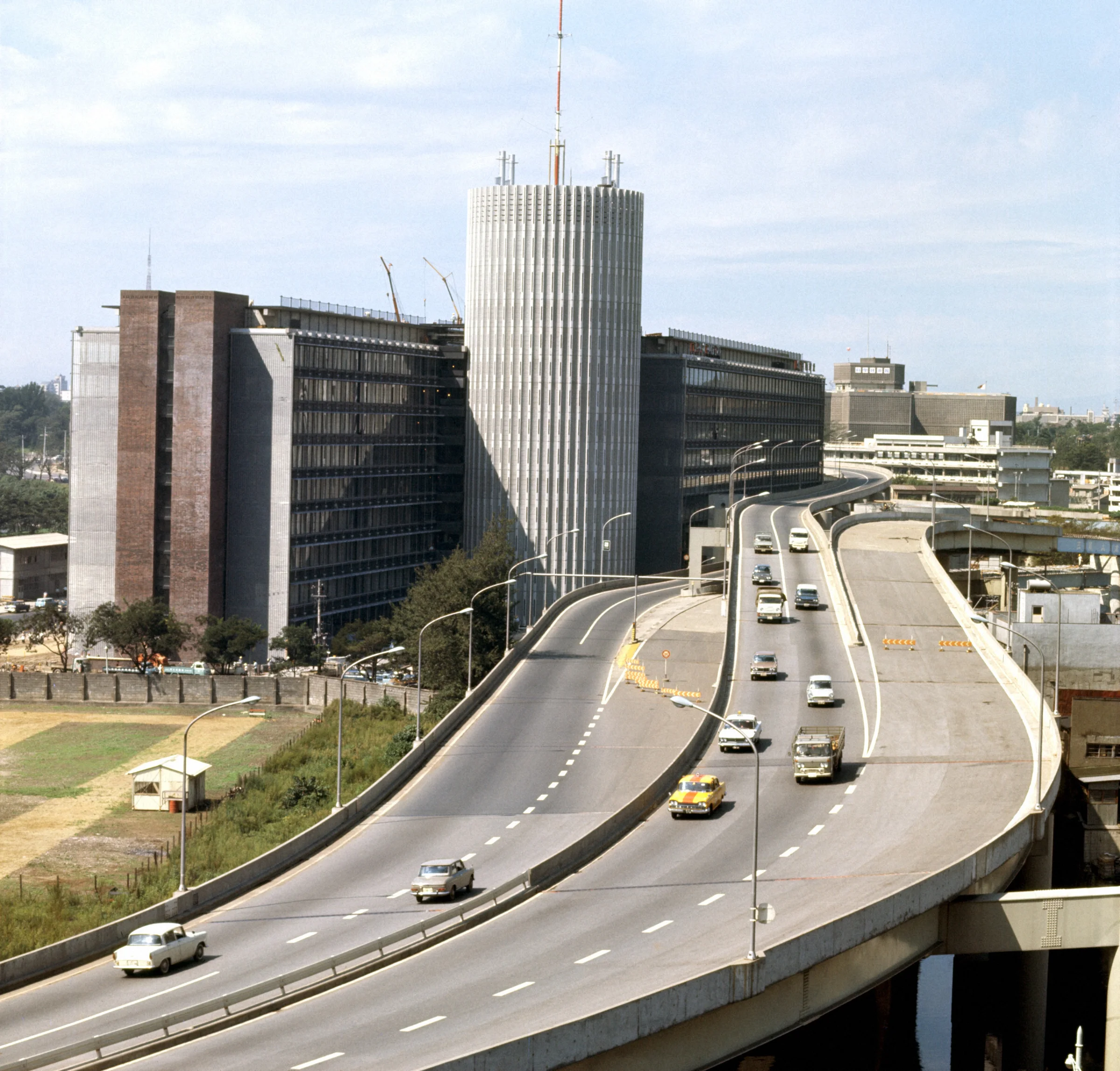
Palaceside Building at opening, seen beyond the Metropolitan Expressway
Palaceside Building and Route 1 of the Metropolitan Expressway. Half a year later, Route 5 (Ikebukuro Line) opened and the Hitotsubashi interchange entrance came into service, September 1966.
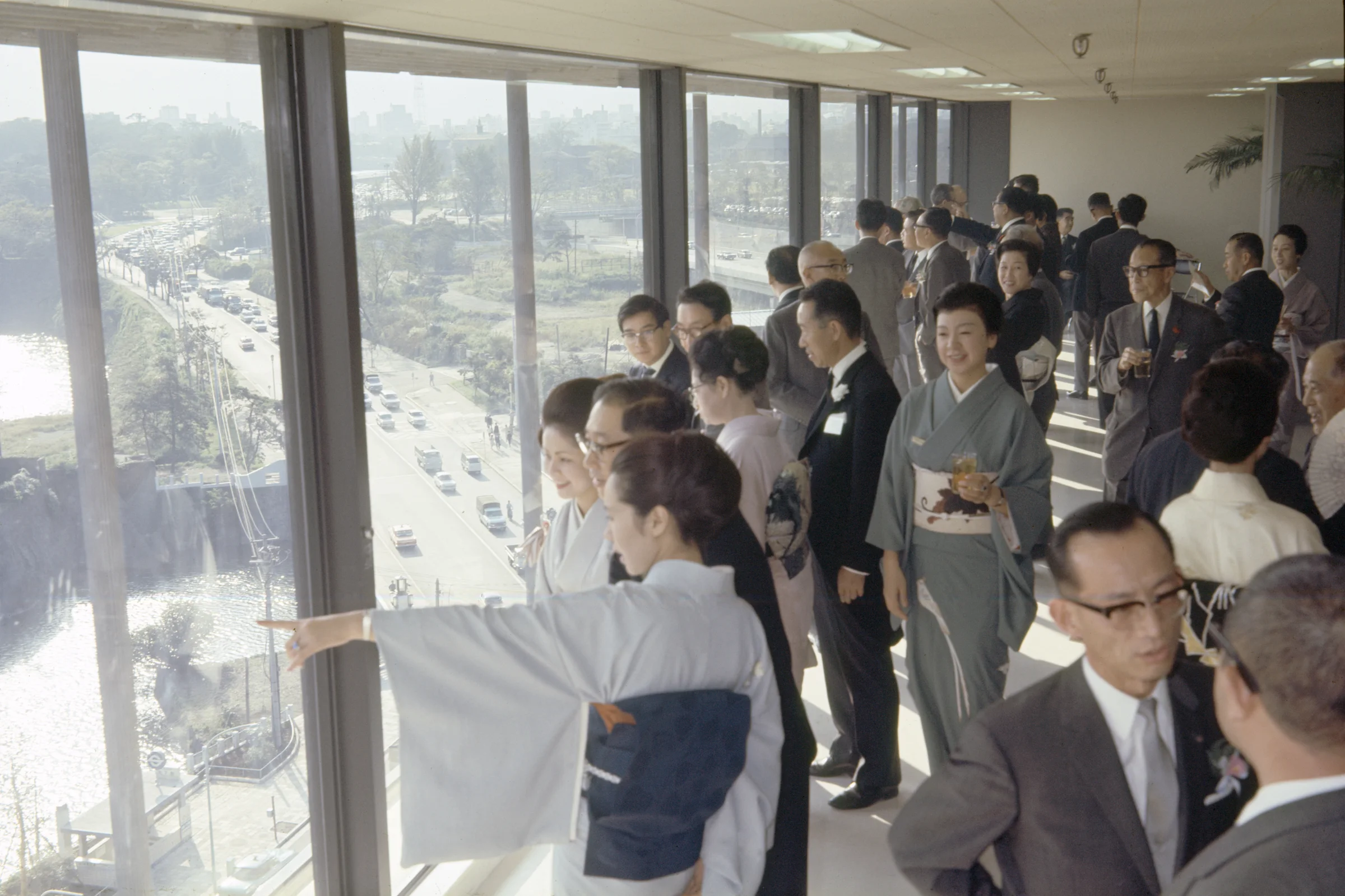
Opening reception with guests gathered by windows overlooking the Imperial Palace
Guests at the opening reception exclaimed at the magnificent view of the Imperial Palace through the floor-to-ceiling glass, October 6, 1966.
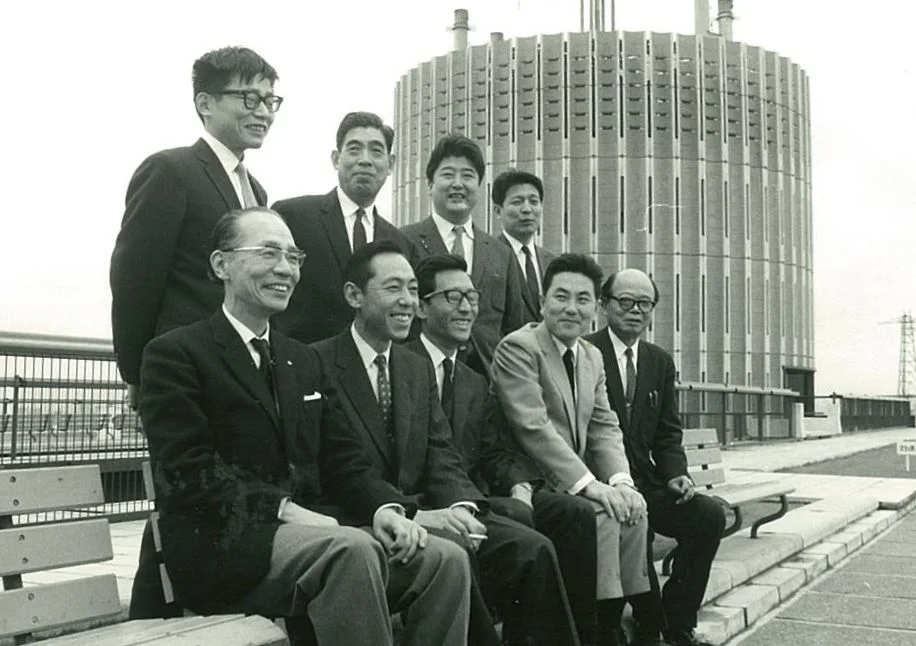
Commemorative group photo on the rooftop with cylindrical cores behind
Shoji Hayashi, head of planning (far right, back row), and fellow Nikken Sekkei staff pose on the rooftop after the building’s completion.

1966

Newspaper Presses at Full Capacity

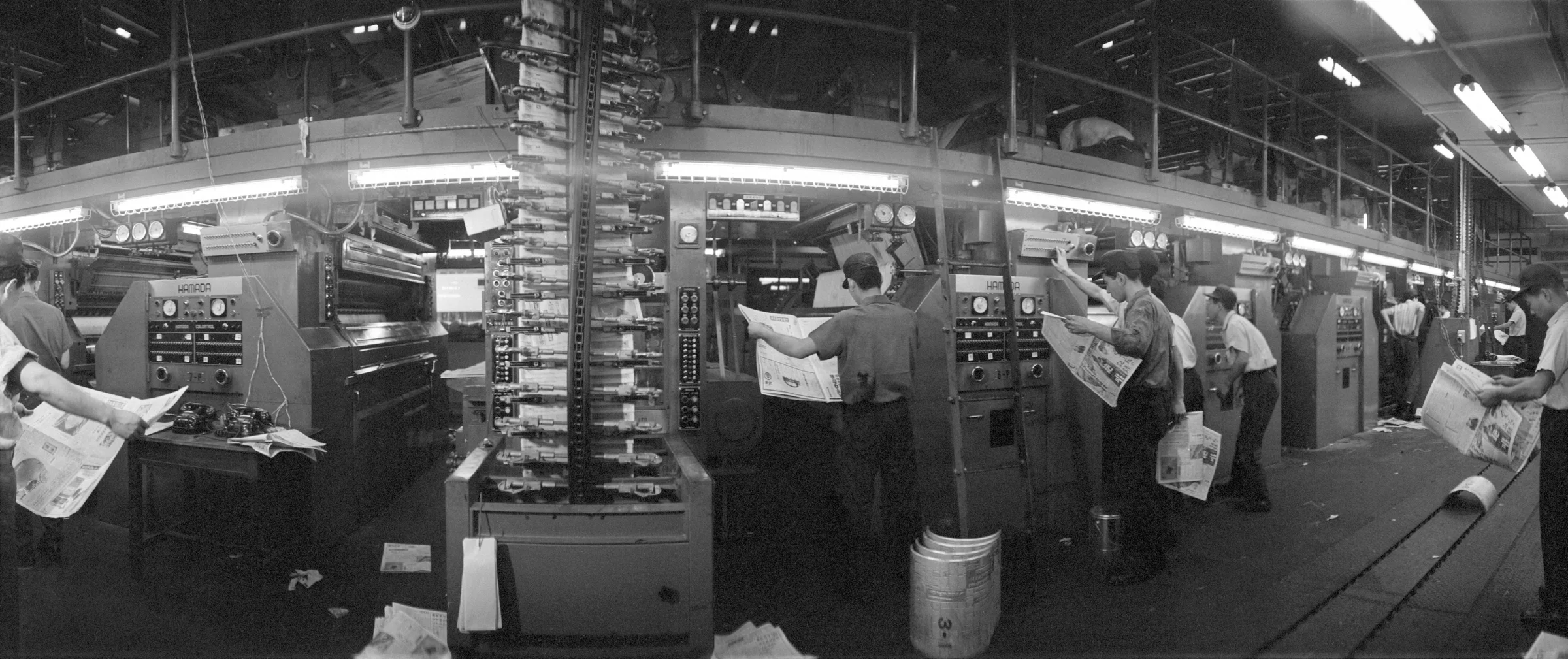
Beneath Palaceside Building lay a vast newspaper printing plant.

The Mainichi Shimbun installed ten of the newest rotary presses, then the most capable in the world, each printing 150,000 copies an hour. This state-of-the-art plant, with printing capacity that defined its era, went into operation the moment the building opened.

Underground printing plant with rotary presses in a long row
Beside the roaring high-speed rotary presses, printing staff carefully check freshly printed pages, September 1966.

1967

Born before the Imperial Palace, Palaceside Building drew a steady stream of visitors who came to admire its beautiful form and dignified presence while touring the newspaper.

When Hato Bus launched its “Everyday Social Studies” course in March 1967, with a stop at the Mainichi Shimbun, the rush of visitors accelerated and Palaceside Building became “Tokyo’s new landmark.”

Commemorative events were held ahead of the first anniversary of the opening in October 1967.

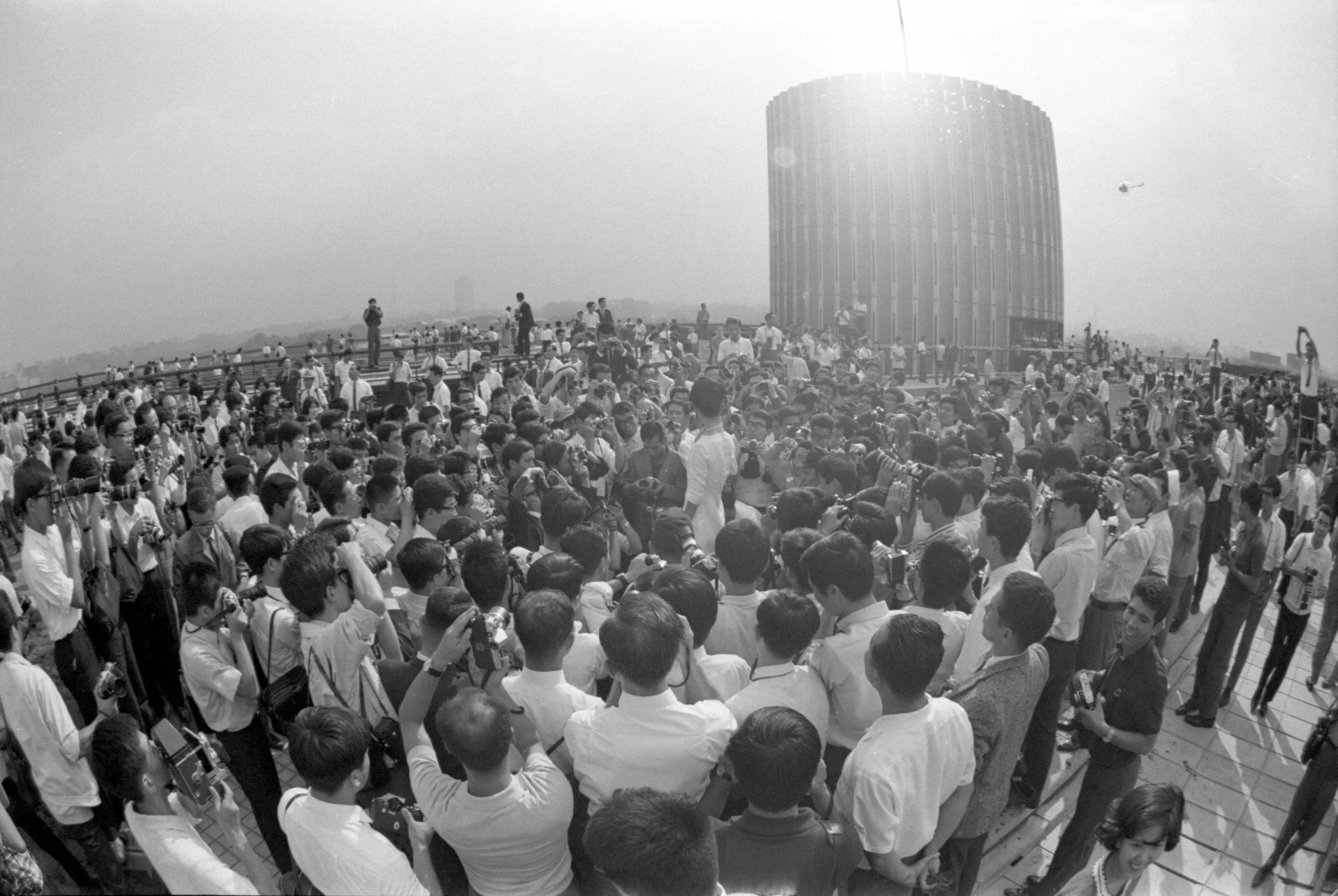
Photo event on the Palaceside Building rooftop with many camera enthusiasts
A photo session held on the rooftop to mark the first anniversary of the opening, “Photographing Palaceside Building and Film Actresses,” drew some 2,500 amateur photographers, September 16, 1966.
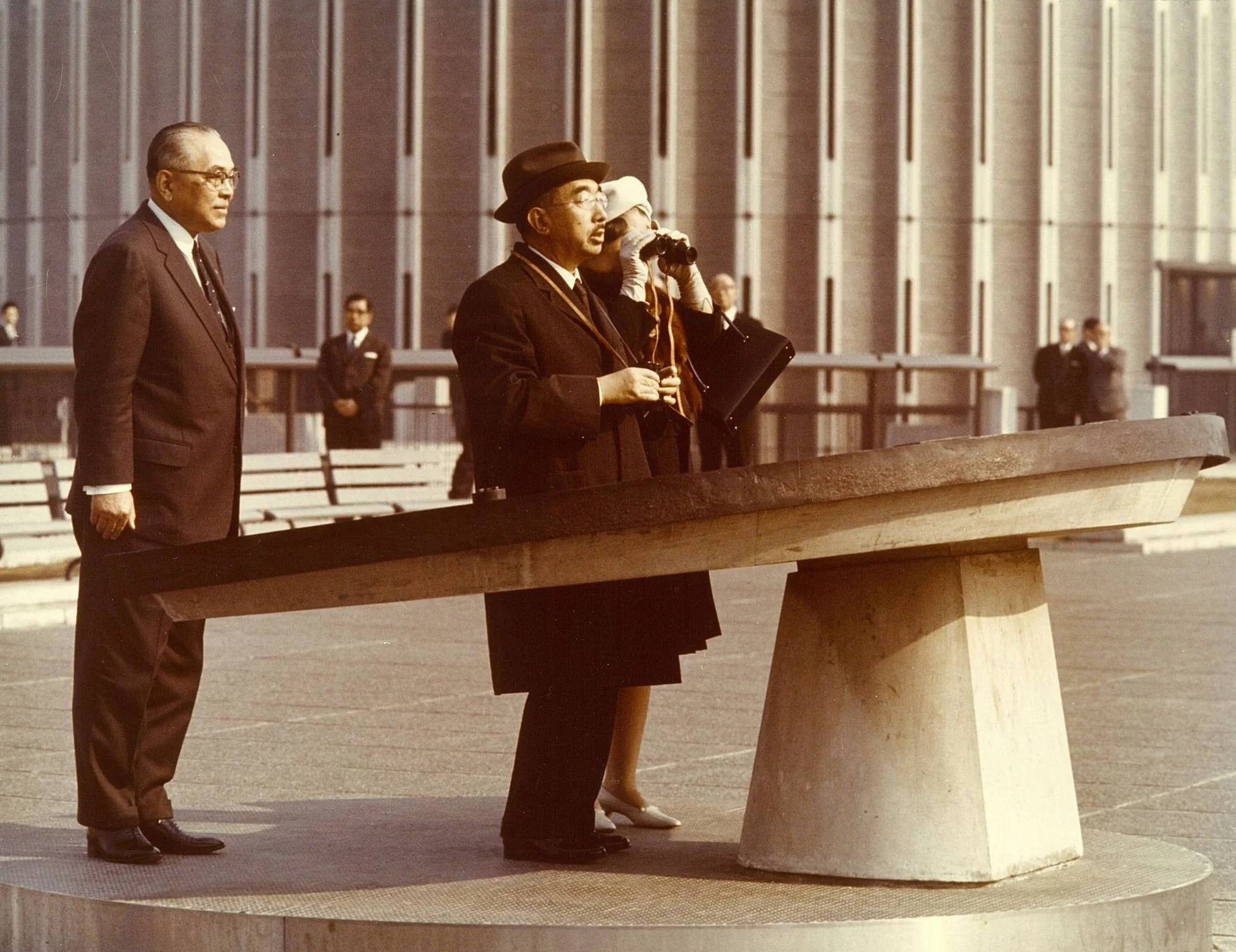
Emperor Showa and Empress Kojun viewing the scenery through binoculars from the rooftop
Emperor Showa and Empress Kojun visit Palaceside Building to tour the Mainichi Shimbun and enjoy the view from the rooftop, November 27, 1967.

1982

A Base for Culture

On January 1, 1970, the building’s address changed from 1 Takehira-cho, Chiyoda-ku to 1-1-1 Hitotsubashi, Chiyoda-ku, preserving the historic place name Hitotsubashi.

On February 21, 1972, the Mainichi Shimbun marked its centennial—the first Japanese newspaper to reach 100 years of publication.

Home to the newspaper, Palaceside Building became not only a base for reporting but also a base for the newspaper’s cultural activities.

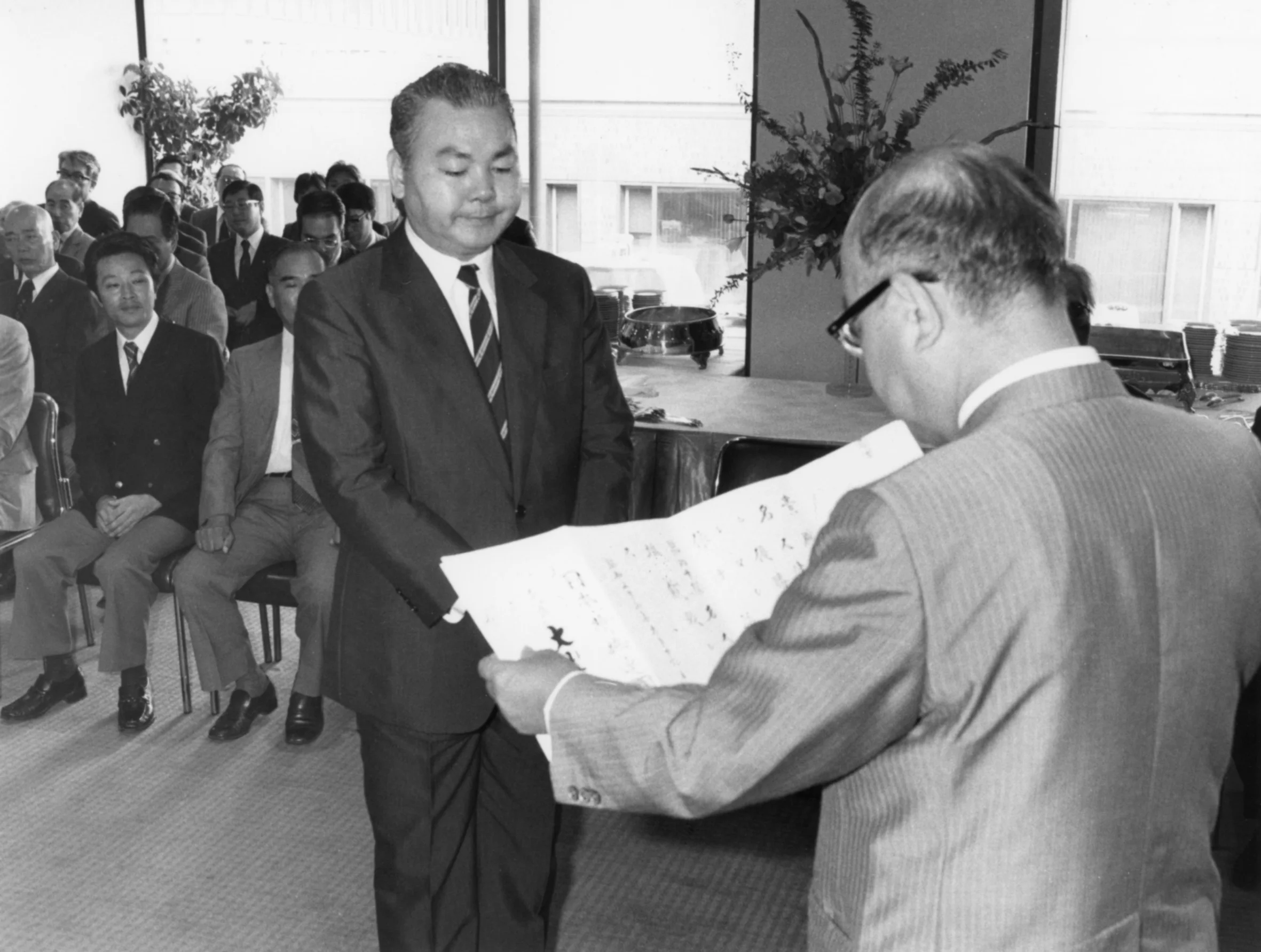
Hifumi Kato receiving his certificate as the new Meijin
The Mainichi Shimbun, sponsor of the Meijin shogi title match, held the Meijin investiture ceremony at a restaurant in Palaceside Building. New Meijin Hifumi Kato receives the letter of investiture from Yasuharu Oyama (right), president of the Japan Shogi Association, September 16, 1982.

1990–2003

Beauty Born of Function

1992

A Commitment to Maintenance

Ahead of its 25th anniversary, Palaceside Building drew up a five-year refresh plan in February 1990 that included a complete renovation of the restrooms, introducing bidet toilets, and automatic doors at the east and west entrances.

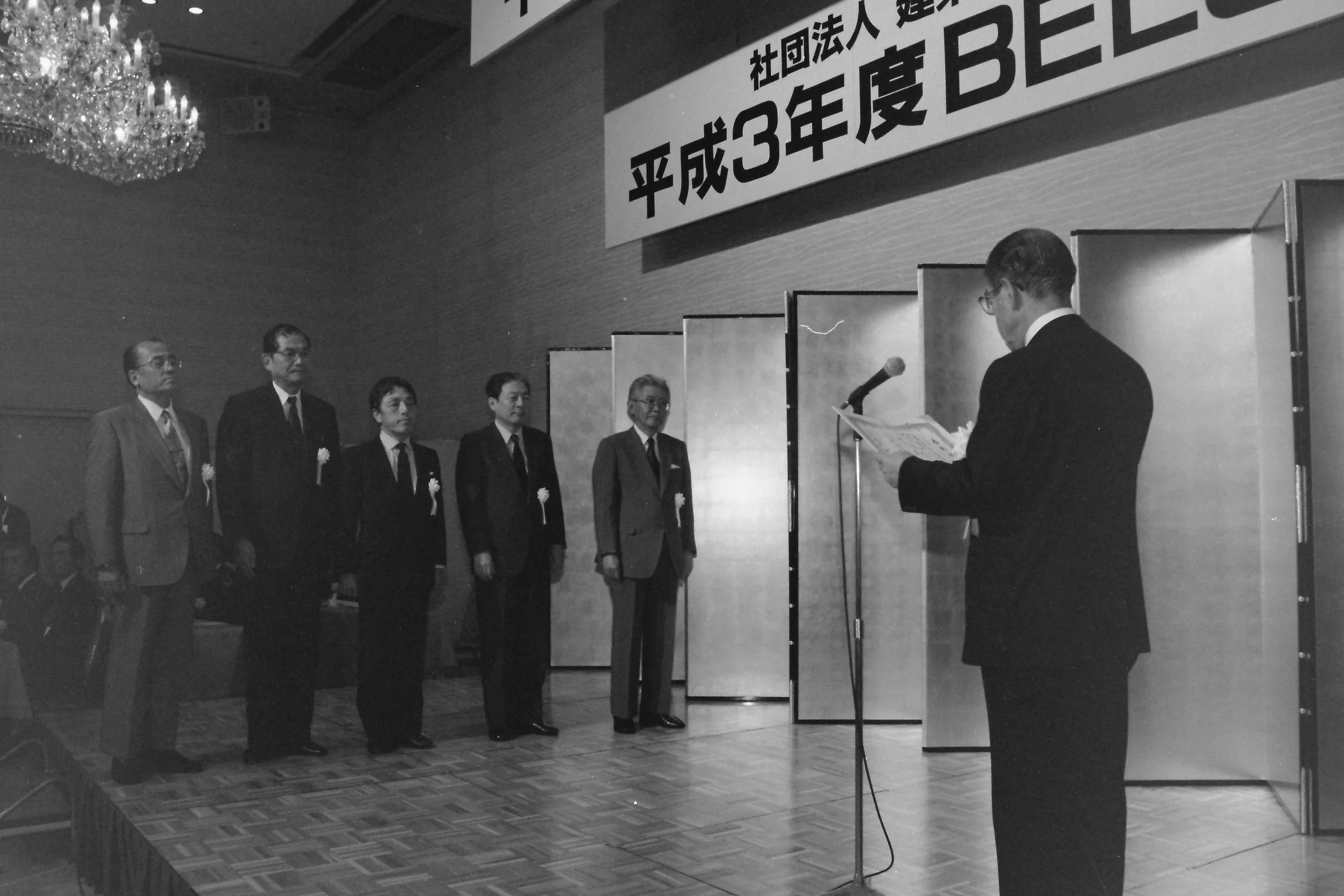
The sustained effort to strengthen maintenance since completion was rewarded in 1992 with the prestigious first BELCA Award (now established by the Building and Equipment Long-life Cycle Association).

Platform at the FY1991 BELCA Award ceremony
The BELCA Award ceremony. The building was recognized for being beautifully and functionally maintained more than 20 years after construction. Other recipients included the Hattori Clock Store in Ginza, May 21, 1992.

1999

A Masterpiece of Modern Architecture

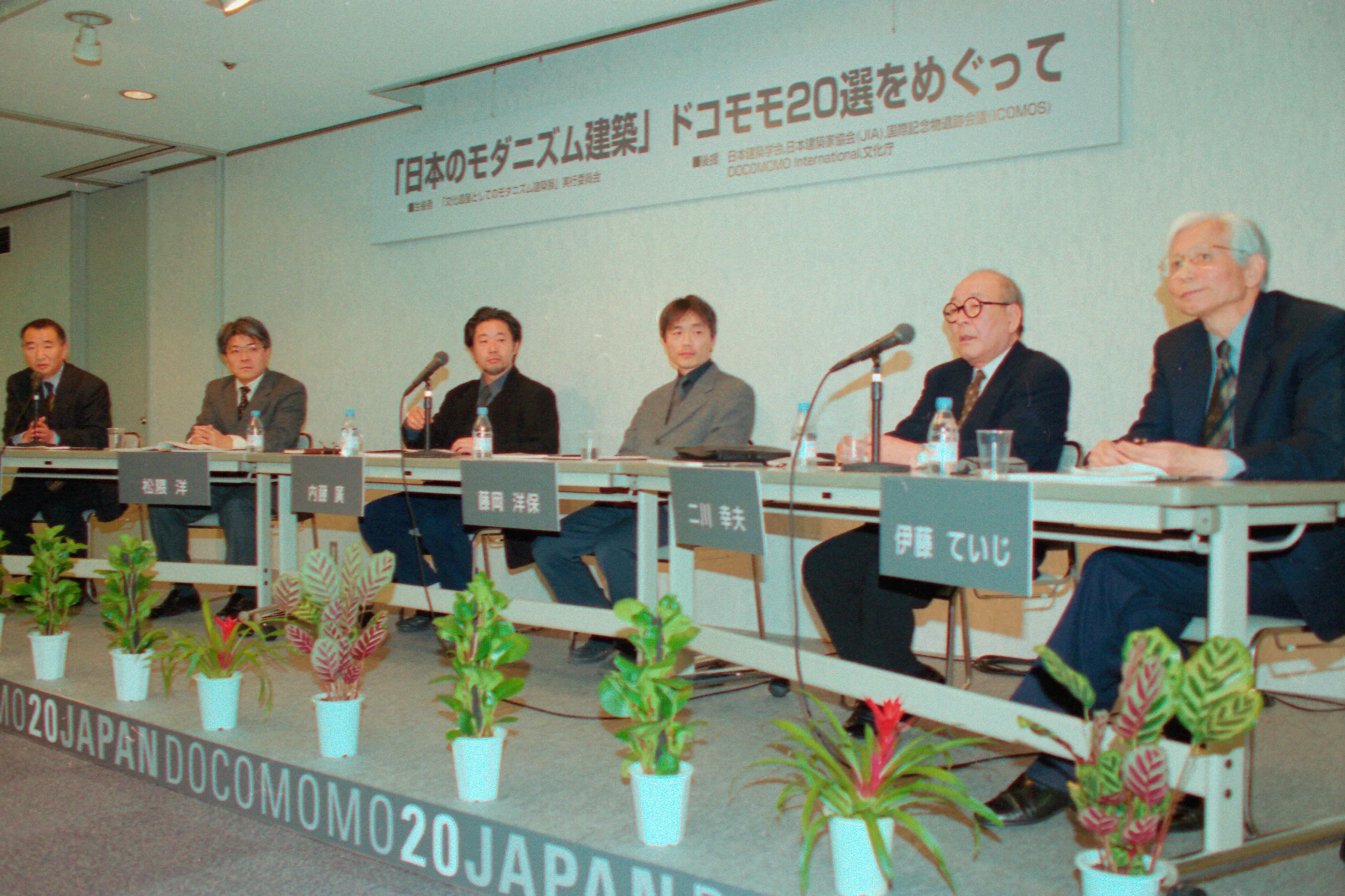
In 1999, Palaceside Building was selected as one of the 20 representative works of modernist architecture in Japan by DOCOMOMO (headquartered in the Netherlands), an academic organization devoted to preserving and passing on the historical value of modern architecture. It was the only postwar office building to be selected.

The reason given: “the beautiful combination of circle, line, and surface that symbolizes Japanese modern architecture.” The selection established Palaceside Building’s reputation as a historic architectural masterpiece.

Speakers at a symposium on the DOCOMOMO 20 Selection of modern architecture in Japan
At the symposium “Exploring the DOCOMOMO 20 Selection,” panelists debated the selection criteria and more. Together with the building tour, attendance exceeded 300, February 18, 2000.

2011

On the afternoon of March 11, 2011, the Great East Japan Earthquake, magnitude 9.0, struck, and Tokyo recorded a seismic intensity of upper 5.

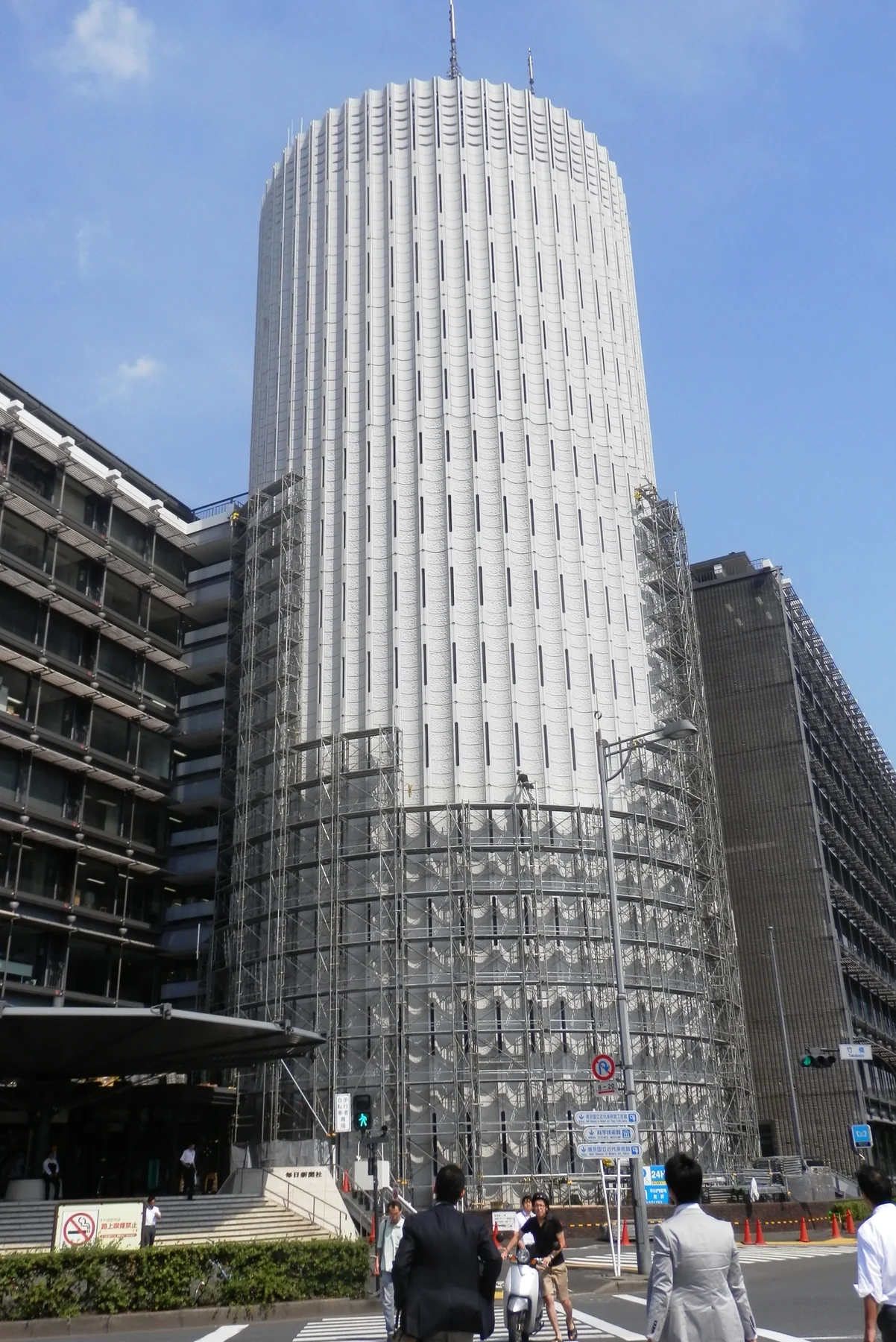
Having completed seismic renewal work the previous year, Palaceside Building suffered only minor damage compared with other buildings, yet full restoration took two years.

Palaceside Building’s cylindrical core wrapped in scaffolding during exterior wall repairs
The walls of the cylindrical cores developed fine cracks from age and from the Great East Japan Earthquake. Scaffolding was erected and the exterior repaired over seven months from September 2012.

2015–2026

An Appeal Carried Forward

2015

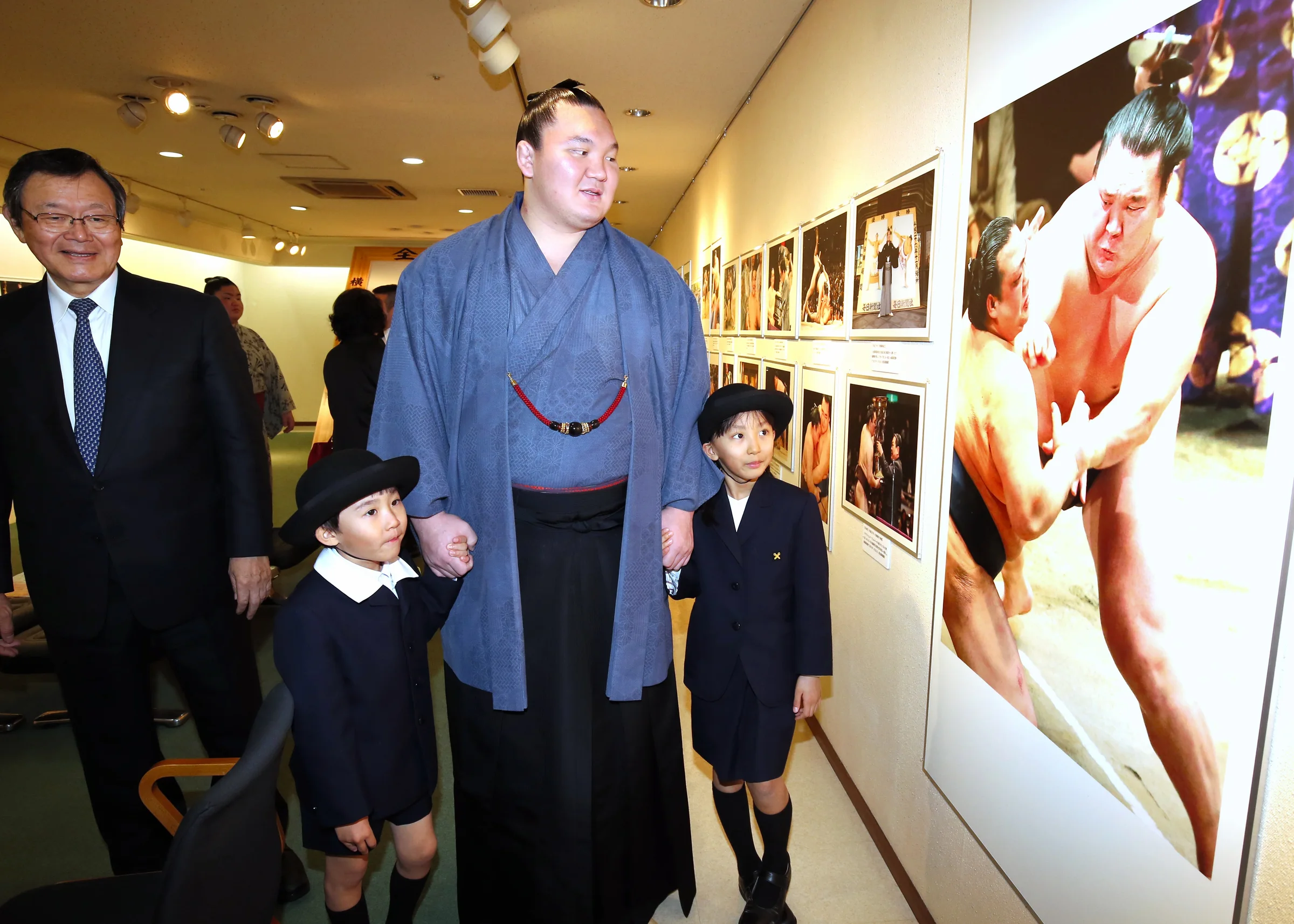
Alongside its cultural activities, the Mainichi Shimbun is committed to sports. One long-standing example is presenting the championship portraits awarded to Grand Sumo tournament winners.

In 2015, a photo exhibition on yokozuna Hakuho, who was then rewriting the all-time record for championships, was held in the gallery at Palaceside Building, and Hakuho himself visited.

As an official partner of the Tokyo Olympic and Paralympic Games, held in 2021, the Mainichi Shimbun also promoted sports through its reporting.

Yokozuna Hakuho and children at an exhibition of sumo photographs
Yokozuna Hakuho views his own photo exhibition, children in hand. Coming just after his 34th top-division championship, surpassing the great yokozuna Taiho, the event drew some 300 businesspeople and others to the gallery hoping to catch a glimpse of him, April 8, 2015.
View of Palaceside Building draped in national flags and the green of the Imperial Palace
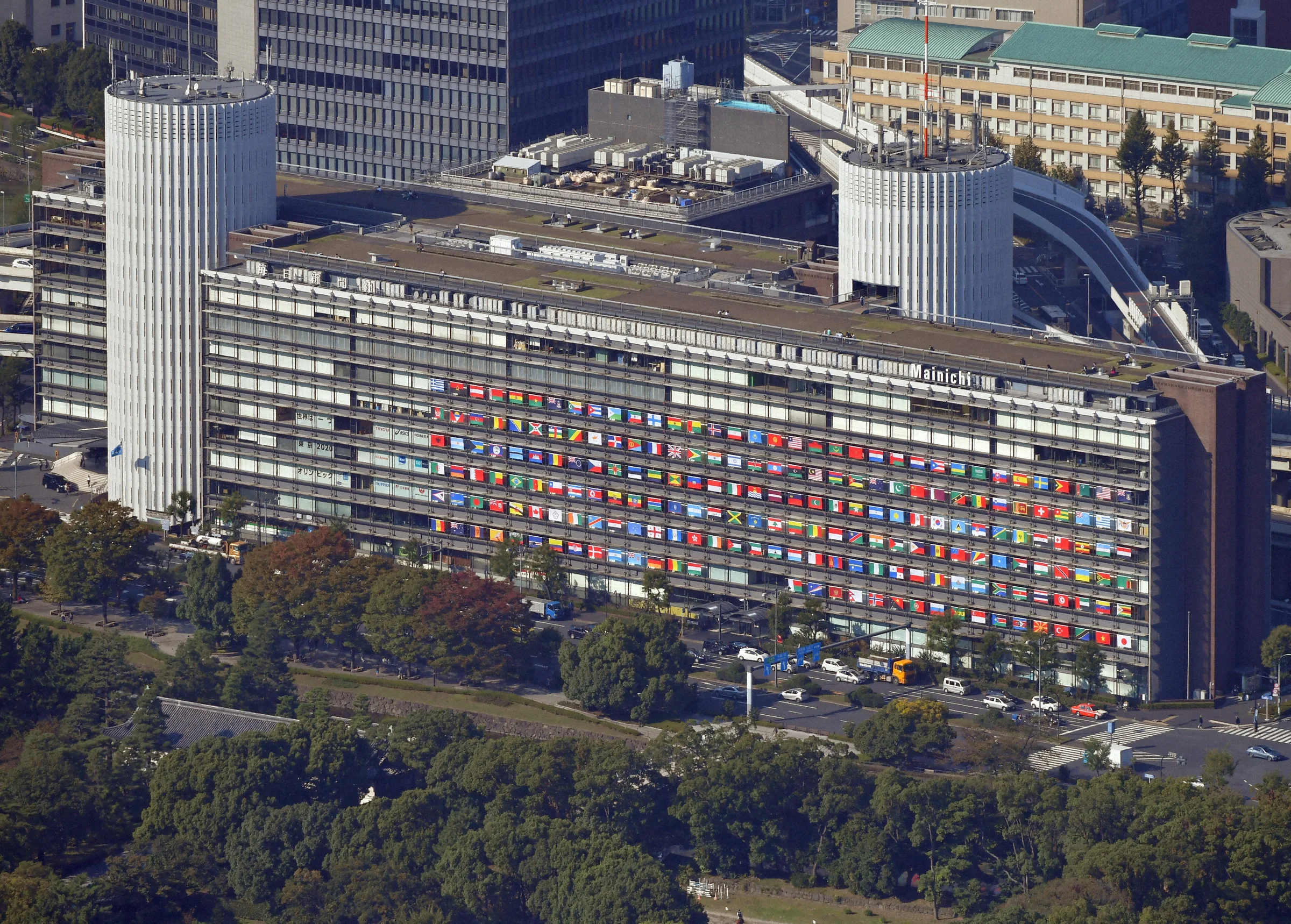
To mark 1,000 days before the opening of the Tokyo Olympics, the Mainichi Shimbun displayed the flags of the 206 countries and regions belonging to the International Olympic Committee (IOC) on Palaceside Building. One cloth flag was attached to each window frame on floors 2 to 7 facing the Imperial Palace, October 28, 2017.
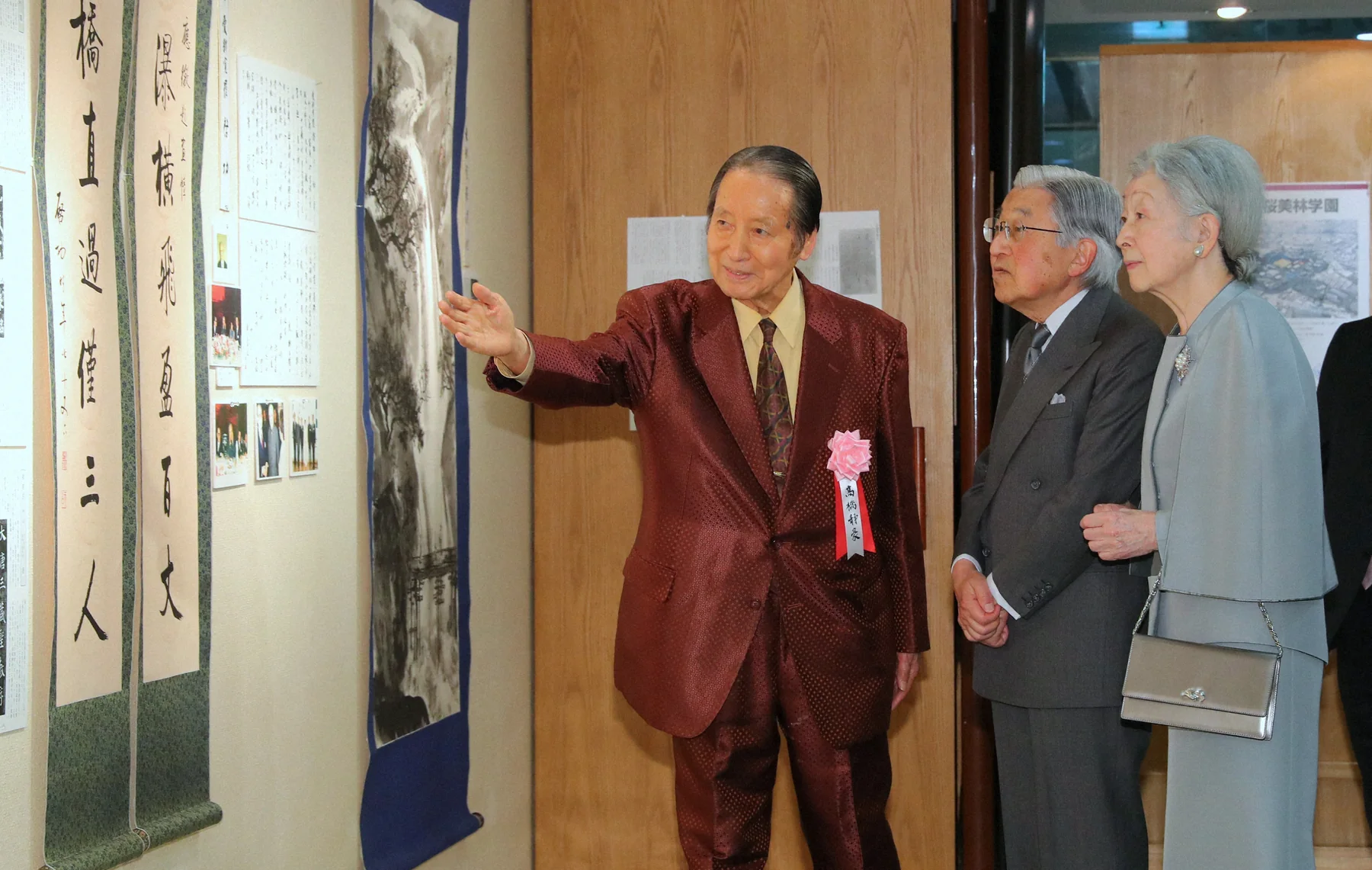
The Emperor and Empress (at the time) viewing an exhibition of calligraphy and painting in the first-floor gallery
The Emperor and Empress (at the time) visit Palaceside Building and view an exhibition of calligraphy and painting in the first-floor gallery, April 14, 2018.
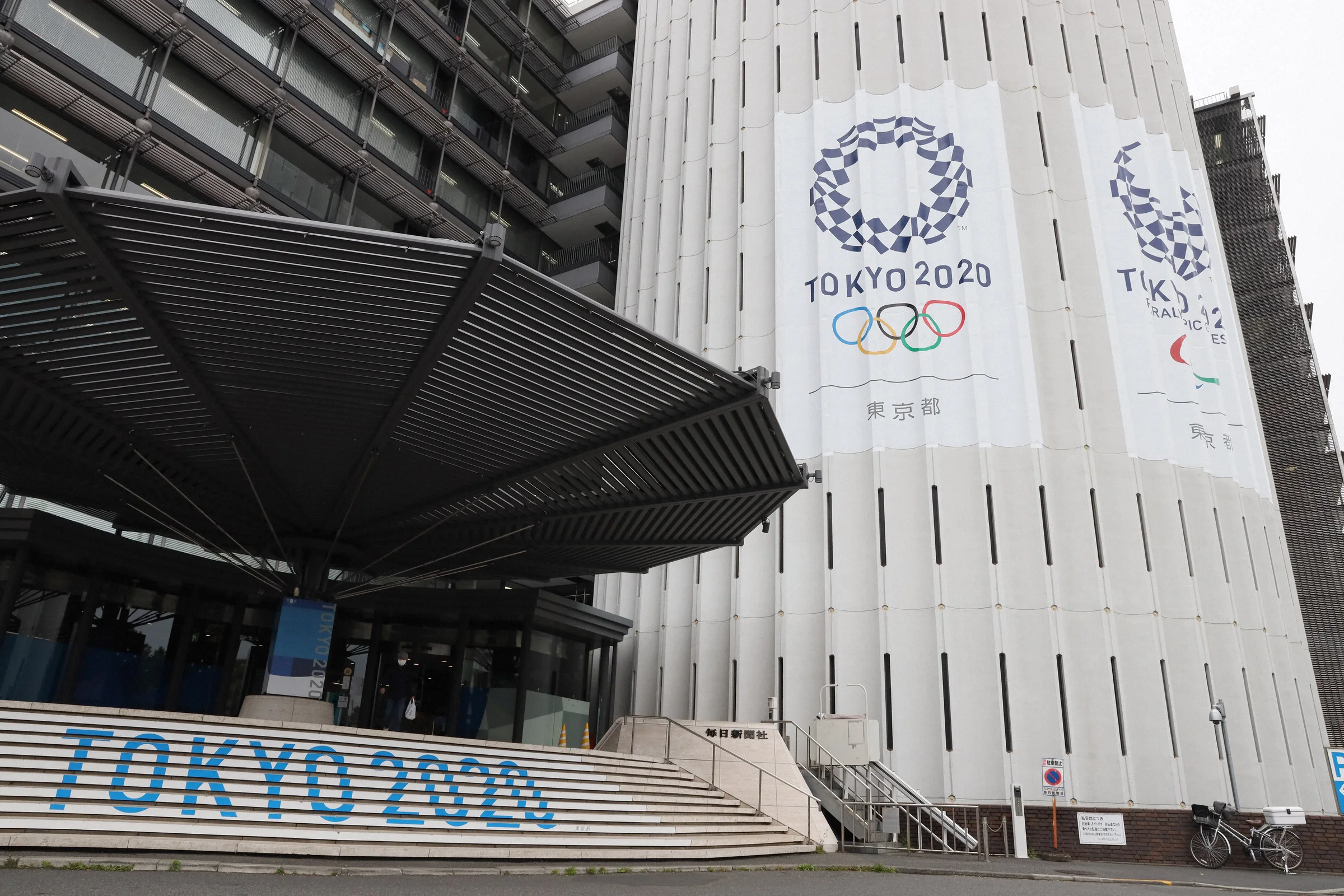
Tokyo 2020 emblem displayed on Palaceside Building's cylindrical core
Welcoming 2020, the year of the Tokyo Olympics and Paralympics, the Mainichi Shimbun decorated the west cylindrical core with the Games emblem and the west entrance steps with the letters “TOKYO 2020,” March 30, 2020.
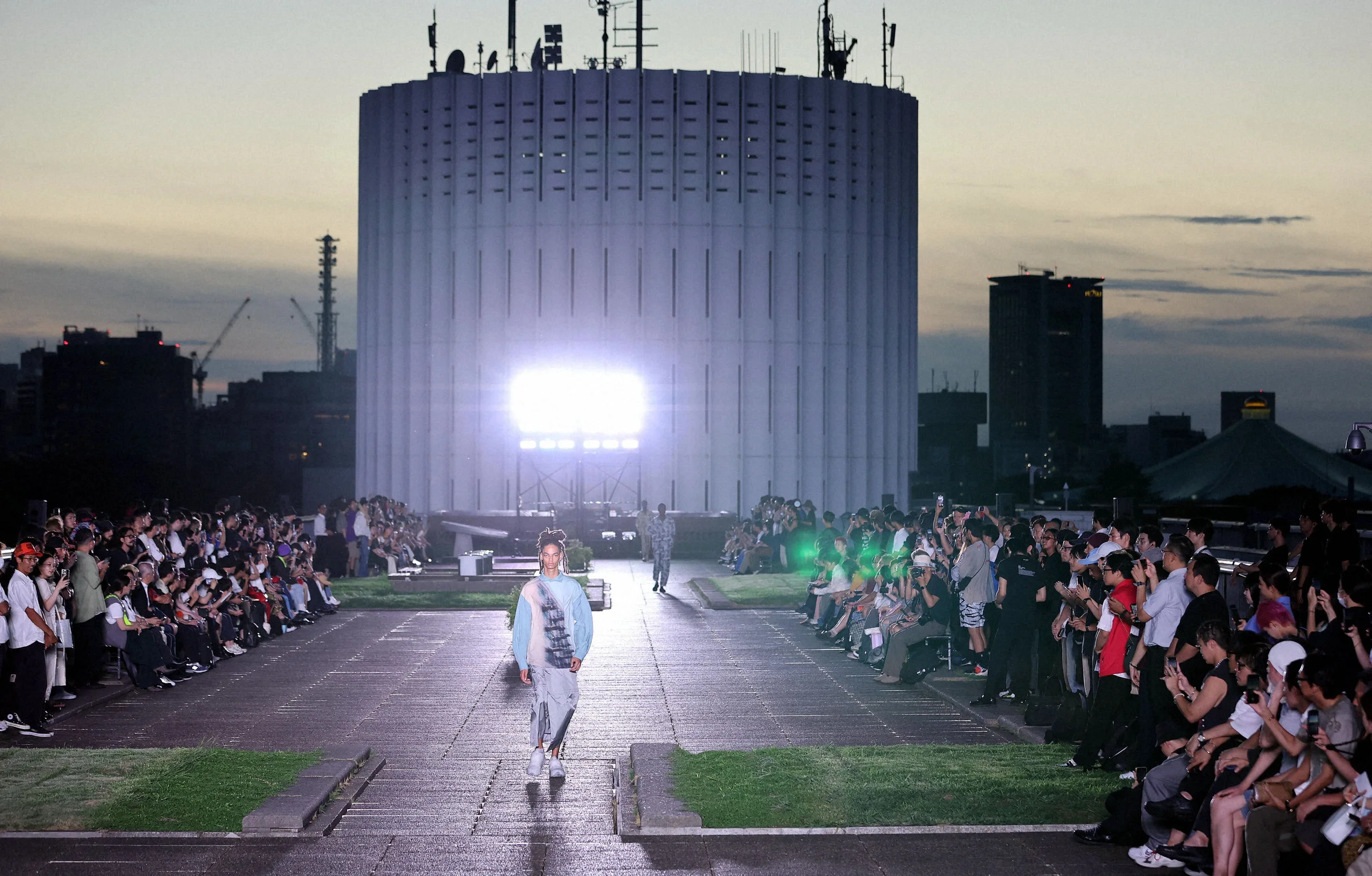
Outdoor fashion show at night with the cylindrical core as backdrop
The first fashion show ever held here drew some 600 invited guests. For about 20 minutes until dusk fell, spotlit models strode down the runway one after another, September 1, 2023.

2023

Timeless Beauty of Form

As eras turned from Showa to Heisei to Reiwa, the building’s refined presence has not changed.

The graceful form of Palaceside Building, in harmony with the green of the Imperial Palace, has been preserved since its completion. Its timeless beauty of form radiates an appeal greater than ever.

2026
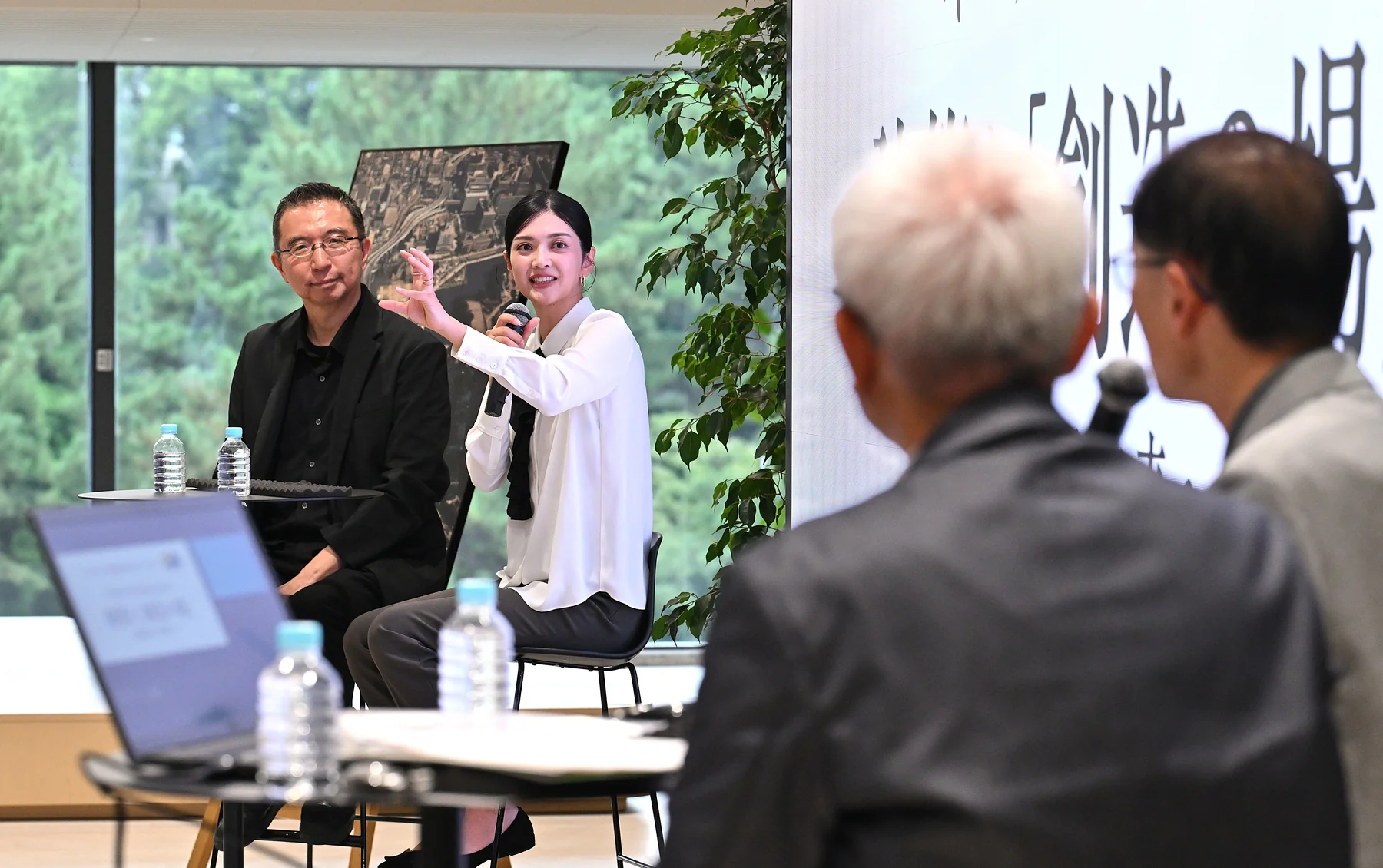
Speakers in conversation on stage at the 60th anniversary symposium
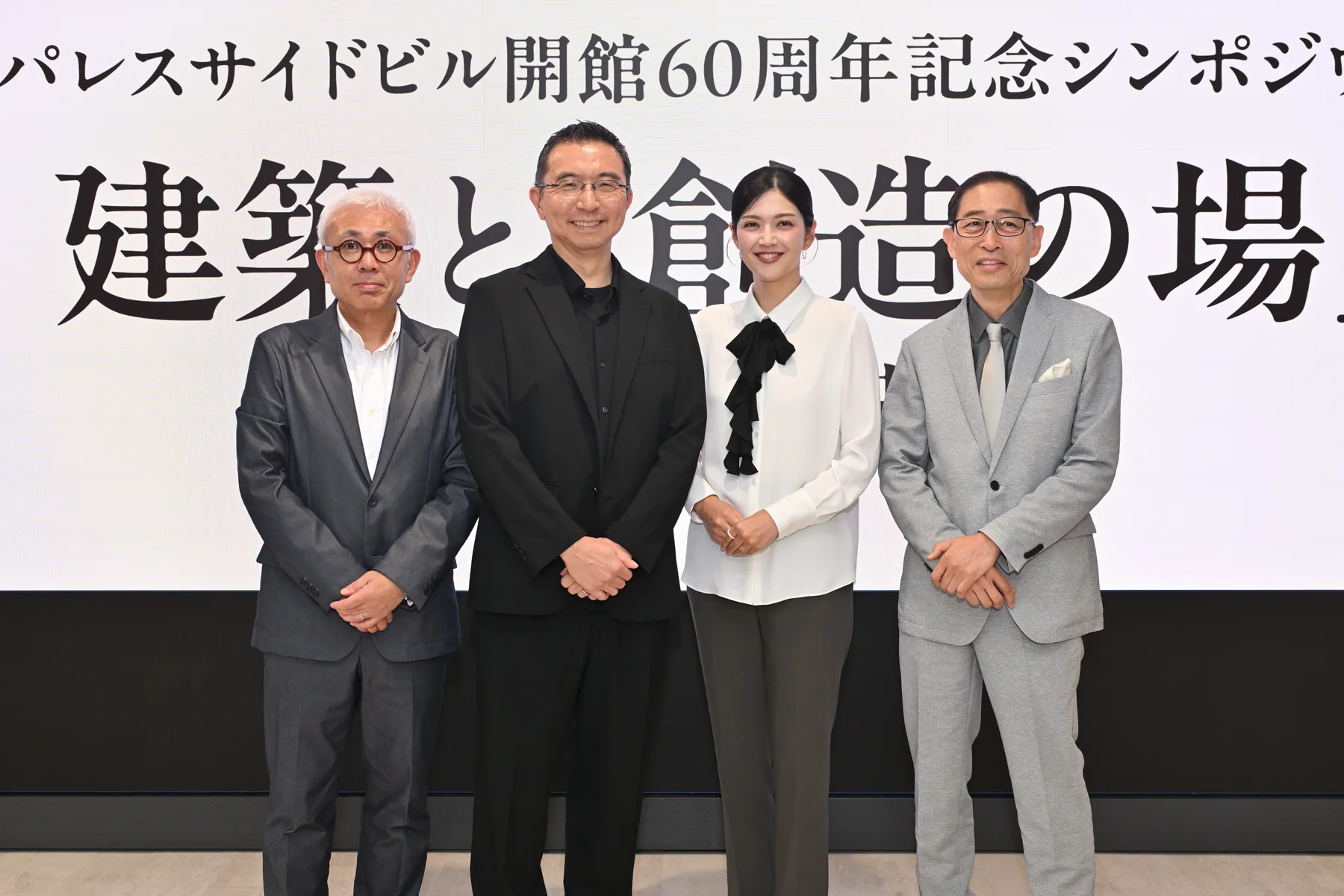
At the symposium marking the 60th anniversary of the opening, architect Sou Fujimoto, actor Michiko Tanaka, and Nikken Sekkei Chairman Tadao Kamei discussed the appeal of Palaceside Building and more, September 1, 2026.
The four speakers at the 60th anniversary symposium
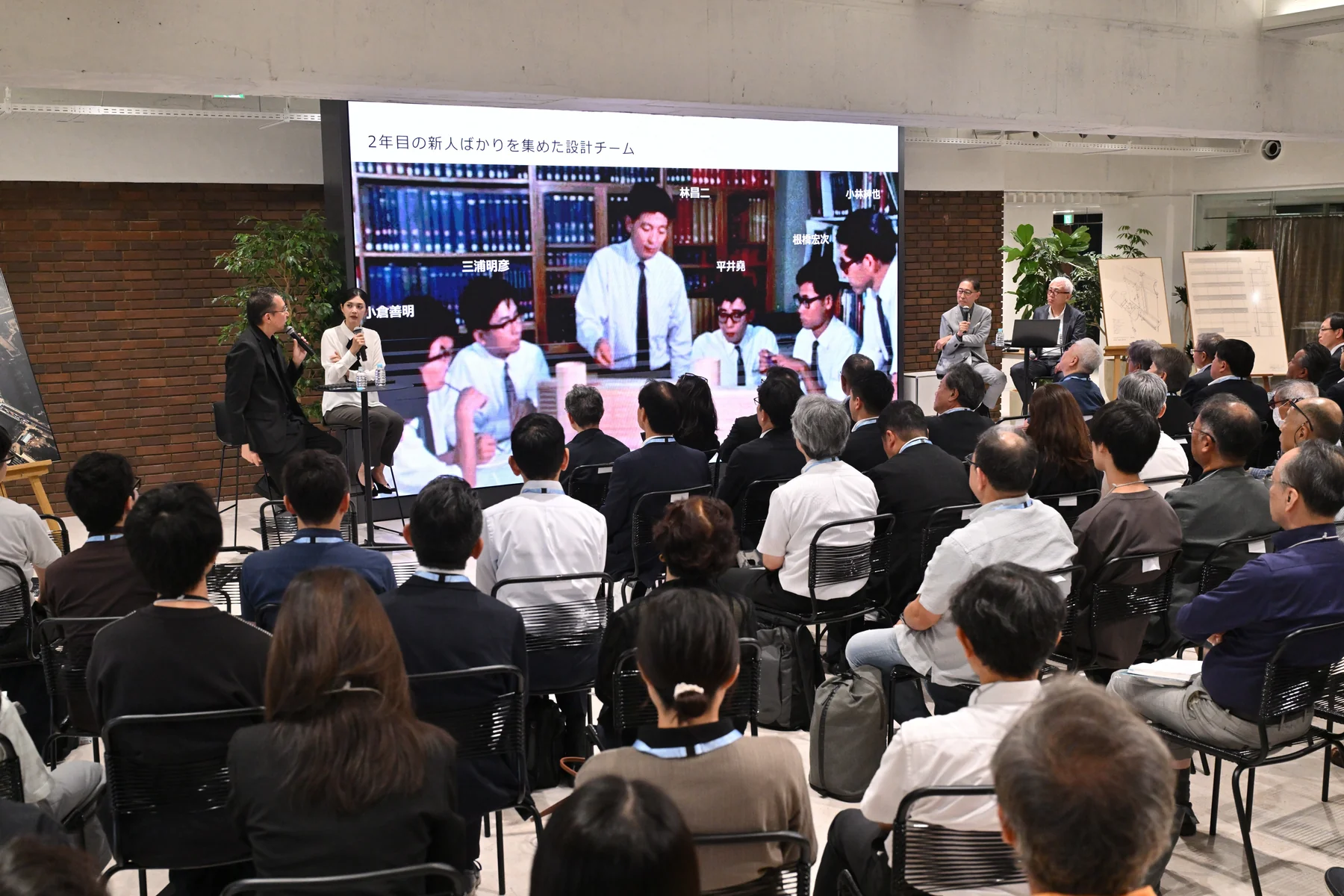
A full audience at the 60th anniversary symposium, with the design team shown on screen

Welcoming so many people,
Palaceside Building keeps walking on.