

Palaceside Building has revised the “Disaster-Prevention Handbook” that tenants keep on hand (photo above). One copy goes to each of some 6,800 people in the building (office and shop staff); delivery has already begun.
It explains in plain language how people in the building should respond in an earthquake or other emergency.
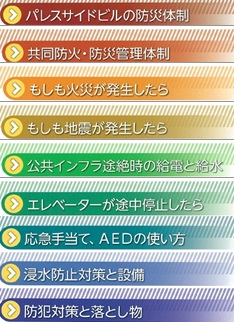
A5, full color, 18 pages (excluding covers), in nine chapters as in the photo at right: “the building’s disaster system,” “if an earthquake occurs,” “power and water when public infrastructure fails,” “if an elevator stops mid-travel,” “first aid and how to use an AED,” and so on. A simple in-building map is at the end.
“Disaster system” covers the role of the Disaster Prevention Center (beside the first-floor west entrance) and equipment such as indoor hydrants, extinguishers, alarms, sprinklers, fire shutters, emergency stairs and emergency in-building phones beside the east and west restrooms. The “if fire or earthquake occurs” chapters note that the building’s seismic performance meets standards and can withstand quakes of Great East Japan or Hanshin class, and that in-building broadcasts and other contacts are ready. On emergency “power and water,” two diesel generators and one gas-turbine unit can supply electricity at about 60 percent of normal for about two days; with stored water and well water, some conservation lets plumbing continue.
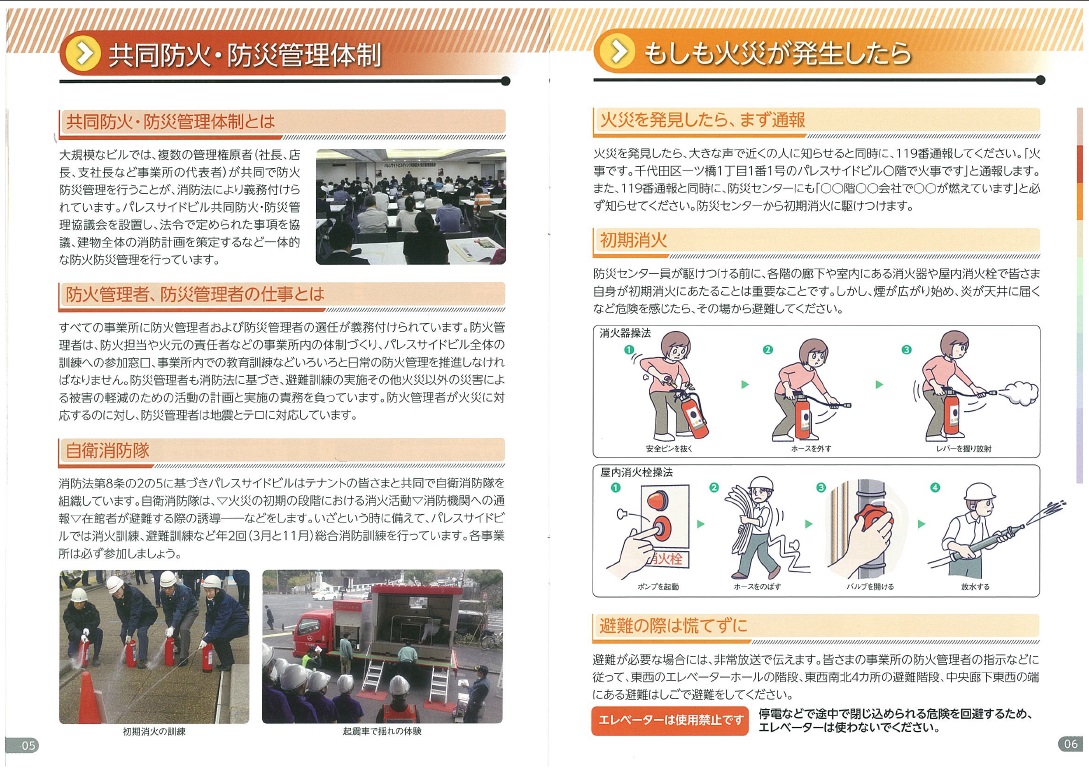
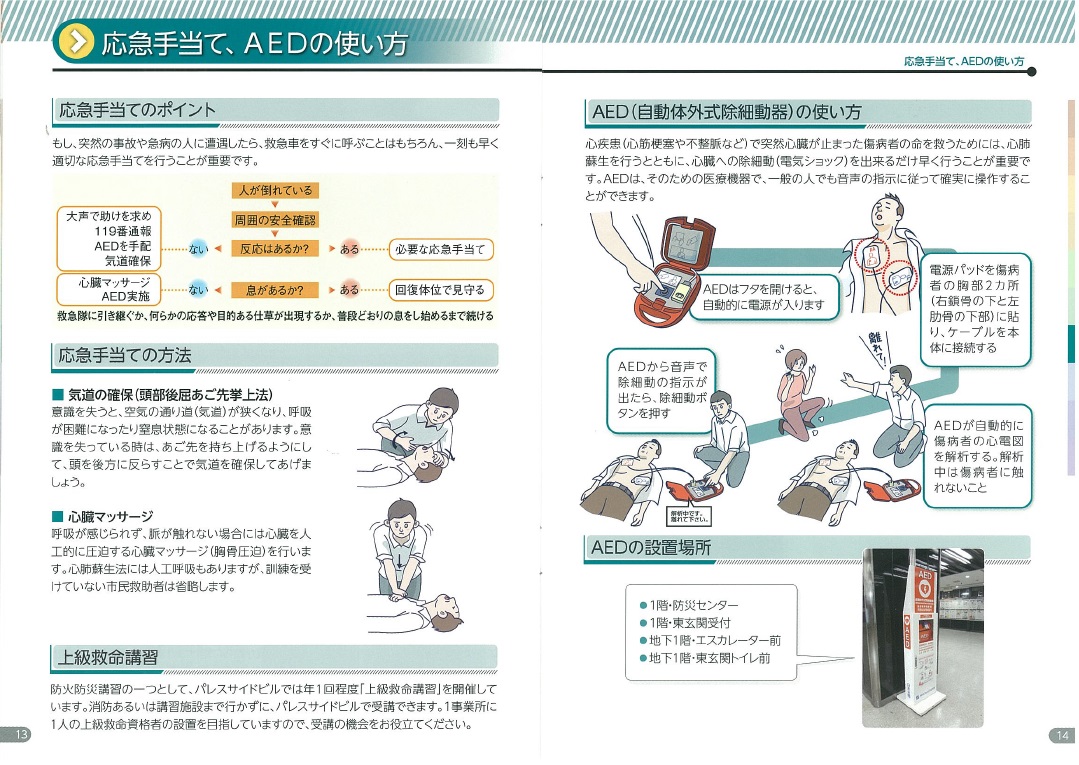
Readability was considered, with ample photos and illustrations (photo at left).
The old handbook was made about seven years ago. Since then laws and systems have changed, especially after the Great East Japan Earthquake: a city-center site like this is a “stay-in-district” area, with a goal of remaining about three days
rather than going home. The building also spent last year drafting a business continuity plan (BCP); the handbook was revised in that light.
We hope it will be used well.