

Our walk along the stone walls of Edo Castle (the Imperial Palace) from Palaceside Building continues at Naka-no-mon. As I noted briefly in the January 13 blog, a major restoration was carried out recently.
The Naka-no-mon stone walls were first built in 1638 (Kanei 15), burned in the Meireki Great Fire of 1657, and rebuilt in 1658 (Manji 1) by Kumamoto domain lord Hosokawa Tsunatoshi
. They were damaged again in the 1703 (Genroku 16) earthquake and repaired the following year by Tottori domain lord Ikeda Yoshiaki; after the Meiji Restoration the gate itself was demolished, leaving only the stone walls, which over long years deformed from earthquakes and faced collapse risk, so from August 2005 to March 2007
—about 20 months—a safety restoration was conducted.
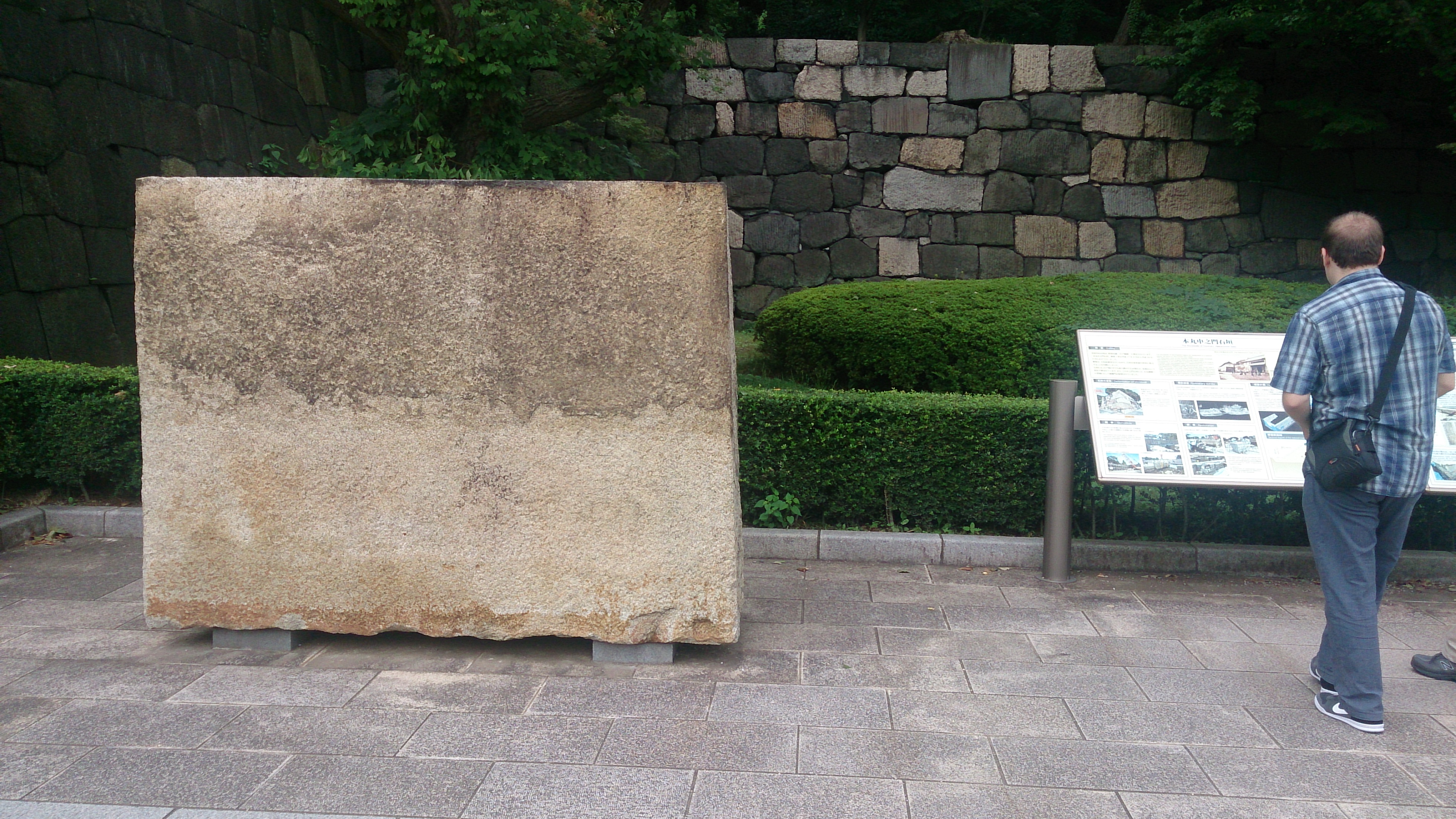
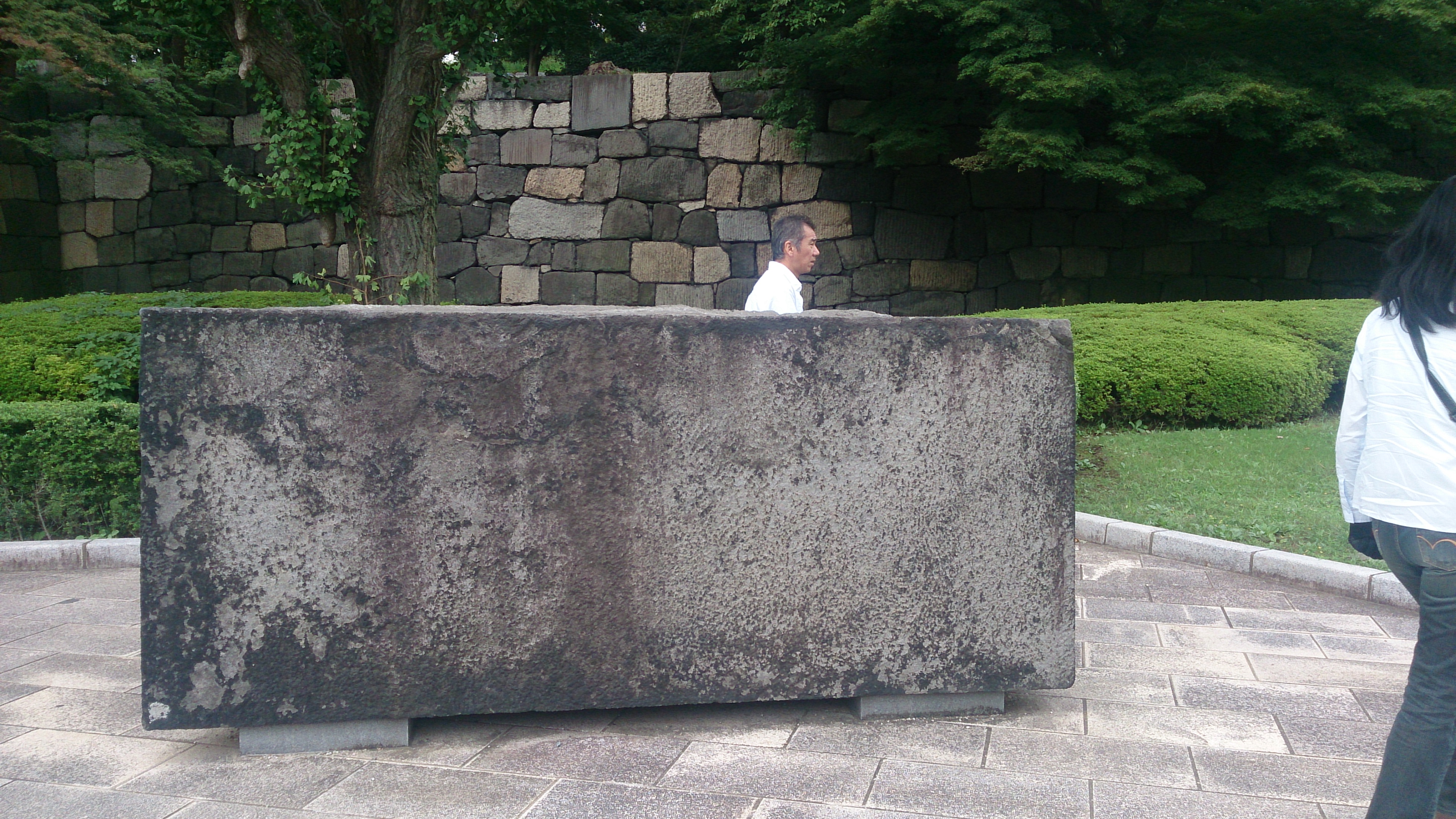
Panels before Naka-no-mon explain the work in detail =top photo: part of a panel. Beside them, Seto Inland Sea granite =photo left top and Izu andesite =same left bottom replaced during restoration are on display.
Earthquakes had shifted stones, opened joints and caused bulging; load and weathering also caused damage and spalling
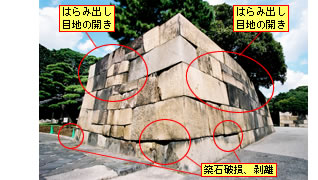
=photo bottom top. A cross-section =photo bottom bottom shows how the wall had bulged forward from its original profile. Three-dimensional laser survey mapped conditions precisely, computer graphics aided planning, and work proceeded carefully
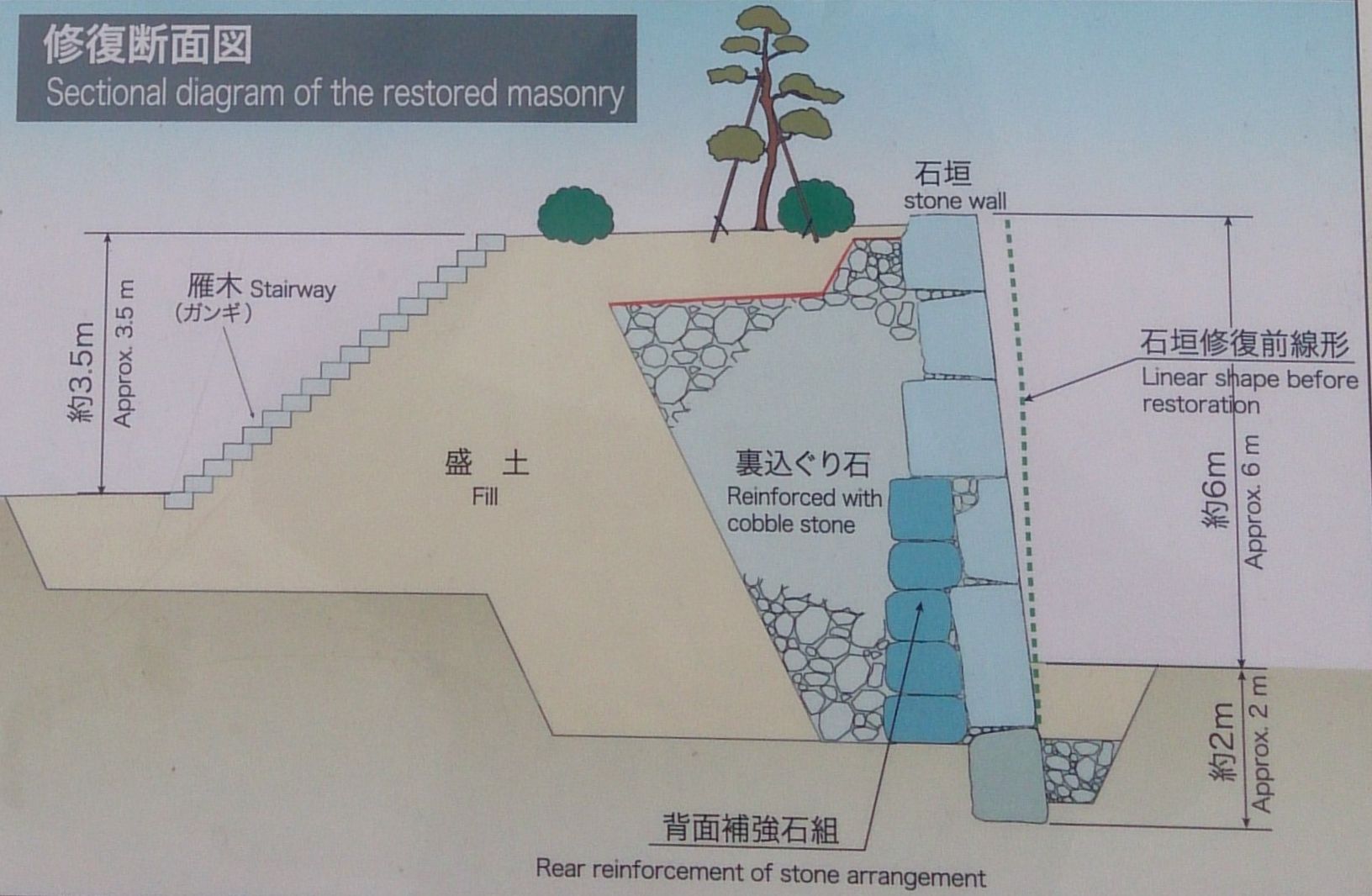
.
Work began with dismantling. Copper "chigiri" linking building stones, copper and iron "shikigane" for setting stones, and rare large "okasugai" pegs were unearthed. Okasugai are special reinforcements linking stones on the back to prevent toppling
.
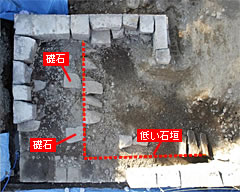
Also, as in photo below, remains of the original Edo Castle Naka-no-mon were found within the present wall.