

Leaving Palaceside for Edo Castle stone walks—after the tenshu base comes Naka-no-mon. Pass Honmaru Ote-mon (Ote San-no-mon), before "Hyakunin-bansho"—the last gate climbing to Honmaru plaza.
As the official route to Honmaru, it's grand. Same six-type scheme as the tenshu base: "kirikomi-hagi × nuno-zumi"—tight-cut stones, horizontal seams
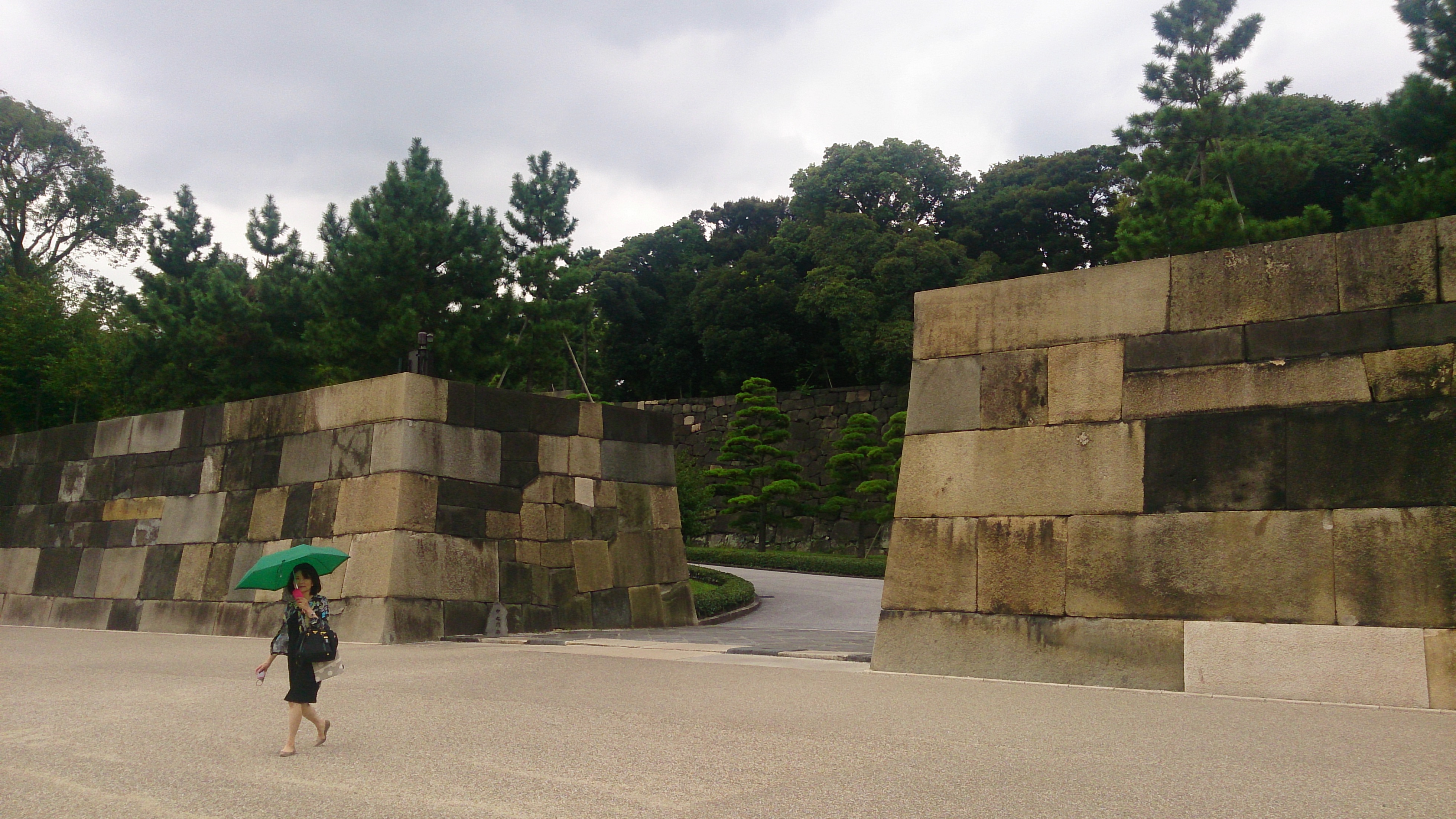
stacked in "cloth layers." The distant panorama =left shows it best.
Beyond arrangement, stone size impresses—up to 35-ton megablocks, finely dressed. Walls mix white granite and black andesite—granite from Seto Inland islands, andesite from eastern Izu.
These gate walls were first built 1638 (Kanei 15), burned in 1657 Meireki fire, rebuilt 1658 by Kumamoto lord Hosokawa Tsunatoshi; damaged in 1703 Genroku earthquake, repaired 1704 by Tottori lord Ikeda Yoshiaki after the quake.
Among Edo's six great gates, this alone was not a "masugata gate"—square enclosure with two gates, the inner offset so attackers cannot charge straight.
Of course yagura existed—
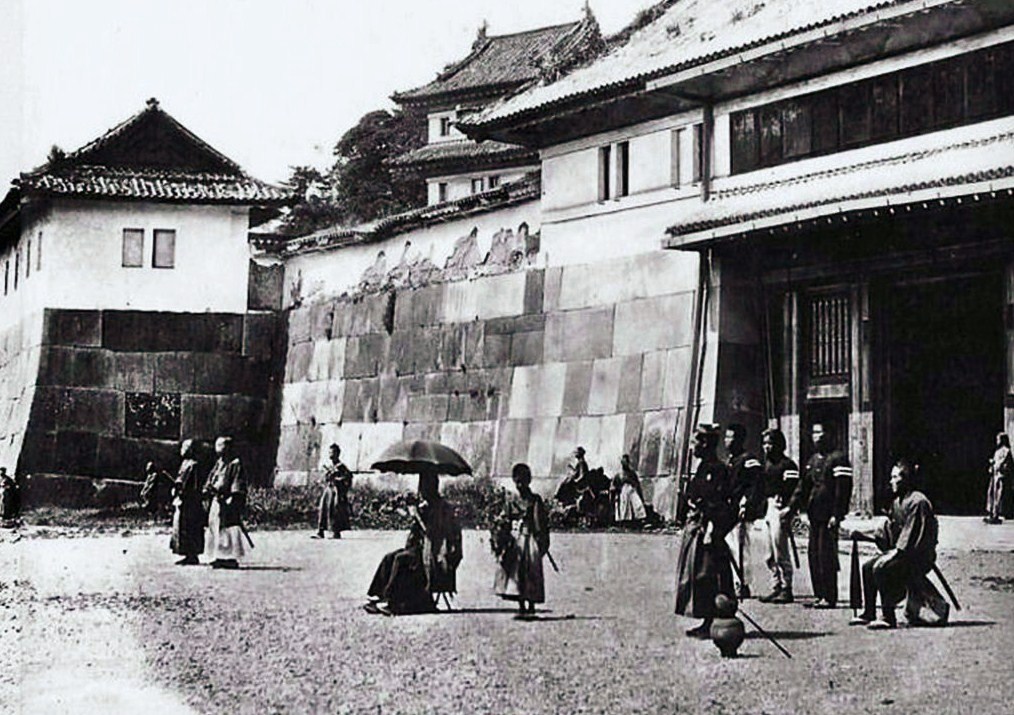
Naka-no-mon had a watari-yagura, left Hyobutenmon yagura, rear Goshoin-de yagura—hardly "shabby" =Meiji-era photo right.
(Note: watari-yagura appear in masugata gates too—e.g., Shimizu-mon's second gate is watari-yagura; "non-masugata therefore watari-yagura" is taxonomically wrong.)
Naka-no-mon walls were heavily weathered over ~300 years—restored in the 21st century. That story another day.