

Has cold suddenly accelerated? Snow in Hokkaido and Tohoku. In Tokyo the Japan Meteorological Agency announced that "Kogarashi No. 1" blew on the night of the 27th. Commuting in the morning, though the gale had eased, looking up, clouds streamed across deep blue sky =photo top, and a condo entrance was piled with blown leaves
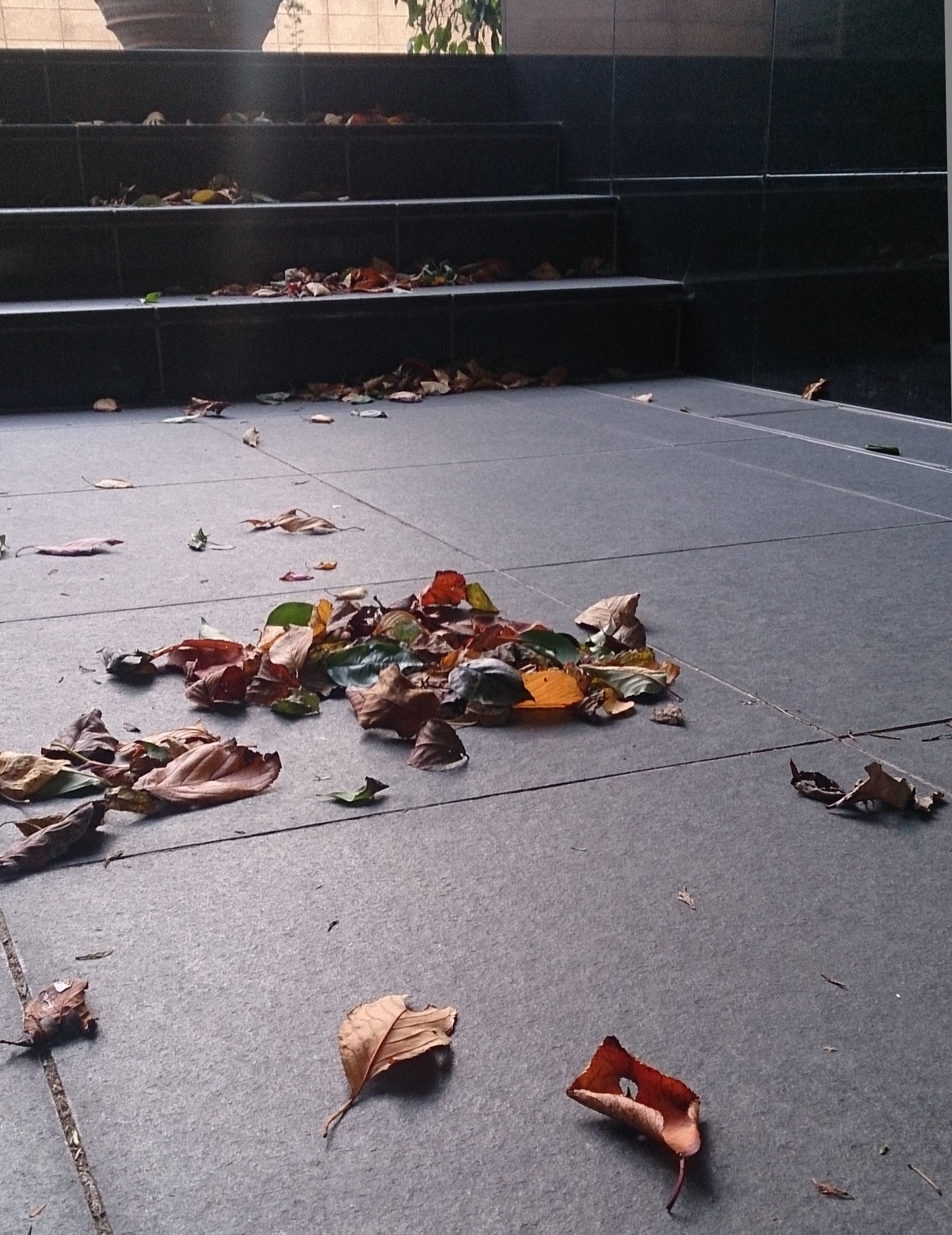
=photo right.
At the JMA headquarters in Otemachi—a few minutes from Palaceside Building—at 7:44 p.m. on the 27th, a north-northwest gust of 17.3 m/s was recorded and certified as "kogarashi." Fifteen days earlier than last year; among recent years, second only to Oct. 26, 2010 and 2011.
Incidentally, dictionaries define "kogarashi" as "a strong, cold wind from late autumn to early winter," but the JMA's strict criteria are: (1) mid-October through end of November; (2) winter-type west-high east-low pressure bringing seasonal winds; (3) northwest to north wind in Tokyo; (4) maximum wind roughly force 5 (8 m/s) or more in Tokyo. Records since 1951: earliest Oct. 13 (1988), latest Nov. 28 (1969, 1981); no kogarashi in 1956, 1962, 1977, 1979.
The JMA said Kanto had winter-type pressure on the 27th with stronger winds, but as continental high pressure moves toward Japan, winds should ease from the 28th. At lunch on the Palaceside Building rooftop, under clear blue sky with soft sun it was fairly warm—yet strong wind still fluttered the shide on the Mainichi Shrine torii =photo bottom.
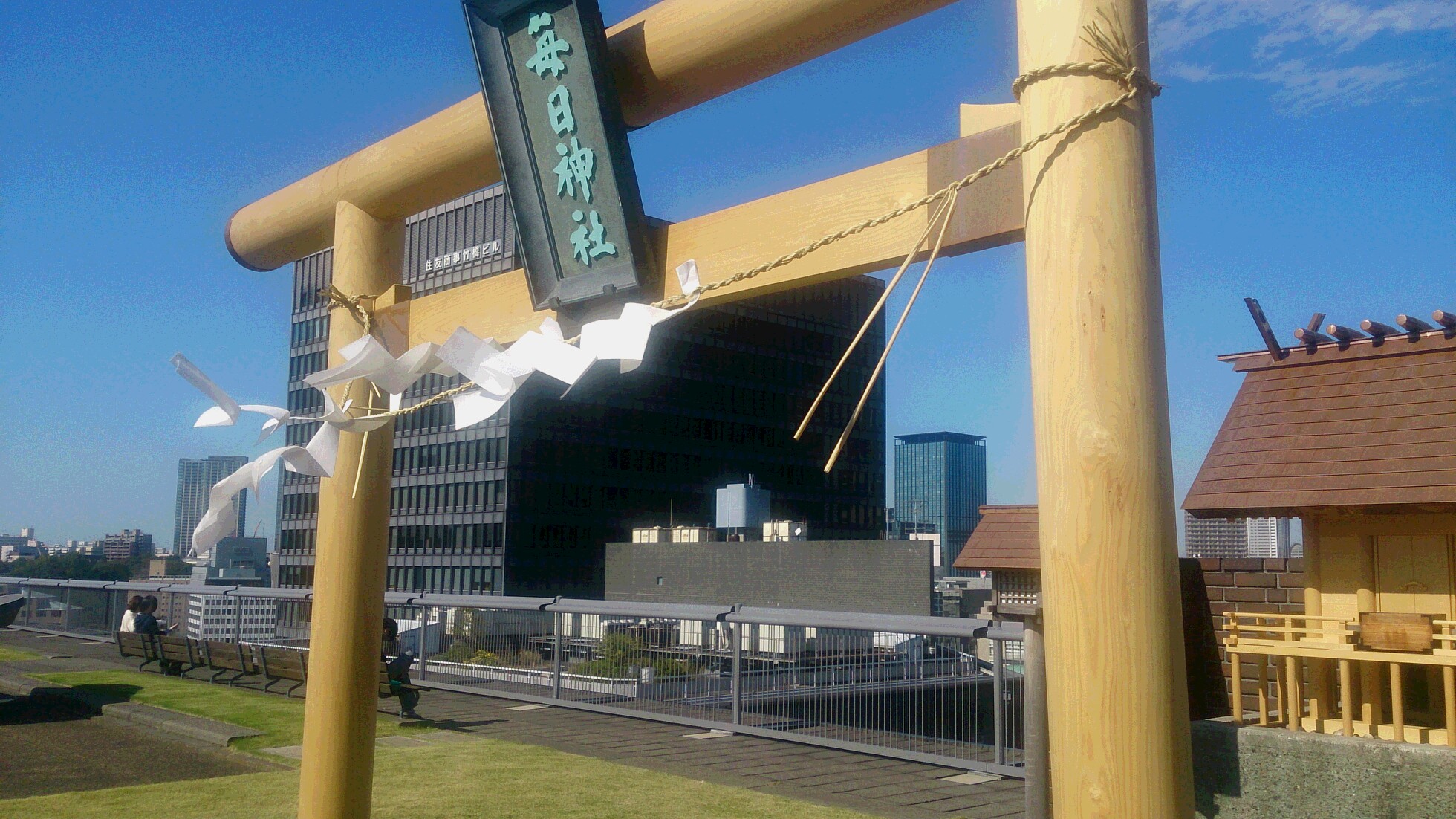
"Kogarashi" can also be written with the made-in-Japan character for wind plus "tree"—a compound ideograph. Both "kogarashi" and that character are early-winter haiku season words. Basho: "Kogarashi ya take ni kakurete shizumarinu"; Akutagawa: "Kogarashi ya mesu ni nokoru umi no iro." For the special character, there is Gon-sui Ikenishi (1650–1722), a haiku poet contemporary with Basho. His Genroku-era line "Kogarashi no ha wa ari keri umi no oto" earned him the nickname "Kogarashi no Gon-sui." Why did he use that character?
Note: the JMA certifies Kogarashi No. 1 only for Tokyo and Kinki. "Haruhatsu-bun" is announced nationwide—perhaps because it heralds warm seasons cheerfully, while kogarashi, a sign of cold, is less welcome?