
We've been tracing modern sewer roots since the Meiji era; setting aside "which came first," here is Ginza—Japan's premier shopping street a short subway ride from Takebashi, still holding that status. I found a web page on Meiji-era Ginza development.
"Western-style gutters of the Ginza brick town
After the great fire of February 1872 (Meiji 5), Tokyo aimed to modernize with foreign-style fireproof buildings; the Ginza brick town was built in October 1873... stone Western gutters on both sides of roads...
Main and cross streets had Western gutters; back alleys had open U-shaped channels... night soil was collected; kitchen wastewater flowed via branch drains into U-channels and culverts."
( photo above shows Ginza brick town—from Taisei Corporation's website on the project)
Partly culverted, but still gutters—stretching to call this "sewers." It appeared in "Sewer development in Tokyo since Meiji" online, as prehistory of Kanda sewers.
What struck me more than the text: the page owner is Kodaira City, Tokyo. After Ginza, Kanda sewers appear.
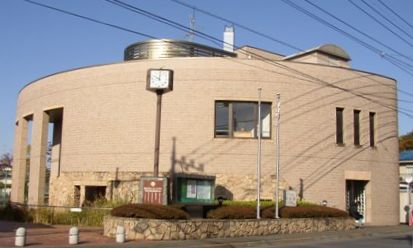
Kodaira seems passionate about sewers—it has the "Fureai Sewerage Museum" =photo upper left= a city museum. Its website says it was built in 1990 when sewer penetration reached 100%... Japan's first facility to think about water environment... Old Kodaira was linked to Edo-period water...
Urban Japan is near 100% sewered; water and toilets feel as natural as air—we forget. In Japan's long history, such convenience spans only recent decades.
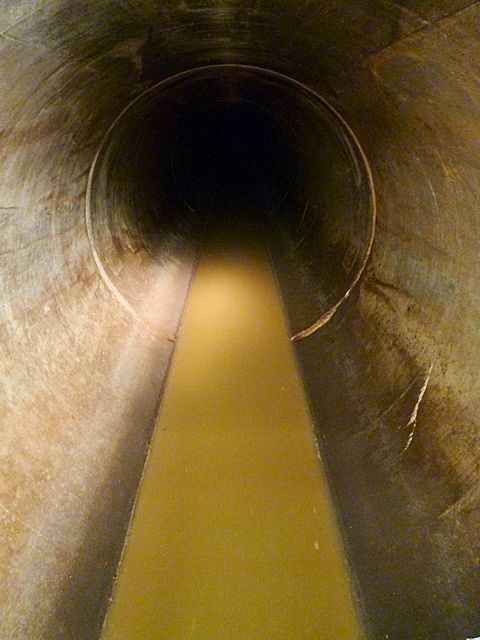
Yet many developing regions still lack infrastructure, risking lives in unsanitary conditions. Kodaira's story runs deep, but the museum—unlike ordinary buildings—descends two floors below ground to the deepest level =photo lower right= where you can enter and smell it firsthand.
Sewer projects had rumors of vested interests, but learning the backstage role that supports convenient city life is worthwhile.