
From the two Kiinokuni-zakas at Takebashi and Akasaka we came to Akasaka’s two Kii residences. This time: the Akasaka Kii residence was, for a while, the Imperial Palace.
Akasaka already had Kii’s largest Edo house, 140,000 tsubo granted in 1632 (Kanei 9). After the Meireki fire (the piece said 1658) burned the house near Takebashi, Kii obtained a small house in Kioicho; the Akasaka house remained a middle residence before and after the fire, the small Kioicho house becoming the upper residence; after the 1823 (Bunsei 6) fire destroyed the Kioicho house, the large house became the de facto upper residence — all written last week.
What happened after the Meiji Restoration? The Wakayama Socio-Economic Research Institute report “Kishu in Tokyo” (July 2011) says that in 1871 (Meiji 4), with haihan-chiken, former Kishu lord Mochiaki was dismissed as Wakayama governor and went to Tokyo. Former lords were made kazoku and gathered in Tokyo. He lived in this vast Akasaka house. In 1873 (Meiji 6), when Nishinomaru of Edo Castle, then used as the Imperial Palace, burned, Mochiaki went to court the same day and offered the Akasaka house. It became the Akasaka Palace. Learning that Emperor Meiji wished to have the Empress Dowager Eisho, widow of the previous Emperor Komei, nearby, Mochiaki also offered the southwest of the grounds where he and his wife had lived
. Until a new palace was completed on the old Edo Castle site in 1888, the Akasaka Palace was the temporary Imperial Palace.
Mochiaki, it is said, bought land at Iigura 6-14, Azabu Ward (the Uesugi count’s residence) in 1873 and later moved there.
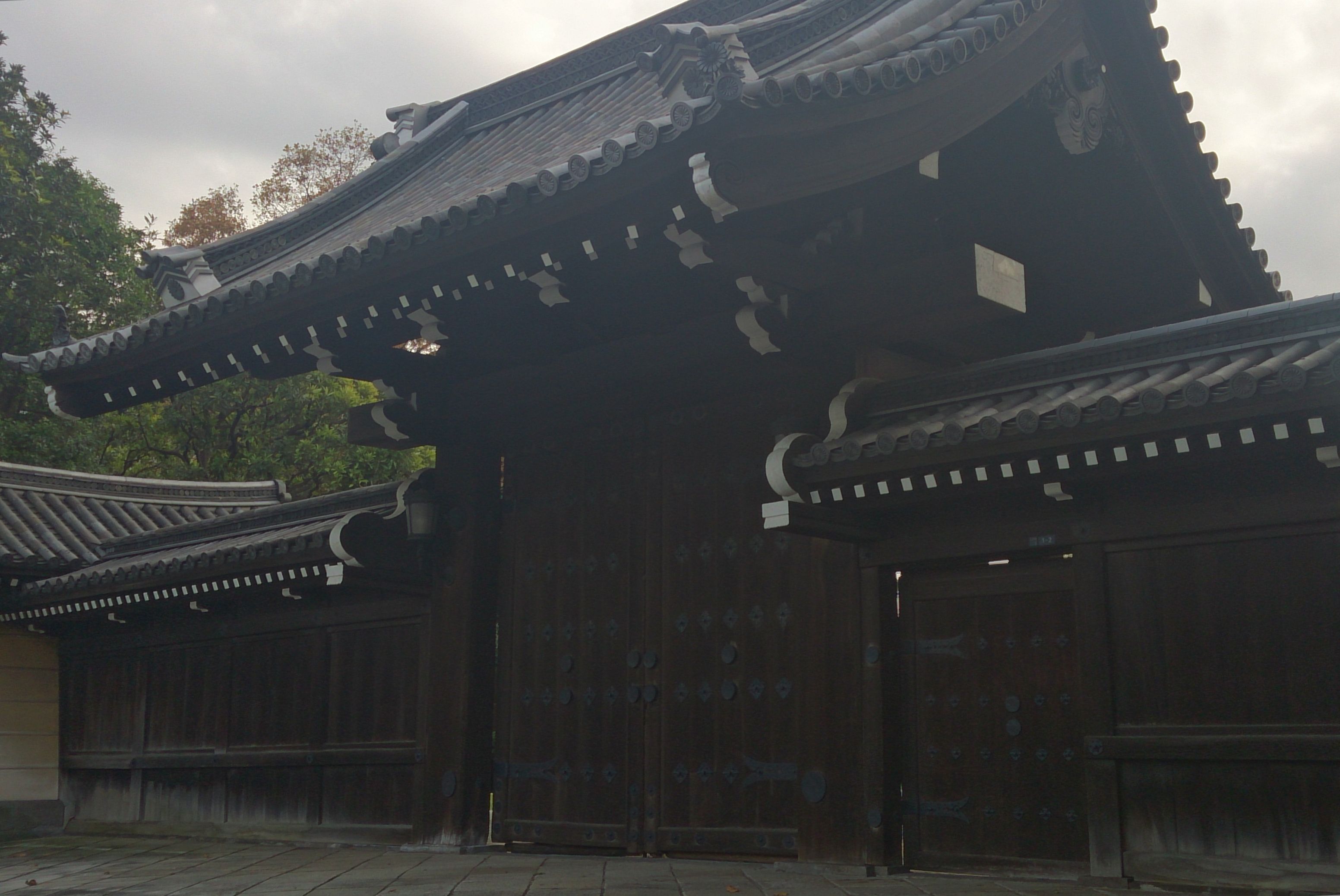
The photo at right is a gate from the Kii-residence period facing Kiinokuni-zaka; it is now the east gate of the State Guest House.
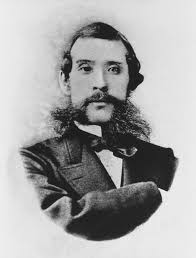
Home minister Toshimichi Okubo (photo at left) kept a residence near Shimizudani Park and was assassinated by former samurai on Kioi-zaka on May 14, 1878 (Meiji 11) — the Kioi Incident. Ten years later, Okubo’s “colleagues” Sutetsuzo Nishimura (later first Keihokyoku director of the Home Ministry, Okinawa governor, vice-minister of Agriculture and Commerce), Yukiyasu Kanai (later Genroin councilor, House of Peers) and Shigeru Narahara (later House of Peers) and others
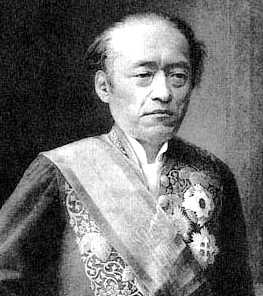
raised a memorial to “the late Minister of the Right, Lord Okubo” in Shimizudani Park (top photo). On Kuichigai-zaka, linking Kiinokuni-zaka and Kioi-zaka, an attempt on Minister of the Right Tomomi Iwakura (photo at right) in 1874 (Iwakura was lightly wounded) — the Kuichigai Incident — also took place.
Both belong to the unsettled years around the Satsuma Rebellion. That such violent affairs happened so near the “temporary palace” is still startling.