

I went to see the well-known Disney hit now in theaters, “Frozen.” It was full; I waited one showing.
Then I saw the stairs and it clicked. Are they not just like Palaceside Building’s “Dream Stairs”? Forgive a little home cooking. Without spoiling the story: Princess Anna (lower right in the photo above) visits the ice palace of her sister Elsa, the Snow Queen (upper left in the same). The stairs have no posts and float in midair
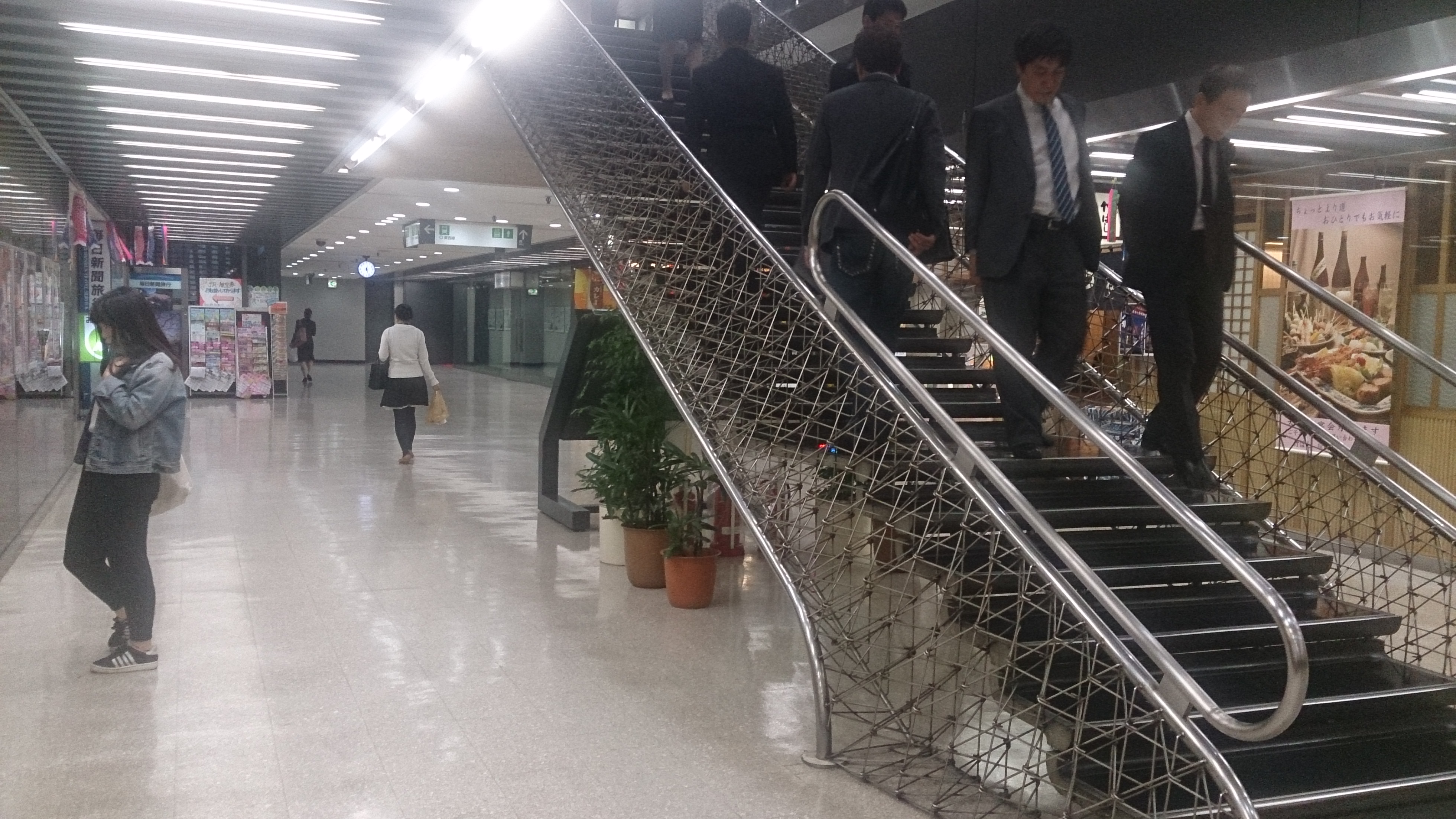
. The scale differs, but the image is exactly the “Dream Stairs,” isn’t it? (photo at right)
“Frozen” has, or is about to, pass 10 billion yen at the box office. It is a well-made film. Pixar Animation Studios, which made it, was bought by Disney in 2006 and is known for distinctive CG in the “Toy Story” series and “Up.” “Frozen” has a dynamic story; I was impressed. The popularity is understandable.
A contrary note, though: it is almost too pretty. Compared with hand-drawn animation, it still feels short of warmth.
So I prefer Ghibli. Disney itself produced many classics: the princess films such as “Cinderella,” “The Lion King,” “Aladdin,” “Beauty and the Beast.” After the Pixar purchase, Disney’s hand-drawn “The Princess and the Frog” (U.S. 2009, Japan 2010) was well reviewed but fell short of box-office hopes, and the next, “Winnie the Pooh” (U.S. and Japan 2011),
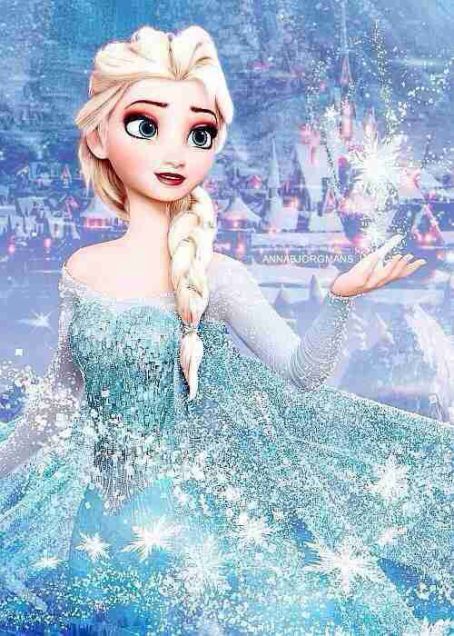
though a 110th-anniversary work for Walt Disney’s birth, flopped commercially. Since then there have been no hand-drawn Disney features.
I am not saying CG is lazy. As in the photo at left, the snow crystals in “Frozen” are said to number 2,000 types, each a different shape — a great deal of work. I do not mean to carp at that spectacle.
Still, I worry that this explosive commercial success will push hand-drawn animation further away. Once a technique is lost, I fear it may never return.