
On February 26 this blog noted that Mitsui Fudosan’s Nihonbashi Regeneration Plan in Tokyo’s Nihonbashi keeps producing buildings under the COREDO name.
COREDO is, strictly, the name of the commercial facilities, not the buildings. COREDO Nihonbashi, on the old Tokyu department-store site at Nihonbashi crossing (2004), is the Nihonbashi 1-chome Building; COREDO Muromachi, finished in 2010 opposite the Mitsui Main Building, is the Muromachi East Mitsui Building. COREDO Muromachi 2, opened in March, is the Muromachi Furukawa Mitsui Building; COREDO Muromachi 3 is the Muromachi Chibagin Mitsui Building.
Names of this sort of building and mall vary; I looked up what they mean.
COREDO joins English “core” with “Edo.” The wish, they say, is to make Nihonbashi a new center of Tokyo.
In the same Muromachi district, along Chuo-dori next to COREDO Muromachi, YUITO has also opened. The building is Nihonbashi Muromachi Nomura Building — a Nomura Real Estate property. The sibling YUITO Annex is
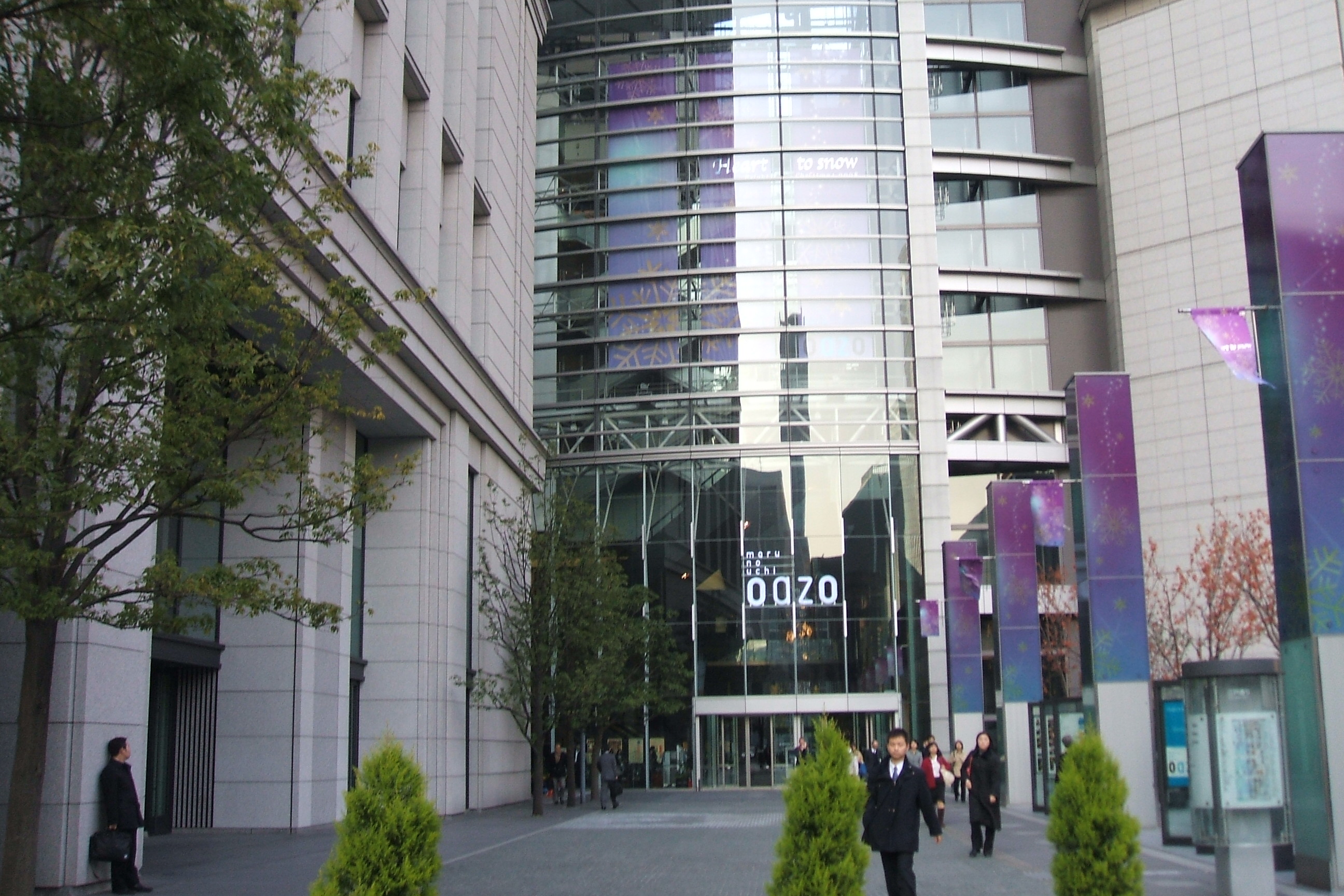
the Ukiyo-koji Sembikiya Building. The concept is said to be “a capital that ties you to a special time” — “yui” (to tie) plus “to” (capital).
OAZO, right in front of Tokyo Station in Marunouchi (photo at right), is the collective name for the Nissay Marunouchi Building, Marunouchi Center Plaza, Shin-Marunouchi Center Building, Marunouchi North Exit Building, Hotel Marunouchi and the commercial part (OAZO Shop & Restaurant). The name is an “Office & Amenity ZOne” that comprehensively (AZ) links the Marunouchi district (the circle = O) and Otemachi (O). It also includes Esperanto “oazo,” meaning “oasis, a place of
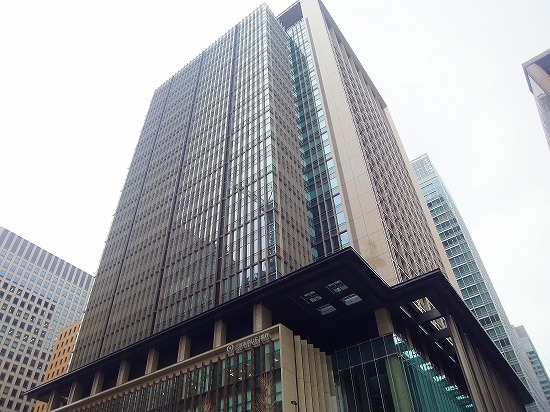
rest.”
iiyo!!, adjoining OAZO to the north (photo at upper left), is the commercial zone of Marunouchi Eiraku Building, a unified rebuild of three towers: the Togin Building, Sumitomo Trust Tokyo Building and Mitsubishi UFJ Trust Tokyo Building. The B1 dining zone of nine restaurants themed on safety, local production and local food culture is “iiyo!! yokocho.” Besides the plain meaning “good,” it plays on the lot number “Marunouchi 1-
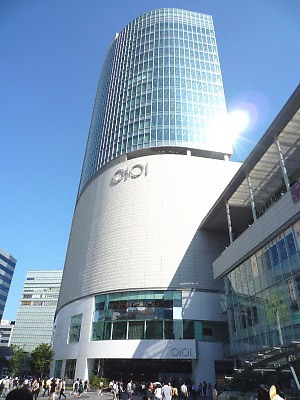
chome 4-banchi.”
ITOCiA in Yurakucho (photo at lower left) is a nickname from “itoshii” (dear) plus “-ia” (a place-name ending). A feminine name.
akasaka Sacas, the mixed redevelopment around the TBS broadcast center in Akasaka — with which The Mainichi Newspapers has a cooperative relationship — turns Sacas Plaza into a skating rink in winter and drew crowds at night as well (top photo; skating has now ended). The name comes from planting about 100 cherries in the area, “to make people’s smiles bloom, and dreams bloom, with the cherries.” It also nods to the many slopes nearby — Sanbun-zaka, Yagen-zaka, Tango-zaka, Hikawa-zaka — “saka-s,” and reversing the letters gives “saca saka saka” = “slope, slope, slope,” which is no accident.
Building names around the country are many; I will report more another day.