
Tomorrow, Friday, April 4, and Monday the 7th, a blood-donation bus will take donations in front of Palaceside Building’s west entrance (photo below is last September).
According to the Tokyo Red Cross Blood Center, donations fall every April — perhaps because transfers unsettle routines — and blood stocks drop nationwide. It is quite a pinch.
Recent donations are as a rule 400 ml. Even within the same A or O type, blood differs slightly from person to person; the more donors a transfusion draws on, the higher the chance of side effects (fever, rash and so on). The aim is to use blood from as few people as possible.
Some people, unfortunately, cannot donate. The main cases include: past transfusion or organ transplant; within four weeks of returning from overseas; a stay of six months or more in designated European countries between 1980 and 2004 (periods and countries vary); dental treatment with bleeding in the past three days; and taking certain medicines.
On medicines, limits on blood-pressure drugs have recently eased; two or more are now acceptable (no cardiac or other complications, and blood pressure roughly in the normal range). Drugs that may be taken on the day include (1) vitamins (except anemia treatment with vitamins), (2) mineral agents (except iron for anemia), (3) Kampo (except for liver disease, colds, asthma and the like), (4) non-steroidal antiallergics, (5) antihistamines, (6) lipid-lowering drugs and (7) gastrointestinal drugs. Many people have hay fever; if the product does not contain Celestamine components, donation is generally possible. Ask at reception or the interview on the day for details.
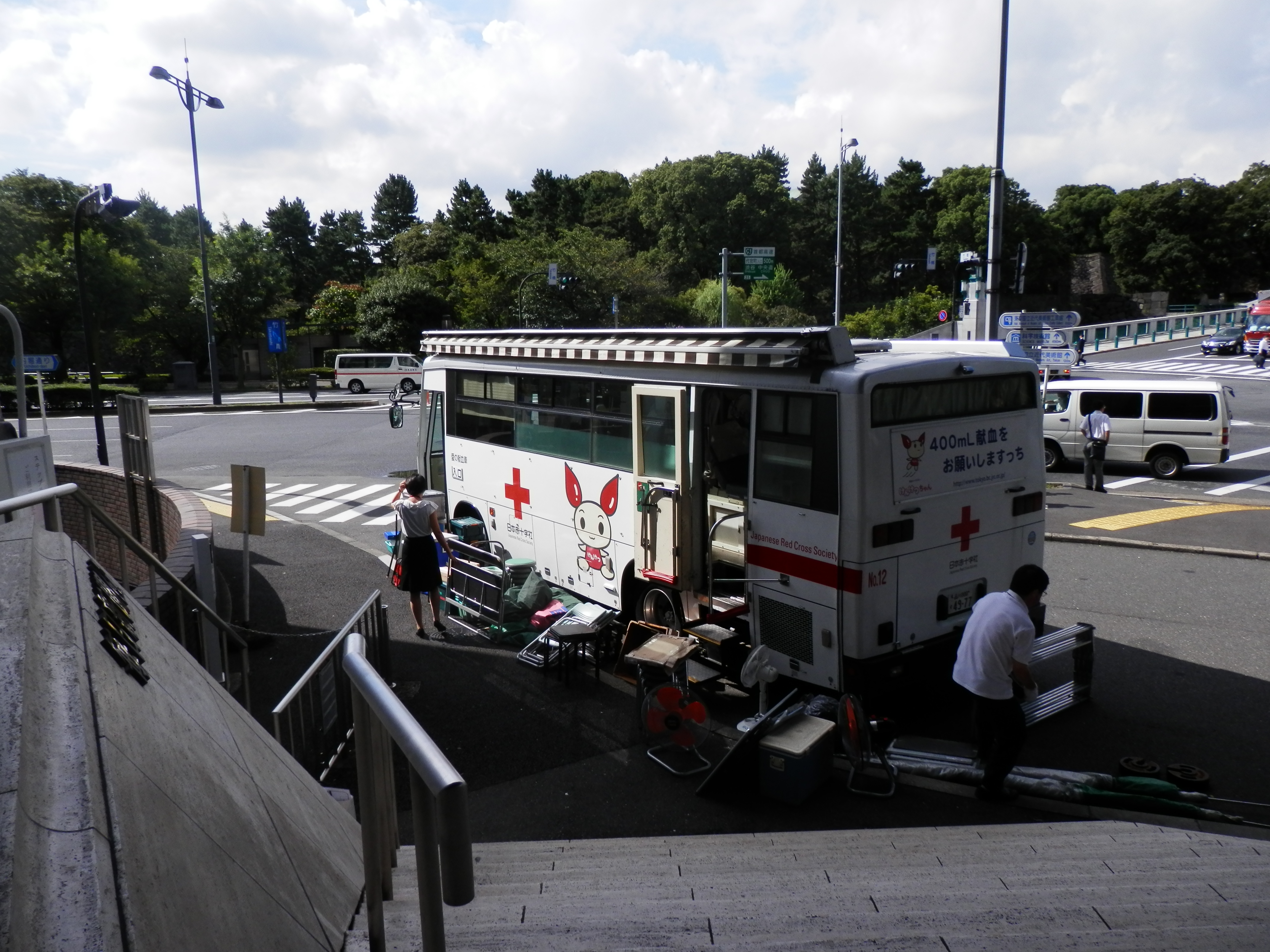
The Red Cross asks morning donors to “have breakfast (a light meal is fine)” and asks all donors to “get at least four hours of sleep.”
Past donors should bring a donation card or booklet; others should bring ID (a staff pass is fine).
On both the 4th and the 7th, reception is 10:00–11:00 and 12:15–16:00 at a desk just inside the west entrance on the left (closed 11:00–12:15). The draw itself takes about 10 minutes; with the doctor’s interview the whole visit is 30–40 minutes.
Palaceside Building holds a drive once or twice a year; usually about 60 people come. The target this time is 80 each day (the most that can be seen if people arrive without a break). Those in the building and nearby, please help.