

Last weekend at my child's elementary school (Setagaya Sasahara), dads' club members steamed rice and cheered kids pounding mochi in the snow.
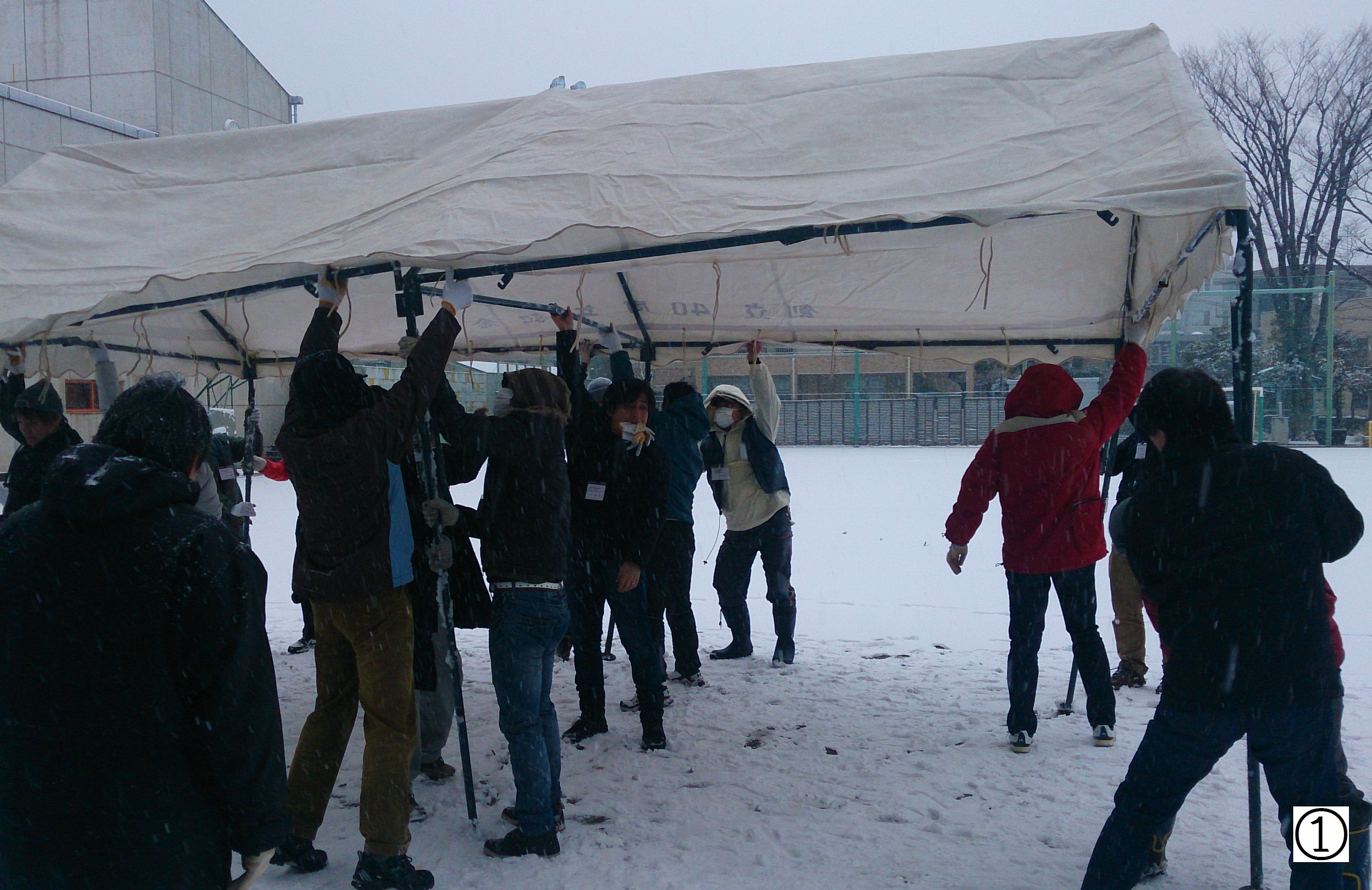
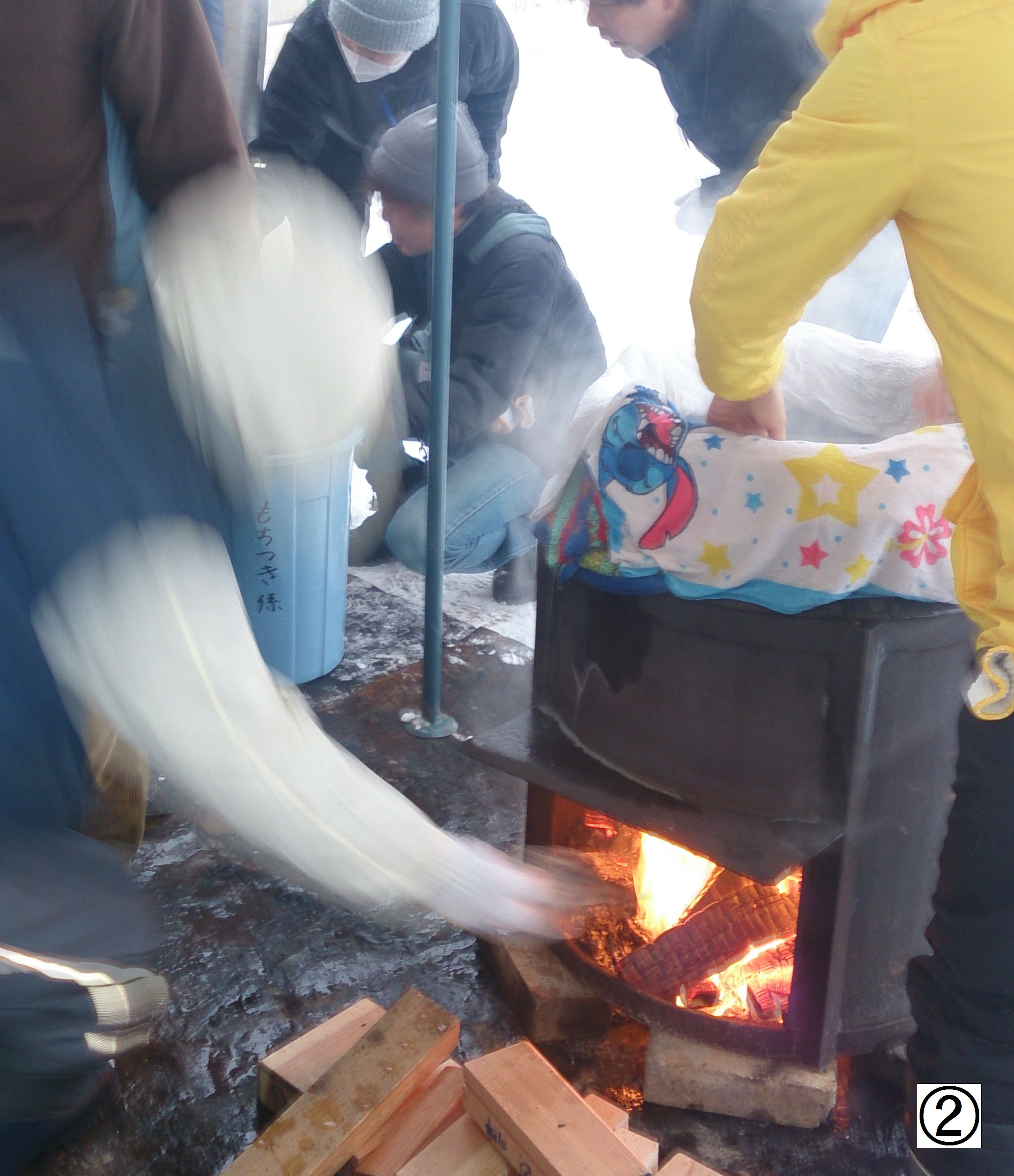
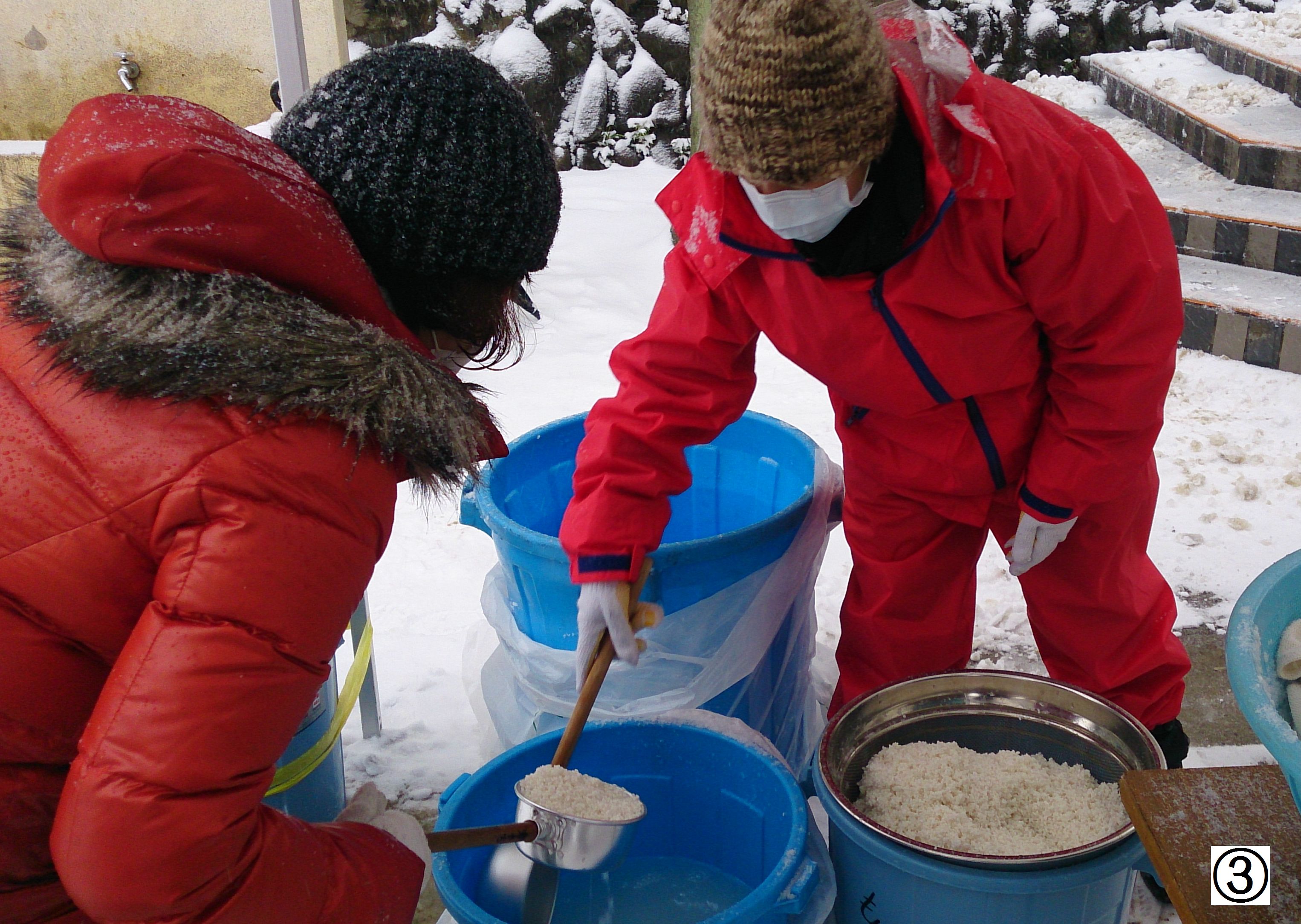
Less flashy than the "dondo-yaki" I wrote about, but prep is heavy. Gather 2.5 hours before at 7 a.m. Mission: steam glutinous rice with kerosene boilers and wood kilns by the gym. Heavy snow meant extra tent setup =photo 1. Set boilers and kilns, light fires =photo 2, fill tanks and pots, boil. Steam by 8 a.m. Moms drain rice soaked overnight
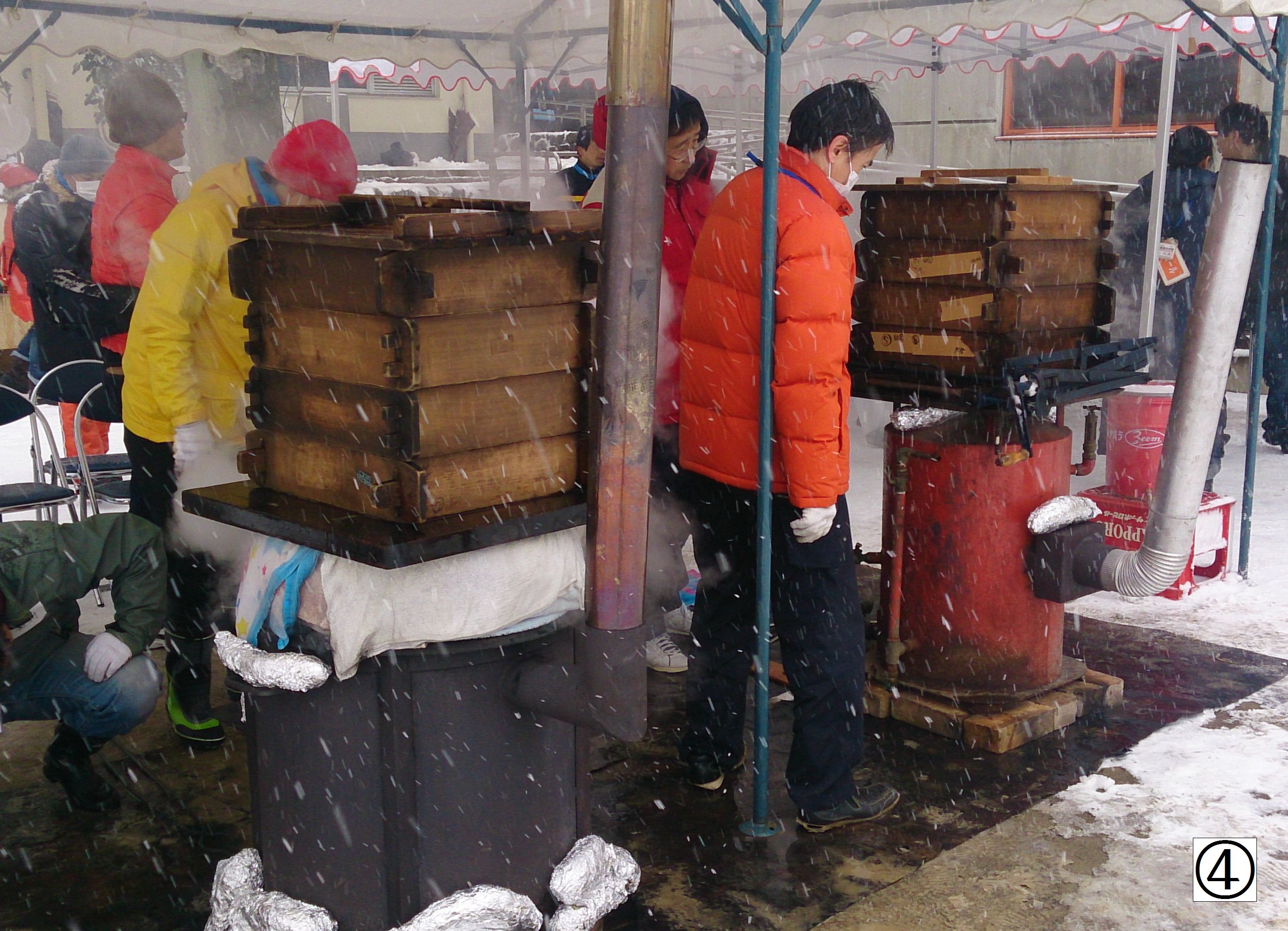
the soaked glutinous rice was drained, =photo 3, load steamers on boilers/kilns, steam over an hour. One steamer per class (2–3 per grade), labeled with pound times, stacked 4–5 high =photo 4, fire watched in shifts. Done batches go to mortars; kids pound =top photo=—all ~350 students, five hits each; older kids wanted more.
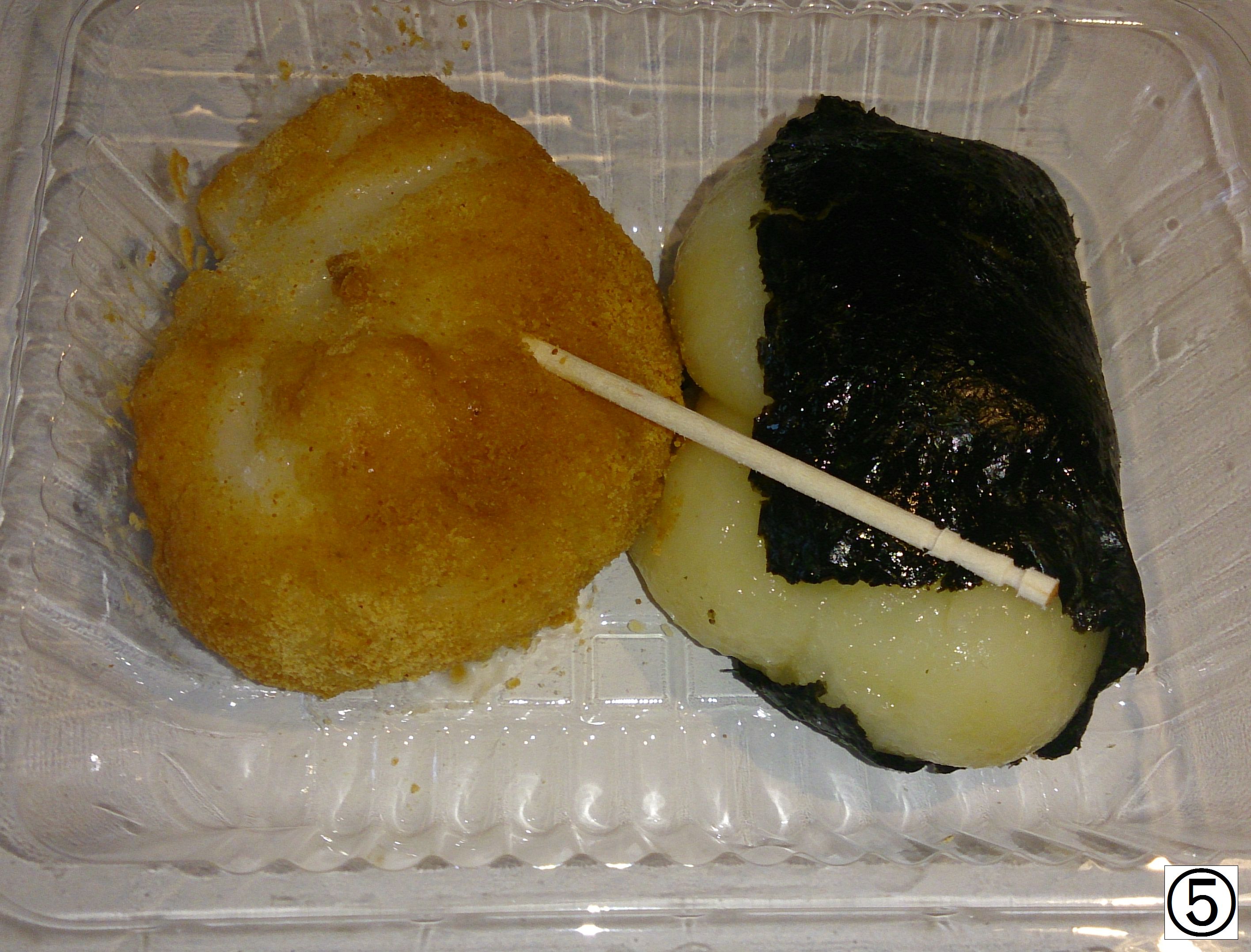
Finished mochi goes to moms for Isobe
rolls and Abekawa mochi. Dads ate too =photo 5. Fresh mochi—delicious!
Last November the Japan Mochi-Pounding Association (Chiyoda office) launched to spread and pass on this tradition—events like this matter.
Writing this, I thought I should learn about mochi. As a child, mochi was only for New Year—
precious and special.
Their site has "Mochi Basics" (http://餅つき.com/page-35)—a brief intro.
"Mochi was originally for New Year and festive 'hare' days. Seasonal festivals—Setsubun, Doll Festival, Boys' Day—also featured mochi; Obon, equinoxes too. Passed down as essential culture... Rice arrived from Southeast Asia in late Jomon; red, sticky varieties...
Mirror mochi from Heian made mochi indispensable for rites and celebrations; Muromachi tea ceremony used it as sweets. Today we still eat mochi at New Year and seasonal turns as lucky food... Pounding was a key New Year prep in year's last days—but avoid Dec 26 ('nothing good') and 29 ('suffering')."
In central Chiyoda near Takebashi, "dondo-yaki" is hard as I wrote, but some schools pound mochi—often as neighborhood events; all 386 Sasahara students pounding seems rare.