
I saw "Great Dinosaur Exhibition—Wonders of the Gobi Desert" at the National Museum of Nature and Science in Ueno Park. My child wanted to go—"fine, why not"—but it impressed adults too.
Mongolia's Gobi Desert is a "holy land" for dinosaur digs. Dry sand layers preserve joints intact—beautiful fossils keep turning up. Amazing that 90% of 100+ items are real Gobi fossils, not replicas. (http://ueno.keizai.biz/headline/1422/)
Skeletons big and small fill the hall—especially the ~70-million-year-old carnivore Tarbosaurus photo upper left and herbivore Saurolophus same right—both over 10 meters. Real specimens overwhelm.
Tarbosaurus resembles T. rex—closely related, living in North America at the same time. Late Cretaceous
period—one evidence that dinosaurs crossed the Bering land bridge between North America and Asia.
A juvenile Tarbosaurus (2–3 years, 2m long) is also shown—best-preserved tyrannosaur child fossil worldwide; seeing how it grows to 10m is a highlight.
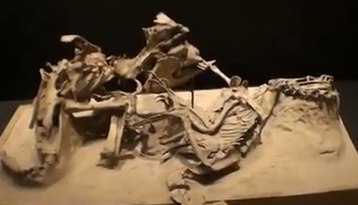
There's even a "fighting fossil"—two species entangled, caught in a sandstorm while battling =photo upper.
Too much to cover; eggs and babies caught my eye.
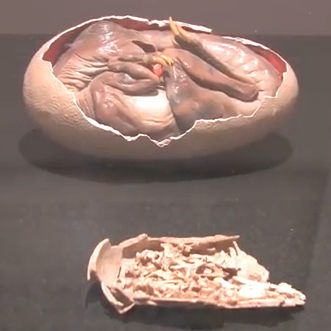
Oviraptor means "egg thief"—found brooding eggs thought to belong to another species. Later, a pre-hatch egg =photo left front, reconstruction rear—proved the eggs were Oviraptor's; cleared of wrongdoing, praised as caring parent. Scientific name still says "thief."
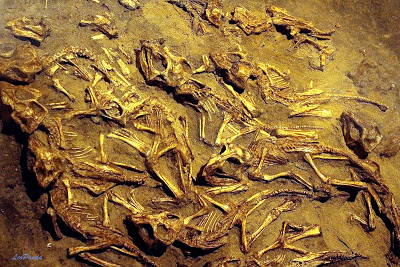
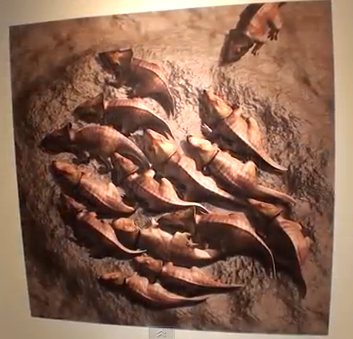
Also 15 Protoceratops babies photo upper right. Died together in a sandstorm—palm-sized; reconstructions photo lower right= are adorable.
Bones too lively for fossils—no wonder experts call the Gobi sacred and keep digging—I
understand a little.
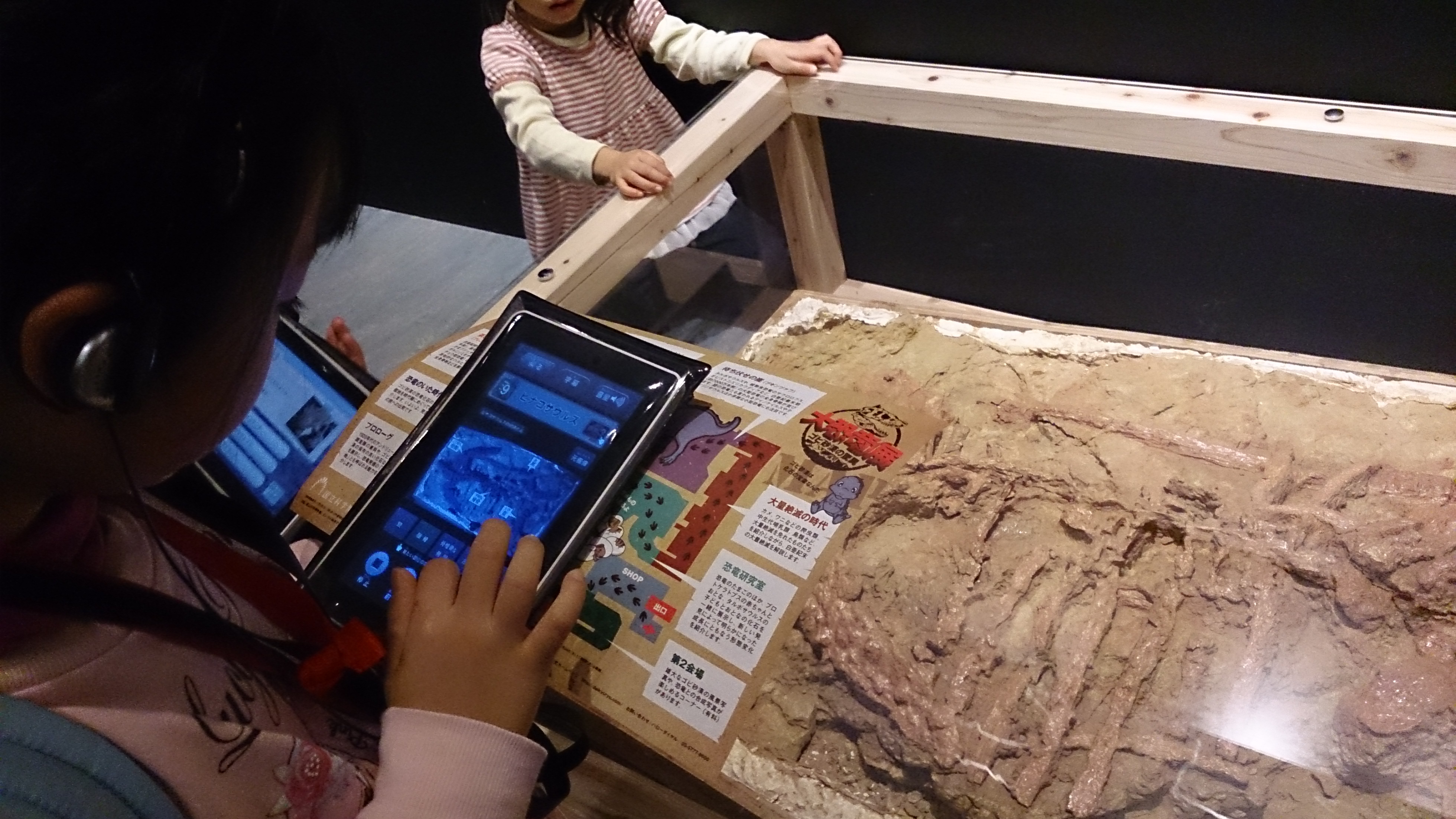
Guides include tablet-style iPads (¥500) =photo lower. Audio and images; kids enjoy quizzes (adults too). Kids handled them well—strange times, I oddly agreed.
Exhib
ition runs through Feb 23—hurry!! Hours 9–17, Fridays until 20:00—stop by after work from Takebashi. General ¥1,500; students ¥600.