

Today the 15th is Little New Year (from sunset on the 14th to sunset on the 15th, or sometimes the three days 14–16). The traditional rite is "dondo-yaki."
"Dondo-yaki" may originate in Heian court rites; Kyoto calls it "Sagicho," with regional variants—but "dondo-yaki" is the most popular name nationwide. New Year
pine
decorations, shimenawa, calligraphy and more are gathered, stacked and burned, praying for health, harvest and household safety—warming by the fire or eating grilled dumplings is said to keep you well all year. In Chiyoda Ward, home to Palaceside, I searched but found no sites—downtown can't handle fire, perhaps. Not as a substitute, but here's my hometown elementary
school's event.
At Setagaya Sasahara Elementary, it's held the second Saturday of January each year. Bamboo is
supplied by a grove; large bamboo from Tokyo University of Agriculture's festival stage (also cut from their grove) is donated; an "Oyaji no Kai" (fathers' club) OB arborist volunteers to lead—plus neighbors' understanding.
At 8 a.m. fathers assemble; the arborist brings 15-meter bamboo cut that morning
large bamboo
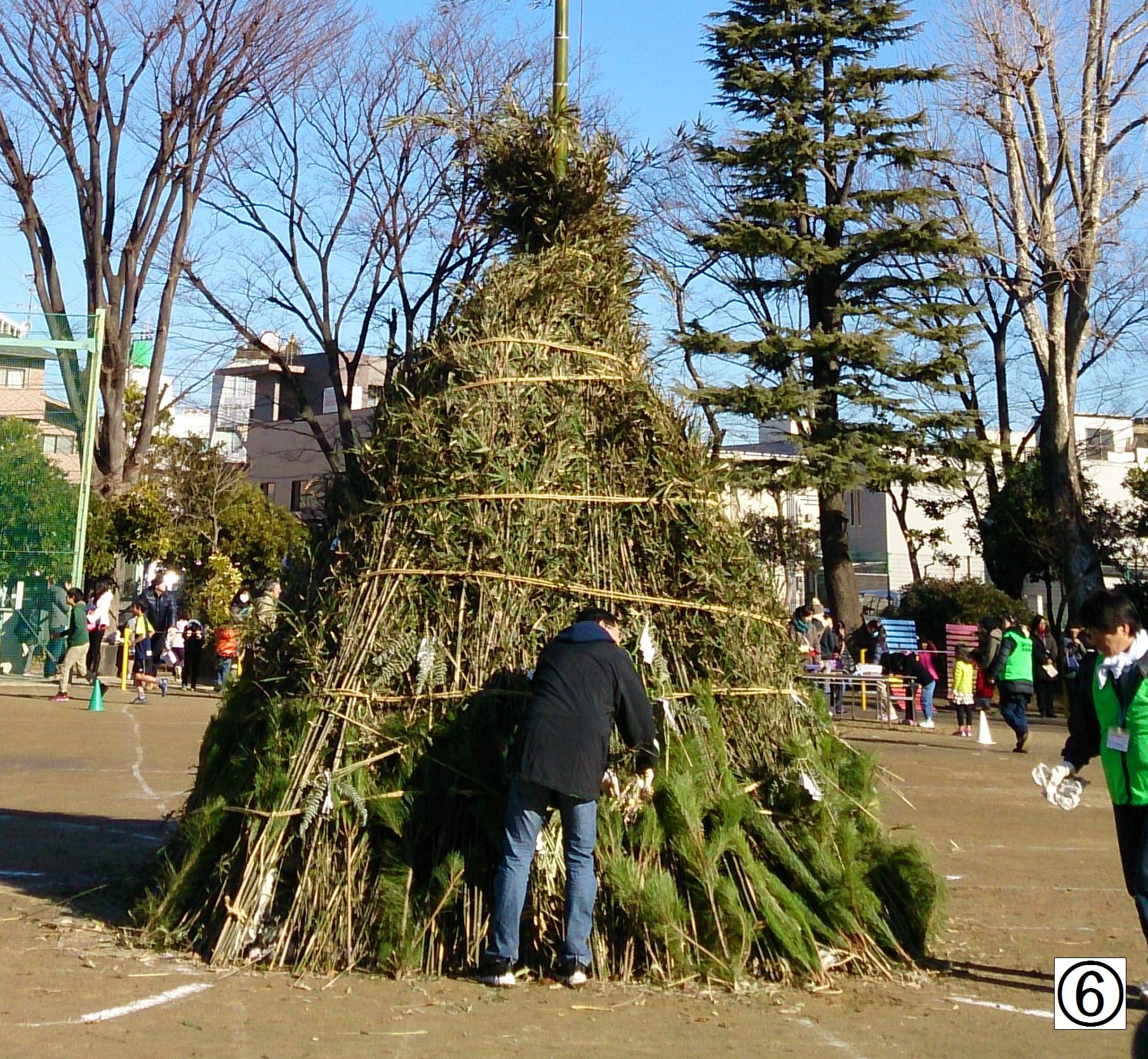
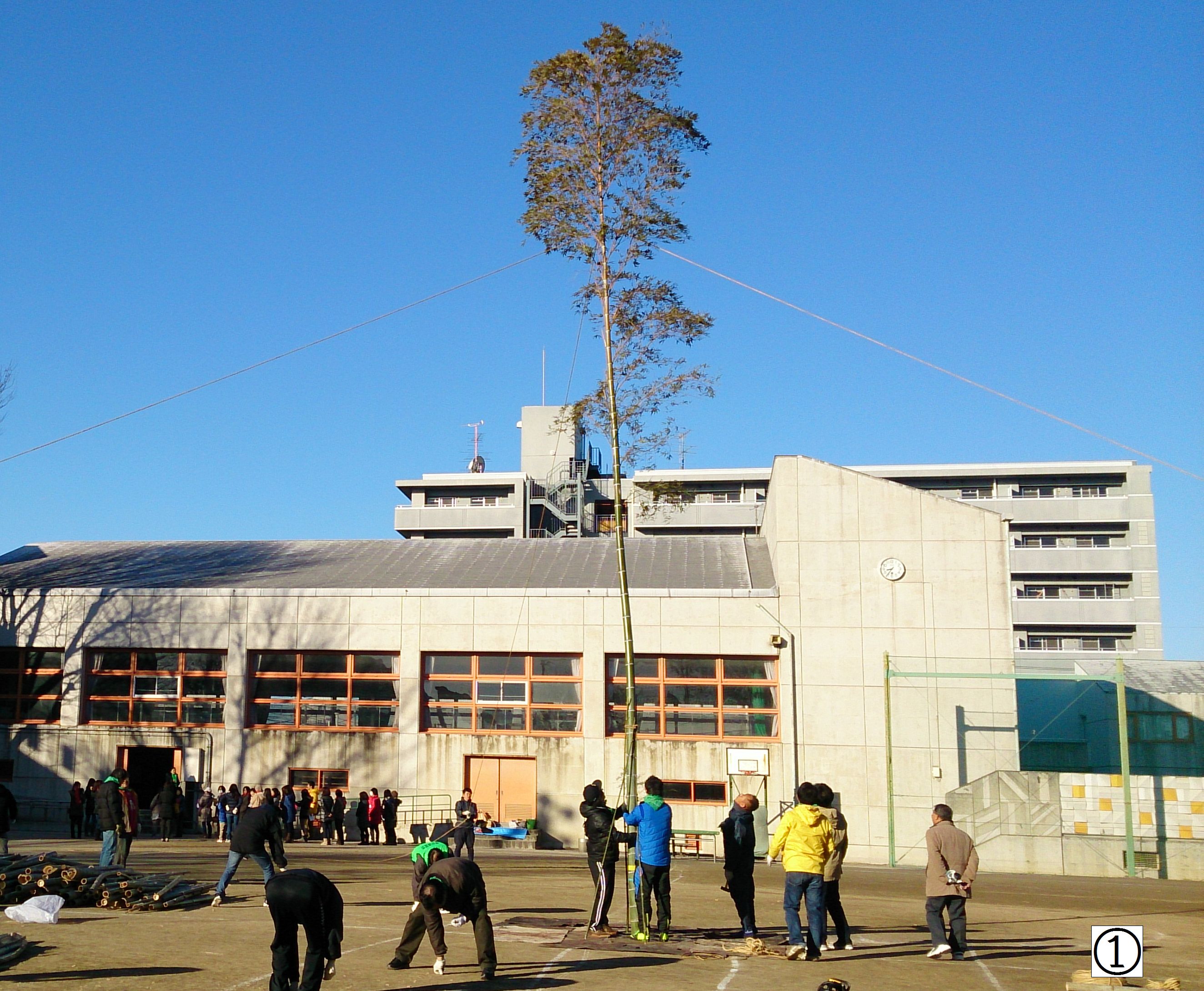
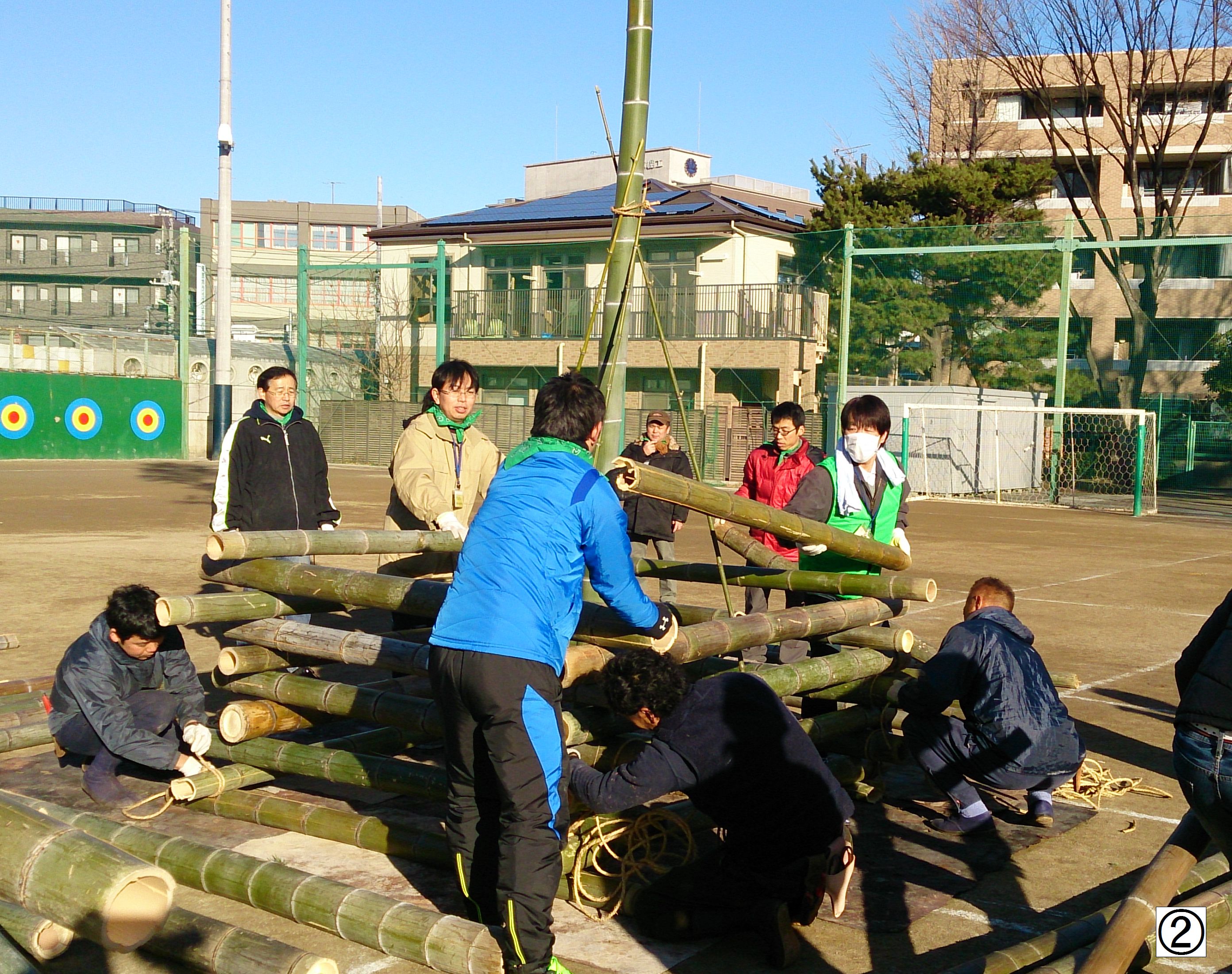
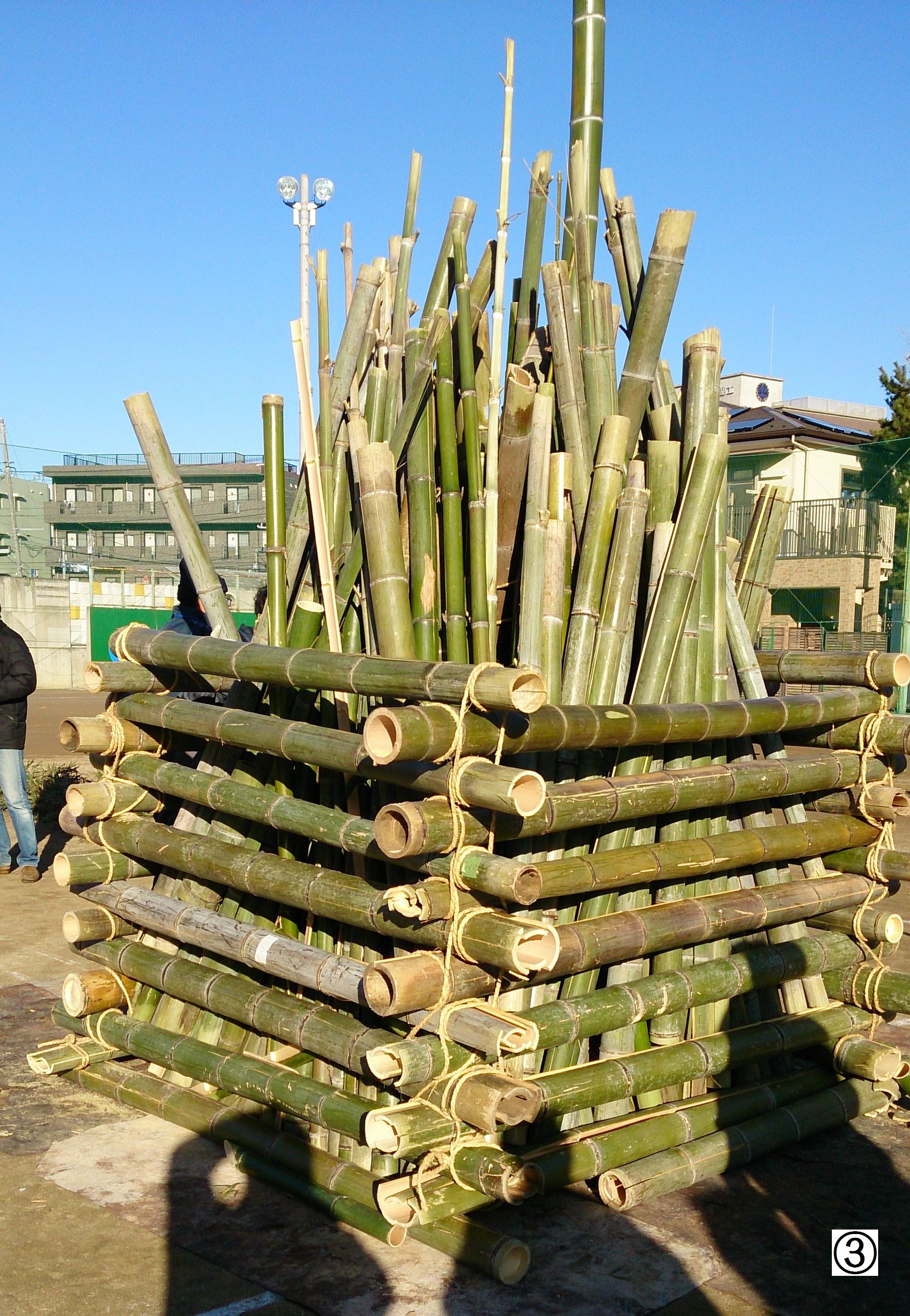
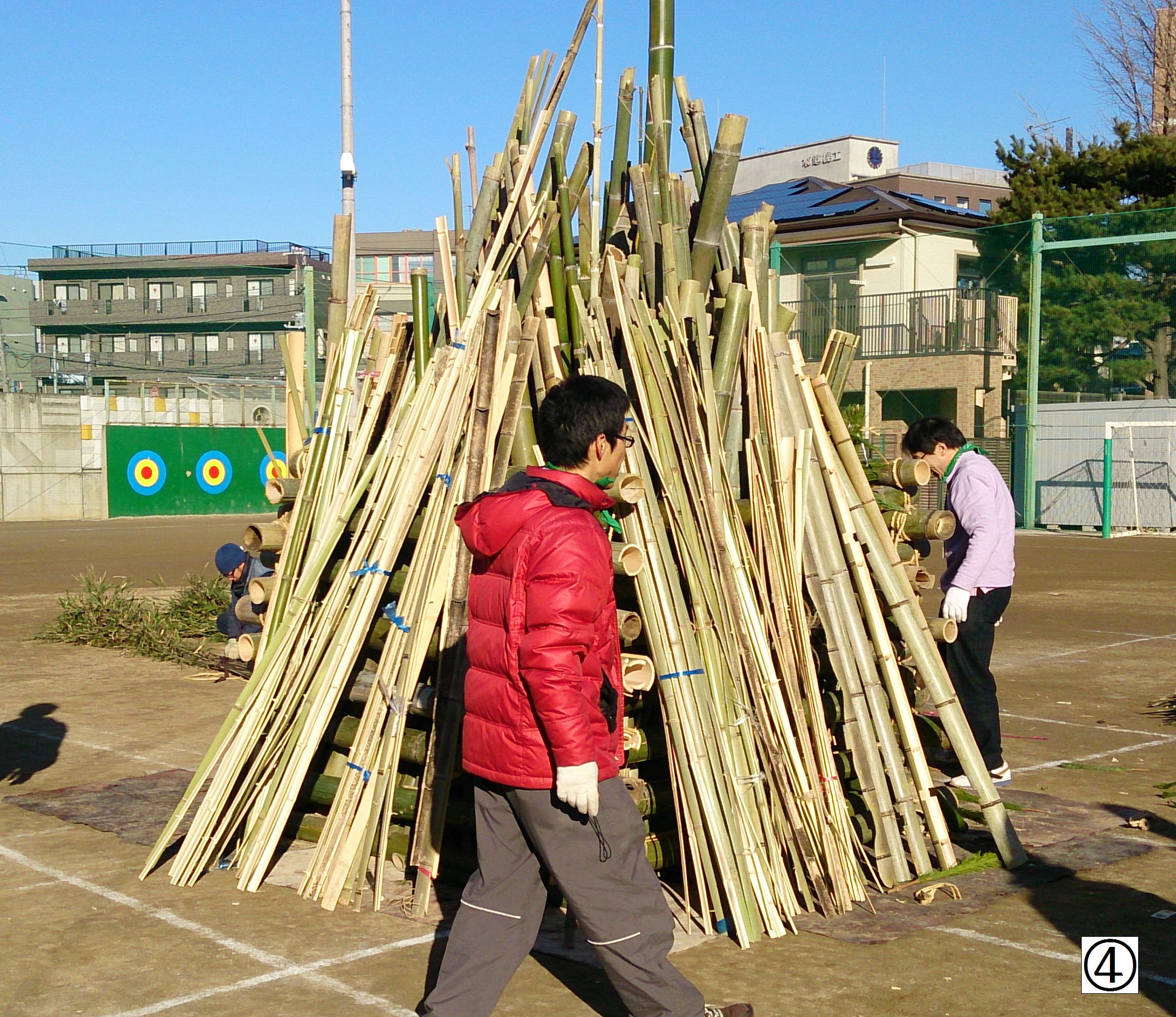
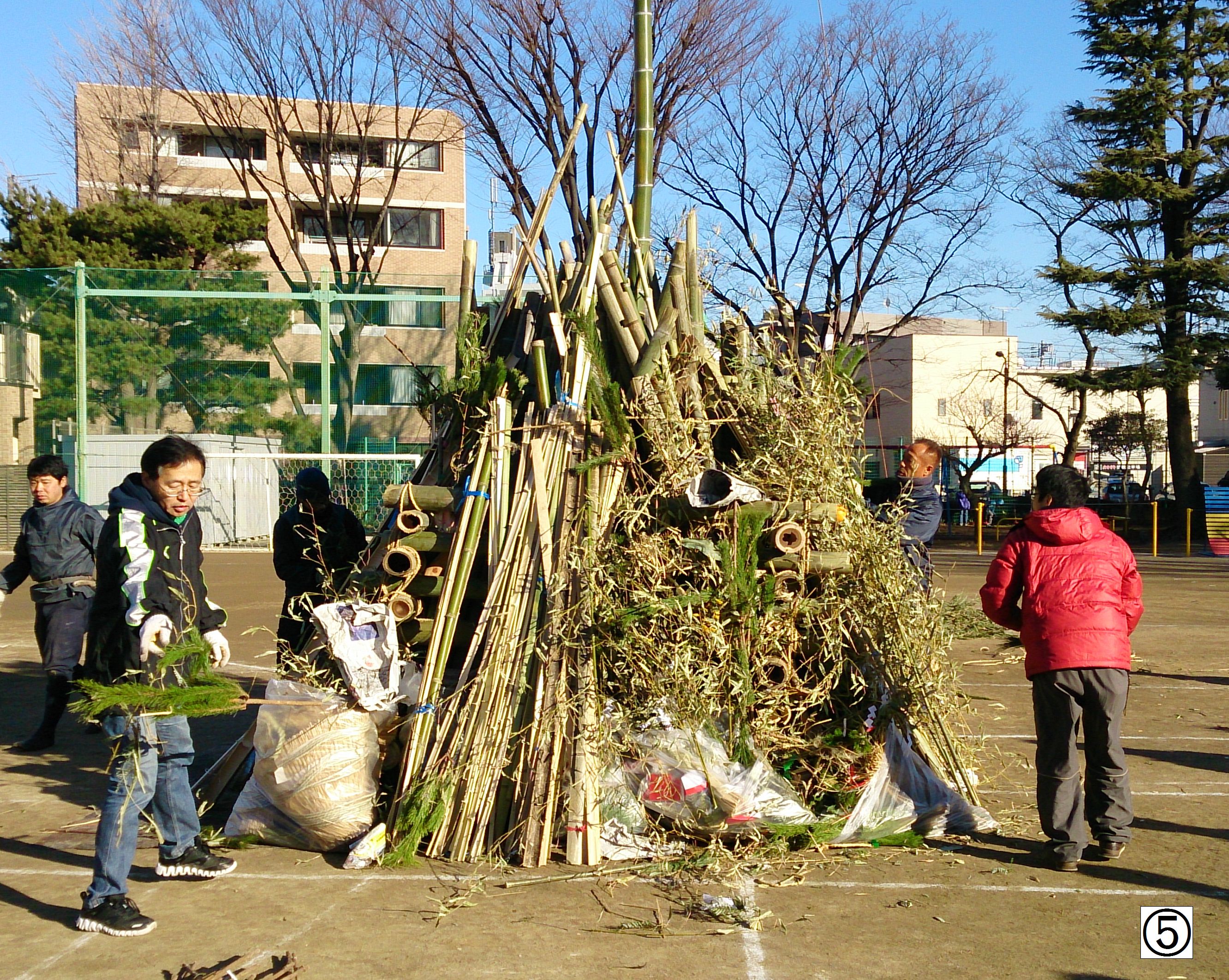
is carried in and fixed from three sides with rope=photo 1. Next, a frame of ~10 cm diameter, ~2 m bamboo is built around the upright=photo 2, gaps filled with leftover bamboo=photo 3, more bamboo leaned around=photo 4, pine and shimenawa placed in gaps=photo 5, then wrapped neatly in bamboo leaves—done=photo 6. Beautiful—the arborist's aesthetic, no?
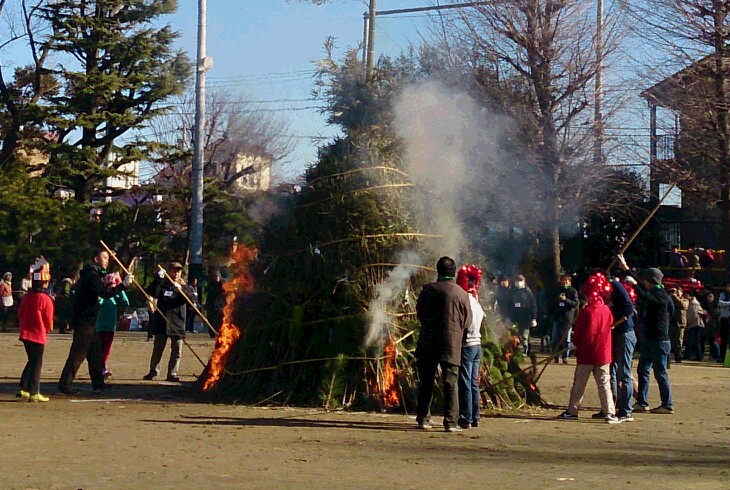
Finally a student representative lights it=photo right. Flames shot up at once—top photo. Usually fire climbs the full 15 m center pole, but this year it snapped before upper leaves burned fully—a pity.
Last comes the dumplings kids await. Mothers kneaded,
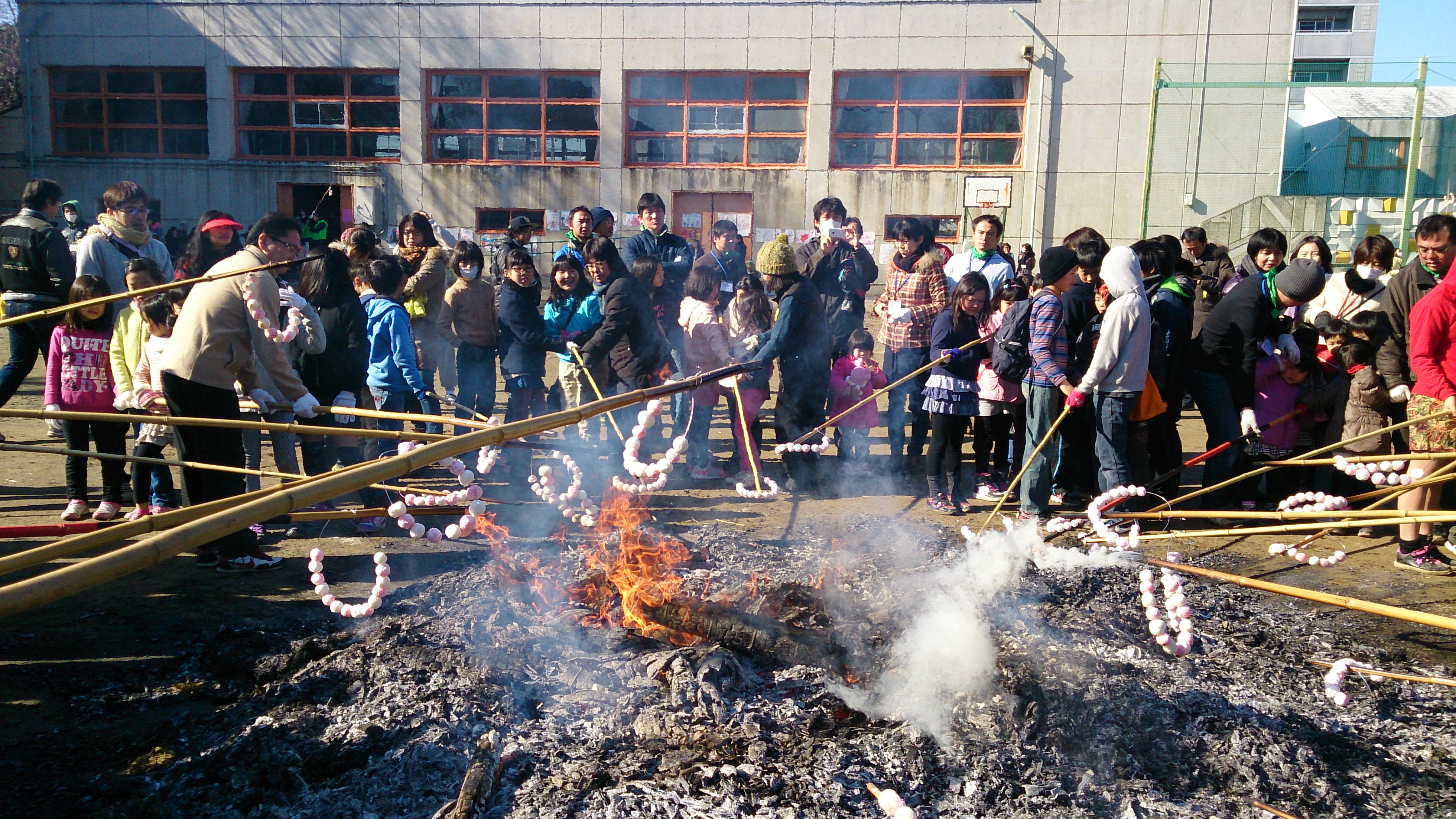
rolled, steamed them. Threaded on wire on ~2 m poles over the embers—still hot below, faces red, cheers as they grilled=photo left. Fire is hot—obvious, but vital for kids who rarely see bonfires today.