

Recently this blog noted Iwanami Shoten's centennial; many "△※▼ anniversaries" dot this year. Apologies for a year-end post—on 70 years since student mobilization.
In Oct 1943 the Hideki Tojo cabinet ended deferment for university students. Mainly liberal-arts students; on Oct 21 a massive send-off was held at Meiji Jingu Outer Garden Stadium=photo upper—Keio students' column. Total mobilized students exceed 100,000, but exact numbers and deaths are unknown. Some graduated early and were drafted before this—broad "student mobilization" remains unclear.
Milestone year brought many media specials. One, Mainichi's "Exploring Modern History"
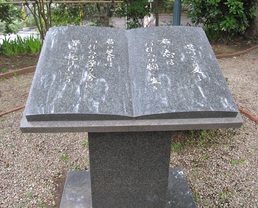
series (Nov 12 morning edition) reported only about 20 universities have memorials—Otaru Commerce, Fukushima, Hitotsubashi, Waseda, Toyo, etc. Keio, at former student-soldiers' request, erected "Memorial to Classmates Who Did Not Return" on Mita Campus in 1998=photo right= at former student-soldiers' request. Then-president Torii Yasuhiko noted persistent campus caution: "Many universities struggle to build monuments. A view remained that anyone who joined that war was bad. Japanese war and aftermath were clumsy."
Verification continues. Tokyo University History Archives researched 1993–97 and published "Tokyo University Student Mobilization" in 1997. Keio emeritus Shirai Atsushi (83) surveyed 1,700 OB with students during his professorship, having experienced the war together;
published 2,165 war-dead names in 1999 and 2,224 in 2005 through surveys, family interviews and archival work.
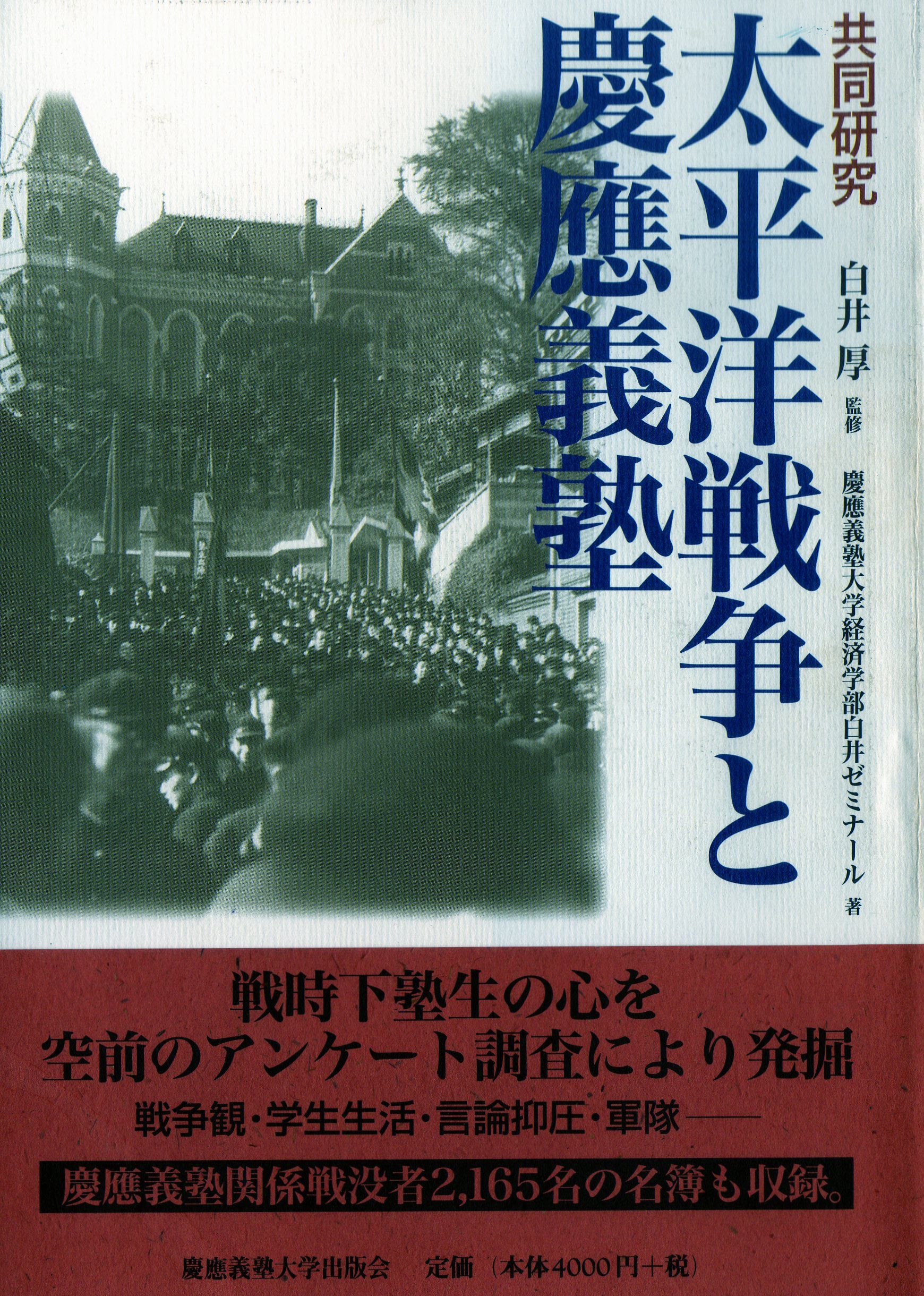
The Shirai seminar published "Keio Gijuku and the Pacific War" (Shirai, ed., Keio University Press, 1999)=photo left=.
This book links to the Dec 24 Iwanami post—1937 Army Officer School textbook "History of Our Country" harshly criticized Fukuzawa's "Encouragement of Learning" for the same reasons as Iwanami censorship (Nankou Kensuke-ron). The textbook reads:
"This is the doctrine of liberty and equality; carried to its end, ruler-subject relations become merely expedient and based on utility... From this utilitarian view, Masashige's loyalty and the Ako ronin are naturally values overturned at the root."
A column in "Keio and the Pacific War" (pp. 22–23) explains:
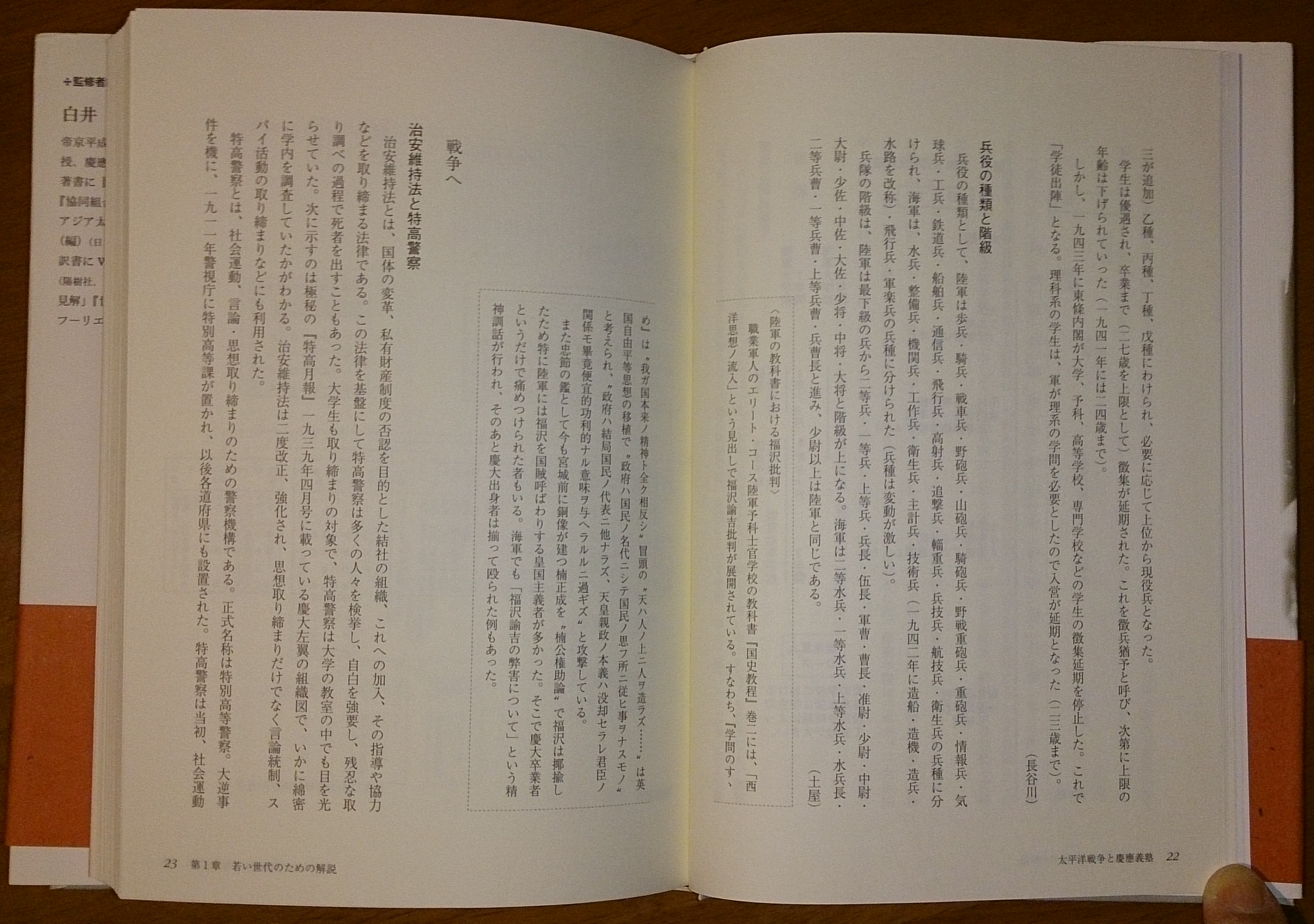
"Many in the army called Fukuzawa a traitor. Keio graduates were mistreated for that alone. The navy held lectures on 'harm of Fukuzawa Yukichi'; Keio men were lined up and beaten."=photo left. Today army criticism might be "honor," but thinking of those unjustly beaten fills me with pain and anger.
This year made me think much about peace. I feel anew the preciousness of peace and duty to preserve it.