
Ten minutes from Palaceside Building at Takebashi, near Jimbocho Crossing behind Shueisha by the Salvation Army—a familiar Millet sower mark on Iwanami Shoten's headquarters plate.
Iwanami marks its centennial this year. As a neighbor, this blog planned a post and
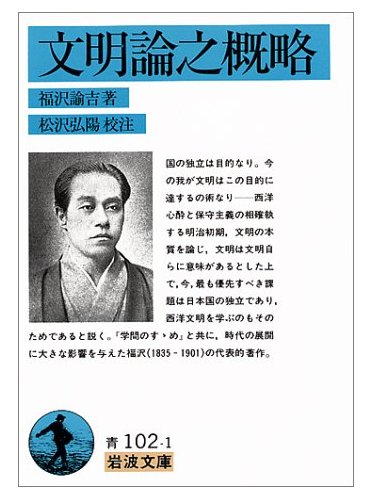
recalled wartime censorship deleting part of a classic—Fukuzawa Yukichi's "An Outline of a Theory of Civilization"=photo right.
Fukuzawa is famous for "Nankou Kensuke-ron," criticizing pro-imperial loyalist views on Kusunoki Masashige and comparing him to a servant hanged for losing his master's money. Maruyama Masao's "Reading 'Outline' Part 2" (Iwanami Shinsho)=photo lower= notes that from 1936 (Showa 11) some ten-plus lines in the paperback were entirely cut by censorship. Iwanami's "Fifty-Year History" records "next-edition revision—articles concerning the Imperial House."
The deleted passage reads:
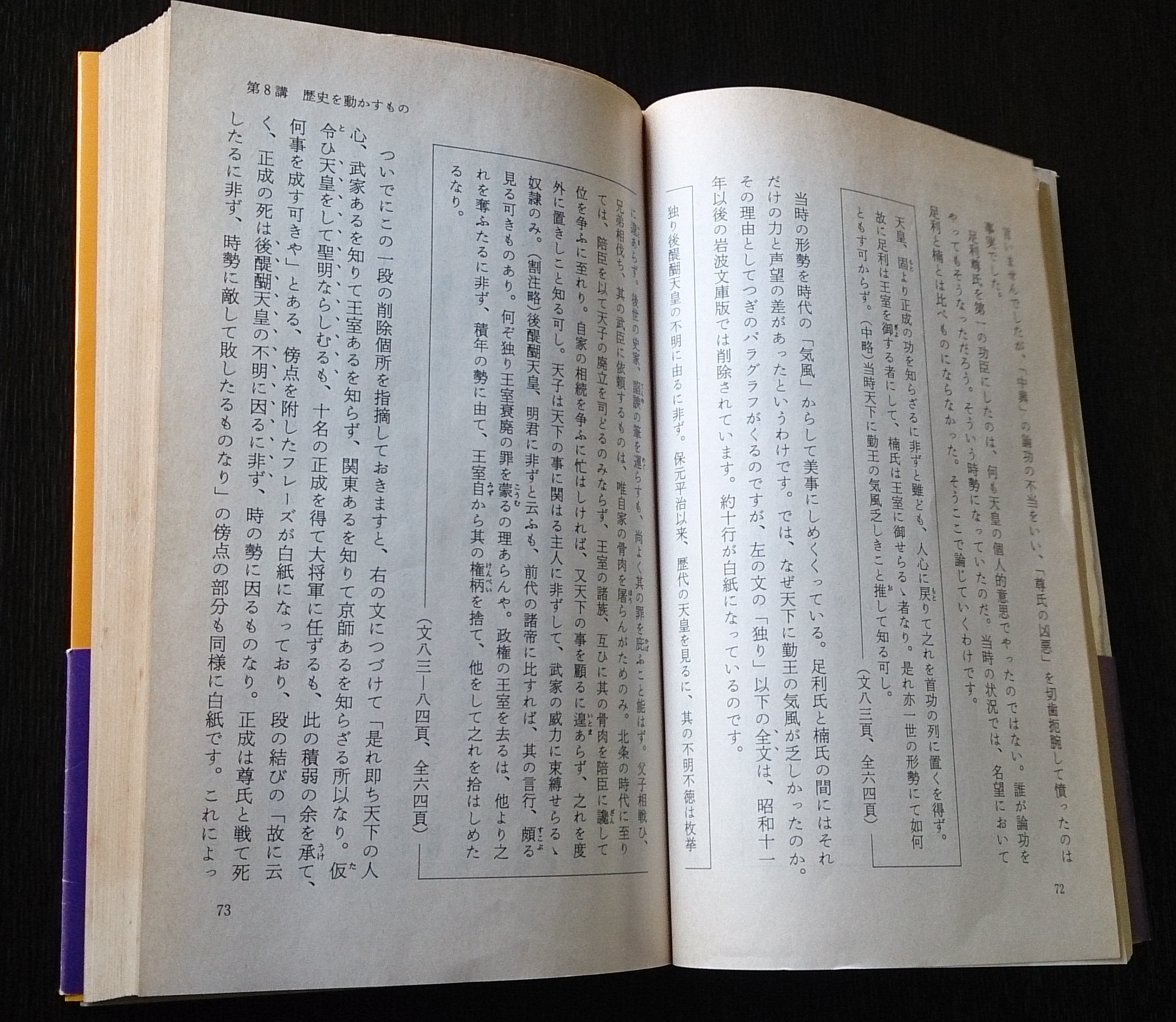
"It is not solely due to Emperor Go-Daigo's incompetence. Since Hogen and Heiji, successive emperors show countless failings; later historians wielding the brush of heaven's mandate can scarcely shield their guilt. Fathers and sons war, brothers clash; relying on military retainers only to slaughter kin. By the Hojo era, vassals controlled enthronement and deposition; royal kin slandered one another through vassals for rank. Busy fighting over succession, they had no leisure for state affairs—this is clear. The emperor was not master of the realm but a slave bound by warrior power. Go-Daigo was no wise ruler, yet compared with predecessors his conduct was worth noting. Why should the throne alone bear blame for decline? Power did not leave the throne because others seized it; long accumulation of force led the throne itself to discard authority and let others pick it up."
It reads like plain truth—what do you think? Maruyama notes censorship made discussing the emperor's virtue or lack thereof taboo.
"Outline" appeared in 1875 (Meiji 8). I admire how relatively free speech was around the Meiji Restoration.