

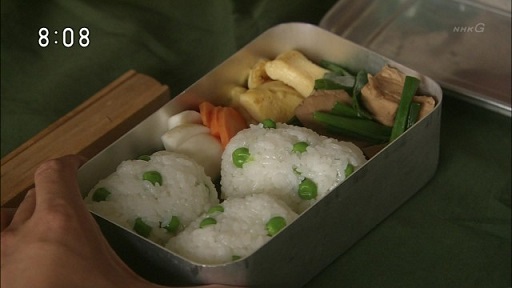
The triangular onigiri and bale-shaped omusubi featured in episode 40 of NHK’s serial drama “Gochisousan” seem to be trending online. The idea that onigiri must be triangular is not actually standard nationwide. In Kansai, bale-shaped omusubi are common, and triangular onigiri are used for Buddhist services and funerals. The Kanto–Kansai food culture gap — Osaka vs. Tokyo — always heats up.
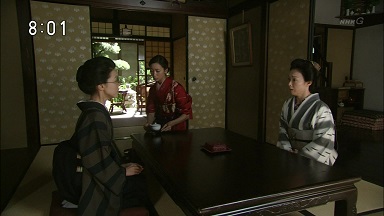
For those who have not watched “Gochisousan”: the story begins with Meiko (Anne), daughter of a Western-style restaurant in Tokyo, growing up healthy and strong. As a schoolgirl she packs different onigiri every day in lunch boxes for Yutaro (Higashide Masahiro), an Osaka-born University of Tokyo student boarding at her home — naturally, triangular onigiri. From episode 31 the two are already married and the setting moves to Osaka. Meiko, unfamiliar with local customs, makes lunch for her sister-in-law… The homeroom teacher comes to ask about the hidden lunch-eating at girls’ school =photo lower left, the fuss spreads, and in episode 40 the triangle and bale face off decisively.
Triangular onigiri for Buddhist rites; bale-shaped for everyday meals. Online, people are asking whether this Kansai custom is really true.
Palaceside Building has two convenience stores plus several eateries selling take-out onigiri, and the majority are triangular. Some convenience stores also stock bale (or rather square) onigiri at about 20 percent =main photo. But that does not mean Kansai convenience stores carry only bale shapes with no triangles, or that bale shapes dominate.
Convenience-store onigiri — with manufacturing systems and crisp nori — are systemically shifting toward tri
angles, though decades ago regional differences were sharper, or so they say.
A colleague’s Osaka-born wife says her grandmother’s onigiri were bale-shaped and she longed for triangular ones. Another male colleague in his 40s says at his Wakayama grandmother’s house he had eaten only bale-shaped onigiri. Some say bale shapes are rare even in Kyushu; where I lived, convenience-store onigiri were a compromise — 30 percent bale, 70 percent triangle.
East and west differ in soy sauce flavor too; in the drama Meiko was culture-shocked by soy sauce. Kyoto people often insist they should not be lumped with Osaka, and Hokkaido has its regional tastes as well.
The previous series “Jejje” also drew high ratings; in terms of buzz-making, NHK seems to be hitting the mark lately.