

November 8 was "Bellows Festival"—a traditional blacksmith's calendar event on old-calendar November 8. At Palaceside Building that afternoon on R floor before the boiler, we set an altar with sacred sake; building staff and contractors attended, all offering sakaki and praying for safety in the year ahead=photos top and bottom.
Bellows (fugo; also written 吹子) are indispensable for refining and working metal and starting fire—a simple human-powered blower. Records appear in Egyptian pharaoh tomb inscriptions and in the Nihon Shoki account of the heavenly bellows (ame no habuki) at the cave of heaven—used since antiquity. On old-calendar November 8, smiths, swordsmiths, and casters nationwide rested and visited Inari shrines for "Bellows Festival." Especially lively in Kyoto and Edo; also called Tatara Festival, Smith Festival, or Fire-Lighting Festival. Some areas observed December 8 or April 8. Trades using fire received ofuda, cleaned bellows, hung shimenawa, and offered sake and mochi. Tangerines were shared—eating them was believed to ward off colds and measles, beloved by neighborhood children.
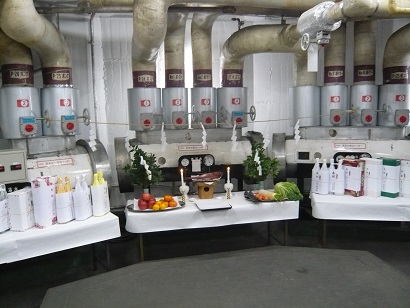
At Palaceside Building we also gave out tangerines to take home.
Bellows grew rare in the Showa era, but gratitude for fire carries over to caring for boilers. In Showa 11 the Steam Boiler Association set November 8 as Steam Boiler Festival; in Showa 24 the Japan Boiler Association made it Boiler Day, shifting from festive observance toward practical improvement of boiler equipment and operation centered on this date.
Some regions and workplaces still hold boiler festivals around this time—switching from cooling to heating, sometimes lighting the boiler after honoring the fire god. Boilers were the heart of building heat.