

I saw an unusual photo exhibition of nothing but sewer pipes in Jimbocho—10 minutes' walk from Palaceside Building. Rei Shirao's "Uro" at Jimbocho Gallery (1F Anno Bldg, 1-41-7 Kanda-Jimbocho, Chiyoda) until November 9. (Closed November 5.)
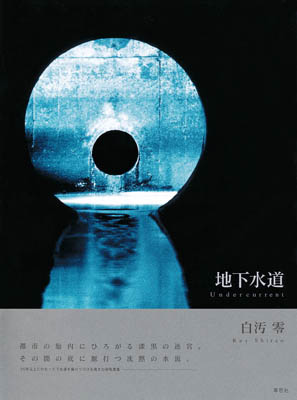
Shirao, late 40s, calls himself a "hole photographer" on his site (http://www014.upp.so-net.ne.jp/RayShirao/index.html). Studied photography in New York, returned as a freelance cameraman, won the 2000 Ueno Hikoma Award encouragement prize. First book Undercurrent (Soushi-sha, 2,940 yen)�=photo left—25 years shooting Tokyo's underground sewers; Meiji-era brick walls, spiral channels, catacomb-like purification plants in fantastical images.
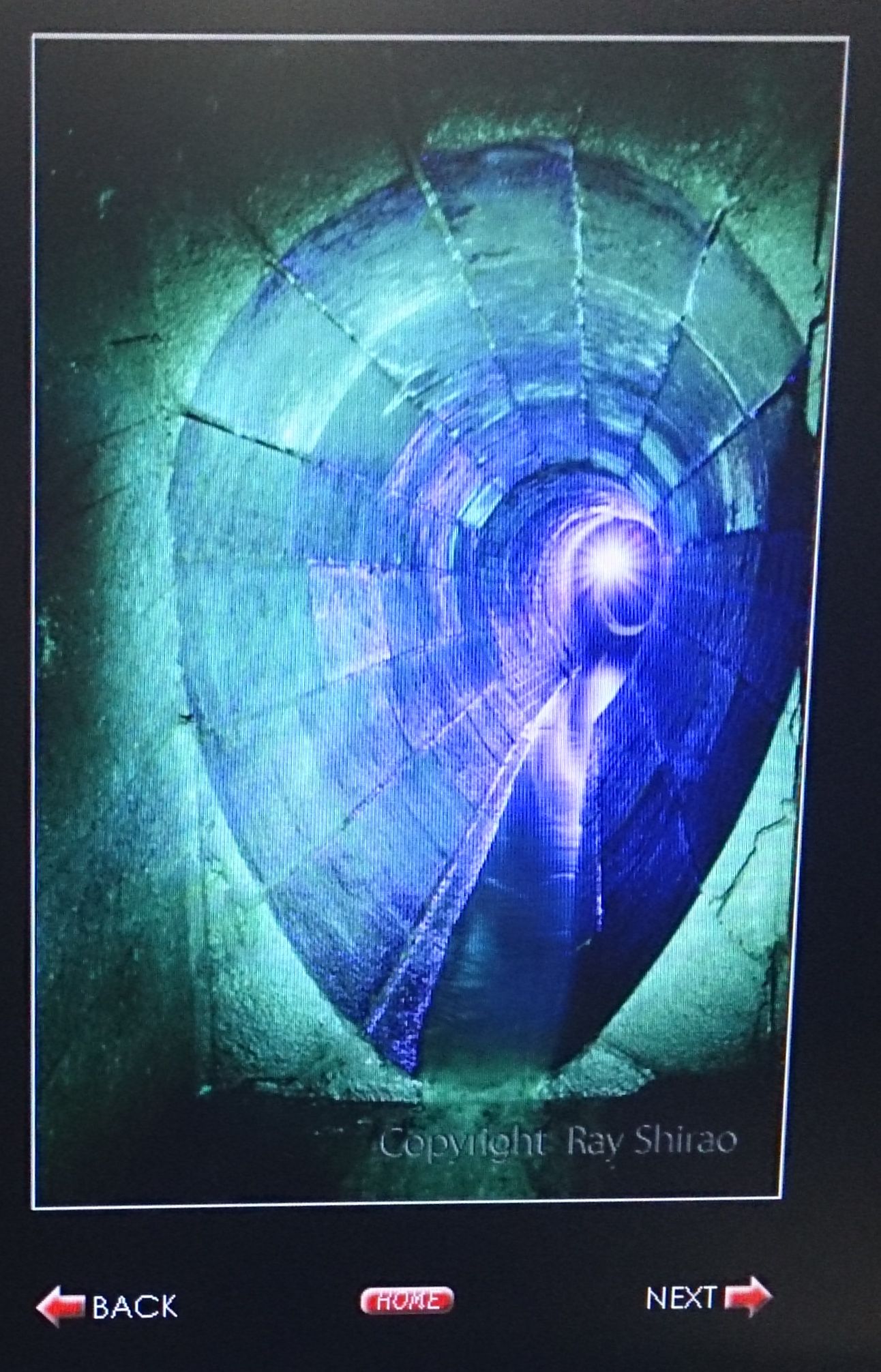
This show=top photo, from his site=
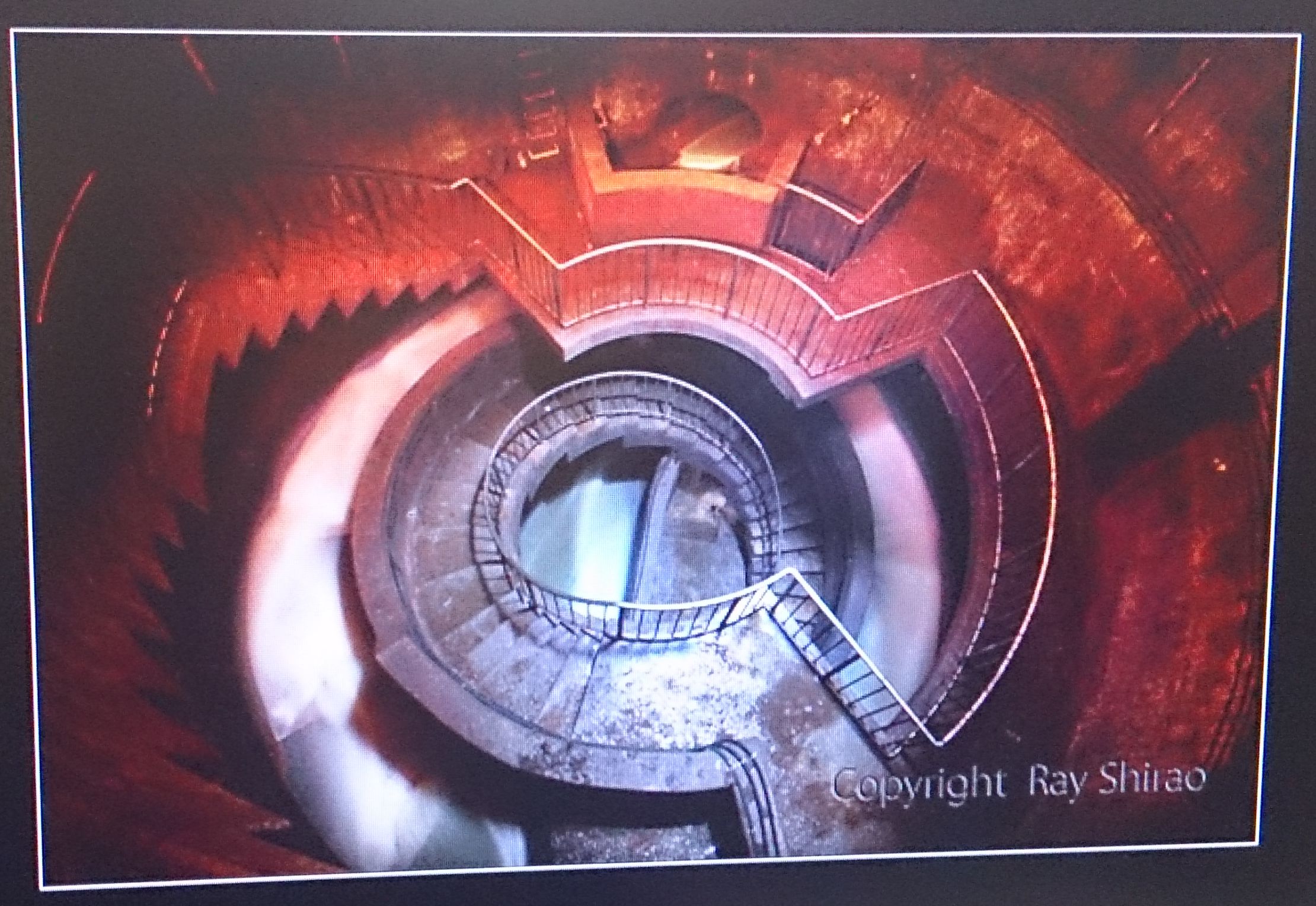
is monochrome only, but books and site include much color=photo right. In a word—sewers can be this beautiful. Water texture is especially interesting.
Curious why sewers, I read his site—including "Kodo," caves with people, and a passage from psychoanalyst Otto Rank on birth trauma and the birth canal as the first "hole" we pass through...
Underground passages make me think first of Victor Hugo's escape in Les Misérables, then Andrzej Wajda's "Kanal." I do not know birth canals, but underground (water) ways and caves seem to make humans ponder heavy things.
Free paper Osanpo Jimbocho runs "Jimbocho Guide Tours." On this show's last day, November 9, "Look Down and Walk! Tour 2: Station to Manhole, Akihabara–Jimbocho" ends at Jimbocho Gallery—a manhole-cover moe project; not for me, but details at http://osanpo-jimbo.com/tour.