
I heard there is a well linked to Takizawa Bakin in Kudan and went to see it. About a 15-minute walk from Takebashi—a pleasant stroll this season if it is not raining. No need even to ride one stop to Kudanshita.
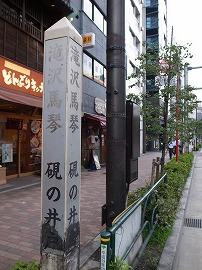
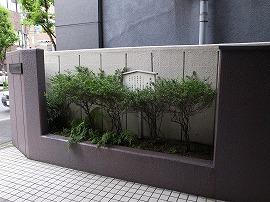
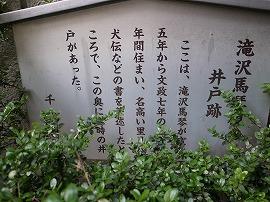
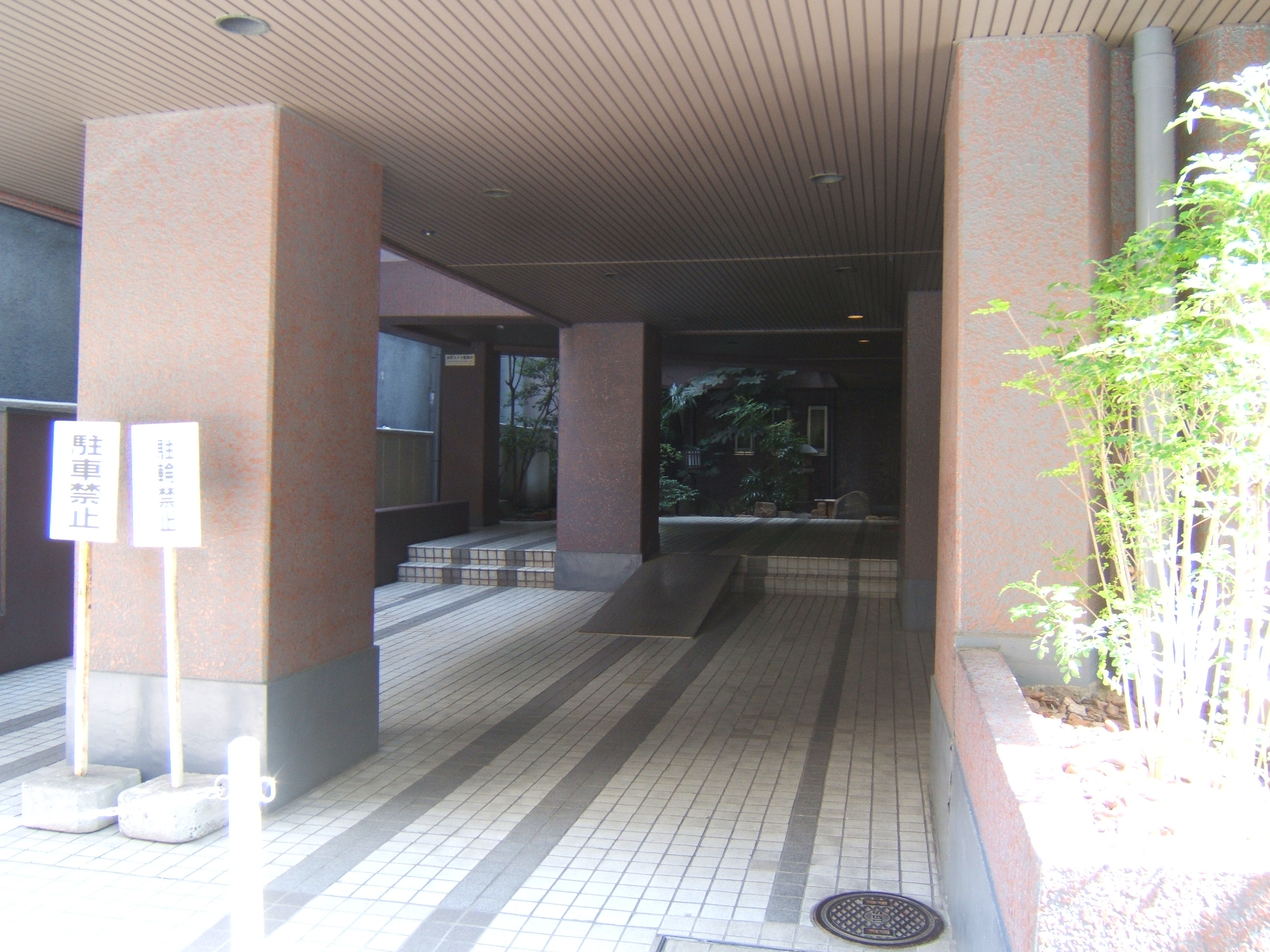
Finding it took some effort. Heading from Kudanshita Crossing toward Kudankita 1-chome on Meidai-dori, on the right you soon see the familiar historic-site marker reading "Takizawa Bakin Suzuri no Ido" (Inkstone Well)=photo upper right—but that alone does not tell you where the well is. Using the address found online (1-5-7 Kudankita, Chiyoda), turn right at a pole corner and walk about 100 meters. On the right is the "New Heights Kudan" apartment; at its entrance=photo upper center is a simple explanatory sign=photo lower right. Face inward and at the far end is a courtyard=photo lower left; approach and you finally meet Bakin's well in the top photo. Here it reads "Well of Takizawa Bakin's Former Residence,"
different from the earlier marker and entrance sign.
Legend says Bakin drew water here for his inkstone, washed his brush, and wrote busily—a Tokyo designated historic site. (It is private property, but with no auto-lock door, you probably will not be arrested for trespass unless you act very suspiciously.)
Bakin (1767–1848) was a famous Edo-period
novelist, best known for Nanso Satomi Hakkenden (truthfully, that is almost all I know...). I faintly remember a TV drama as a child decades ago—the thrill of eight strangers guided by fate joining hands to defeat enemies. I admired the epic structure only after reading the book years later.
When Bakin lived here, called Iidamachi Nakazaka, there was a footwear shop "Iseya." After the master died, Bakin married the widow Oyaku as her second husband in 1793 (Kansei 5), age 27. Already at 24 he had abandoned samurai status to debut as a playwright, hitting success after success as "Kyokutei Bakin." He lived here until moving to Kanda at 58 in 1824; he did not throw himself into the shoe business and focused on writing—marital relations were reportedly strained.
Artists can be willful. If that is what it takes to leave work for posterity—that is a harsh truth.