
We often introduce bronze statues around Takebashi on this blog; today, slightly farther afield—Sazae-san.
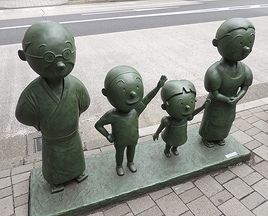
In Setagaya's Sakurashinmachi stand bronze statues of the Sazae-san family=photos top, left. Tokyo's attempt to levy fixed-asset tax caused a stir; recently it was resolved with a tax exemption.
Formally, a dispute over the statues' "public benefit" ended with the metropolis recognizing it—Tokyo jumped the gun and stumbled.
Why Sakurashinmachi? Author Machiko Hasegawa lived there. With the Hasegawa Machiko Art Museum nearby, the shopping district planned statues for the manga's 65th anniversary (2011), with metropolitan and ward subsidies, completing twelve figures in March 2012 for 42 million yen. Tokyo judged them "business assets" for PR and in June this year taxed 1.4% of assessed value—about 600,000 yen; the district paid a quarter (150,000 yen) and appealed for exemption; the remaining 450,000 yen was waived.
Similar statues elsewhere split on tax vs. exemption. Koto's 14 Kochikame statues: 13 ward-owned, one shrine-owned—all exempt. Niigata's Dokaben statue: chamber of commerce and shopping street, exempt as public body. Tottori Sakaiminato's 13 fish objects: NPO-owned, city exempt for public benefit. Ishinomaki's Kamen Rider: one donated to city exempt, JR's station figure taxed.
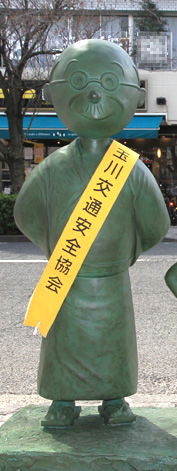
Shopping streets are profit-making shops yet vital to community vitality—obvious where shuttered streets decay. Even near us, some schools traditionally pick PTA chairs from the shopping street. In Sakurashinmachi, Namihei joins traffic-safety campaigns with a sash=photo right.
Tax principles matter—no arbitrary levies or favors. Personally, if taxation is off, shouldn't the 150,000 yen already collected be returned? The district did not ask; they were glad about the 450,000 yen waiver—but partial collection plus "looking the other way" on the rest seems illogical to me.