

The other day, after the Kojimachi boy statue’s costume changes near Takebashi, I wrote about the rewriting of a Soviet soldier statue in Bulgaria (September 13). But the world has dress-ups on a larger scale.
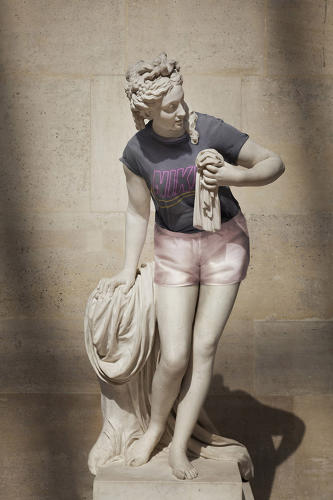
I found it on a site called ROCKET NEWS24 (http://rocketnews24.com/2013/07/03/343621/). The story is that they put clothes on ancient sculptures at the Louvre.
Louvre sculpture first brings to mind the Venus de Milo and the Nike of Samothrace
, but they seem to have spared Venus — or perhaps Nike because she has no face — and avoided both.
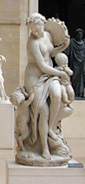
So the photo above is Augustin Pajou’s “Bacchante with a Basque tambourine and two children” (the usual unclothed look is right).
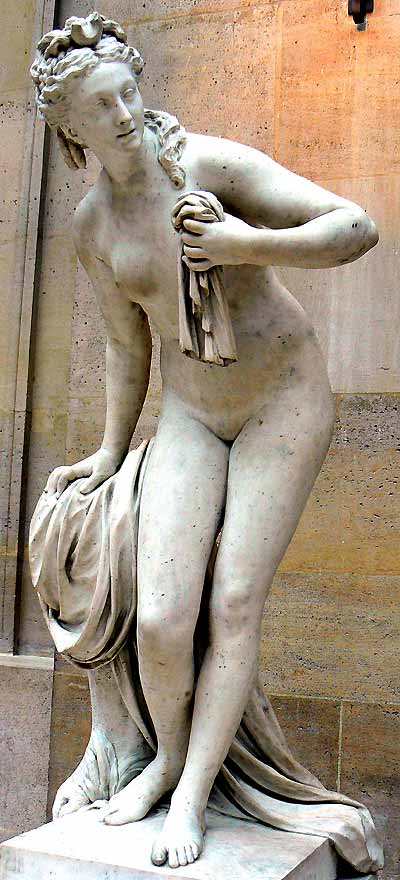
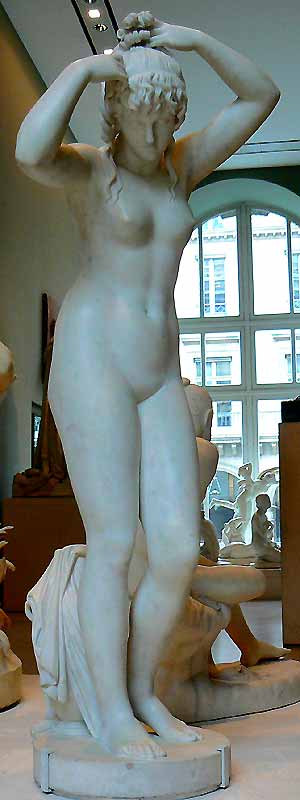
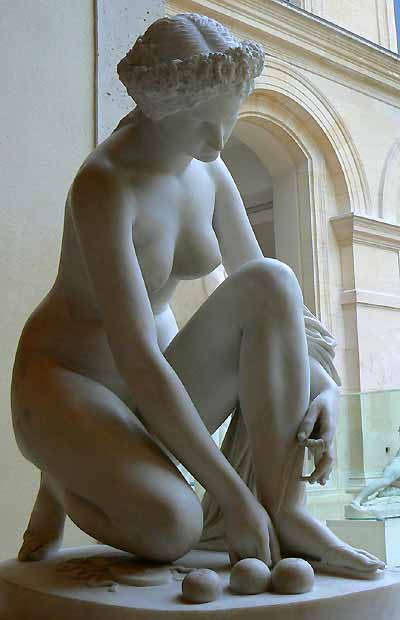
Let me introduce a few more fun ones. The first two are “The Bath”: above, Christophe-Gabriel Allegrain’s “Bather (also called Venus)”; next, Joseph-Charles Marin. After that I do not know exact titles or authors — a Christ, and the last, well, I am not sure.
If you have been to the Louvre you know: historic works, Venus among them, stand around
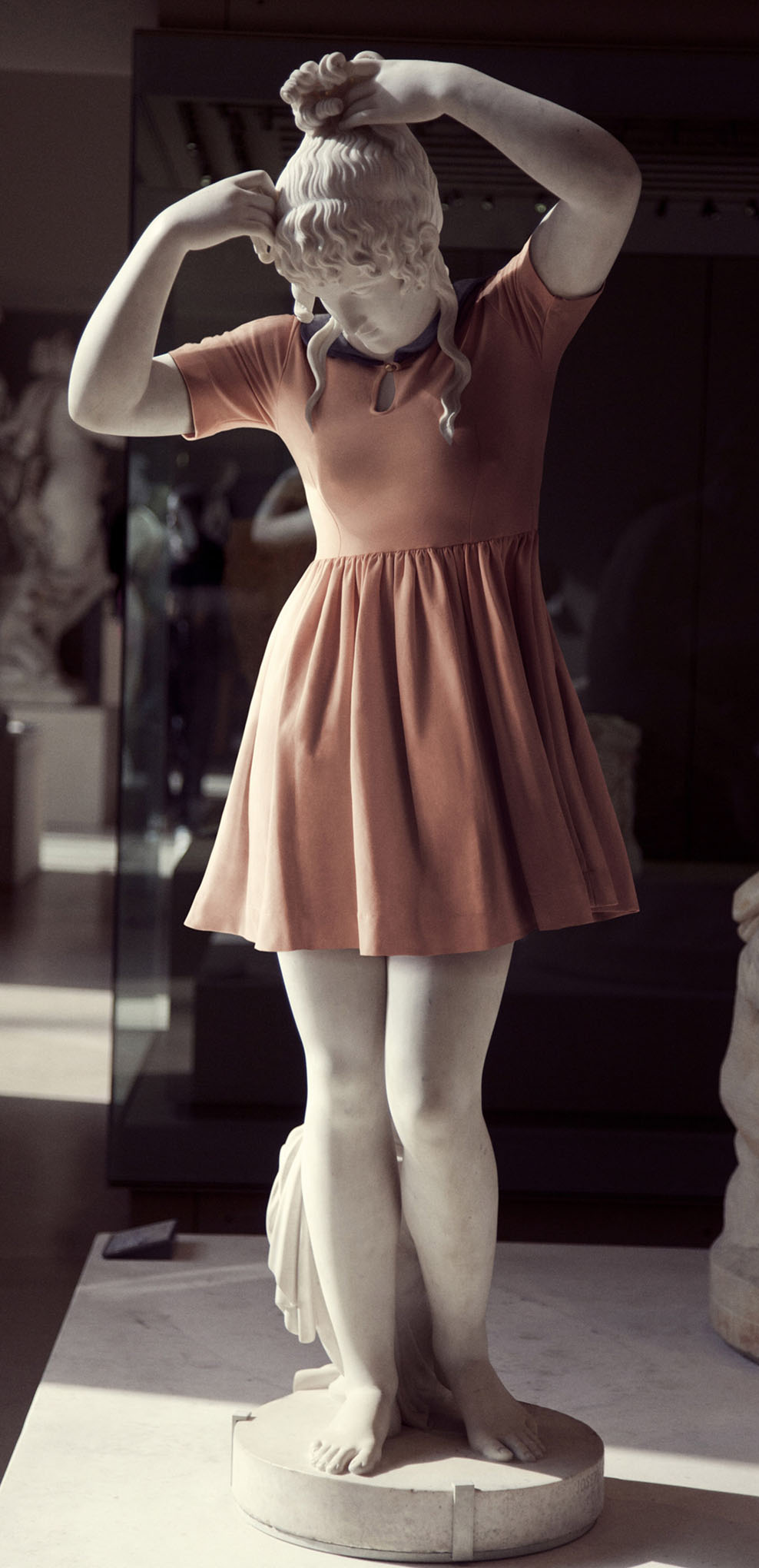
right there. Really, you feel you could touch them. With that memory I thought permission to dress them might have come easily — but read the article carefully and they are composites.
Of course they are; if you think a second… you do not even need to think.
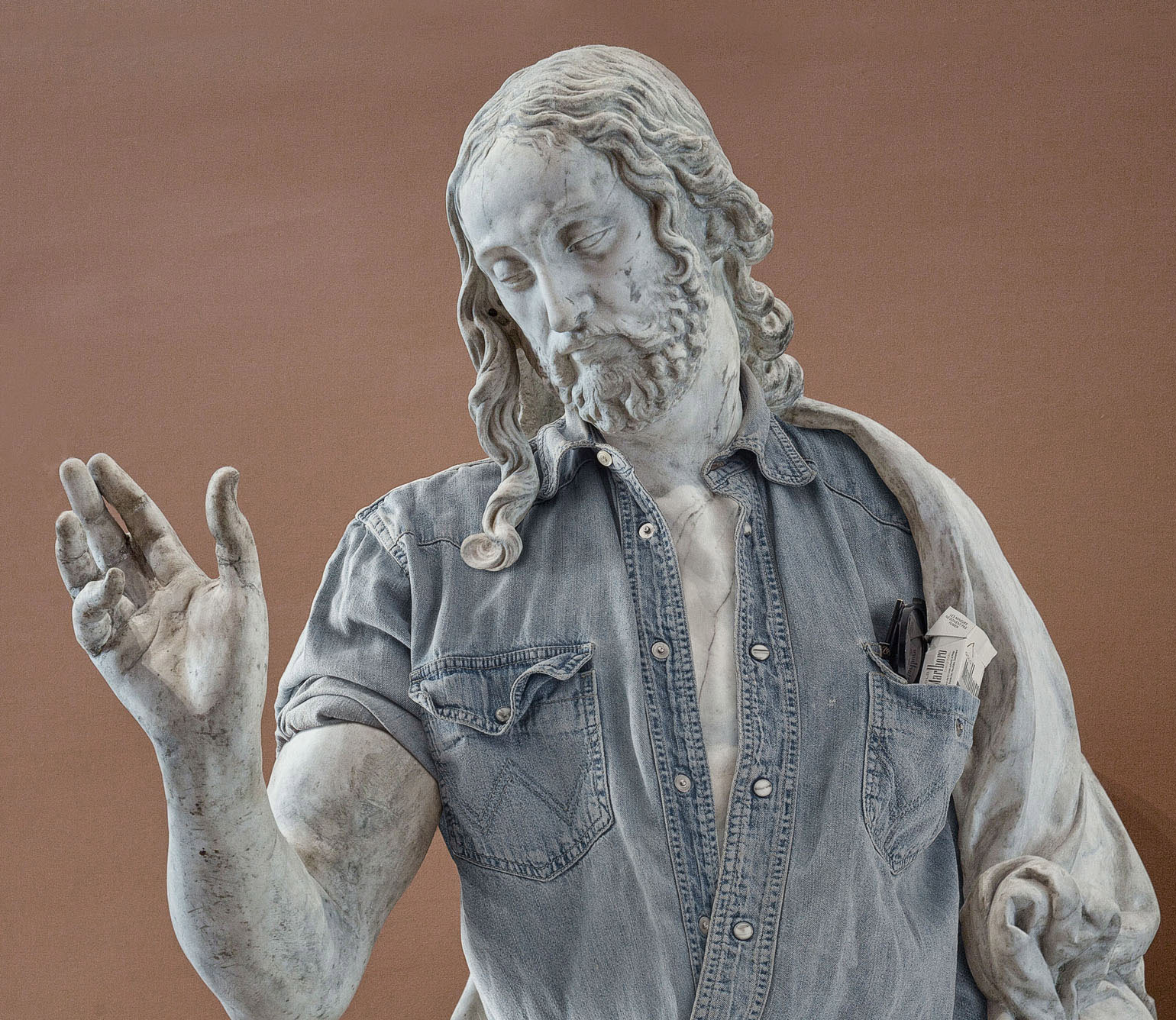
These photos combine studio shots of a human
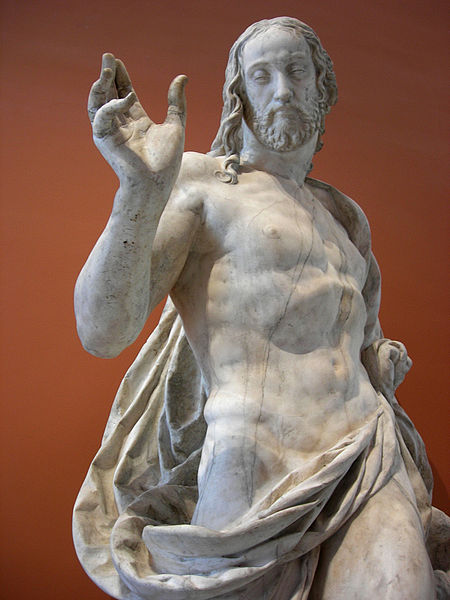
model of similar build wearing clothes with sculpture photos taken at the Louvre, composited by an artist named Alex Persani. Come to think of it, if you look closely, clothes slip under hair that should be attached at neck and shoulder — unnatural.
Even so, however beautiful, stone is stone — that feeling is hard to deny; put clothes on and they become so human you think they might move
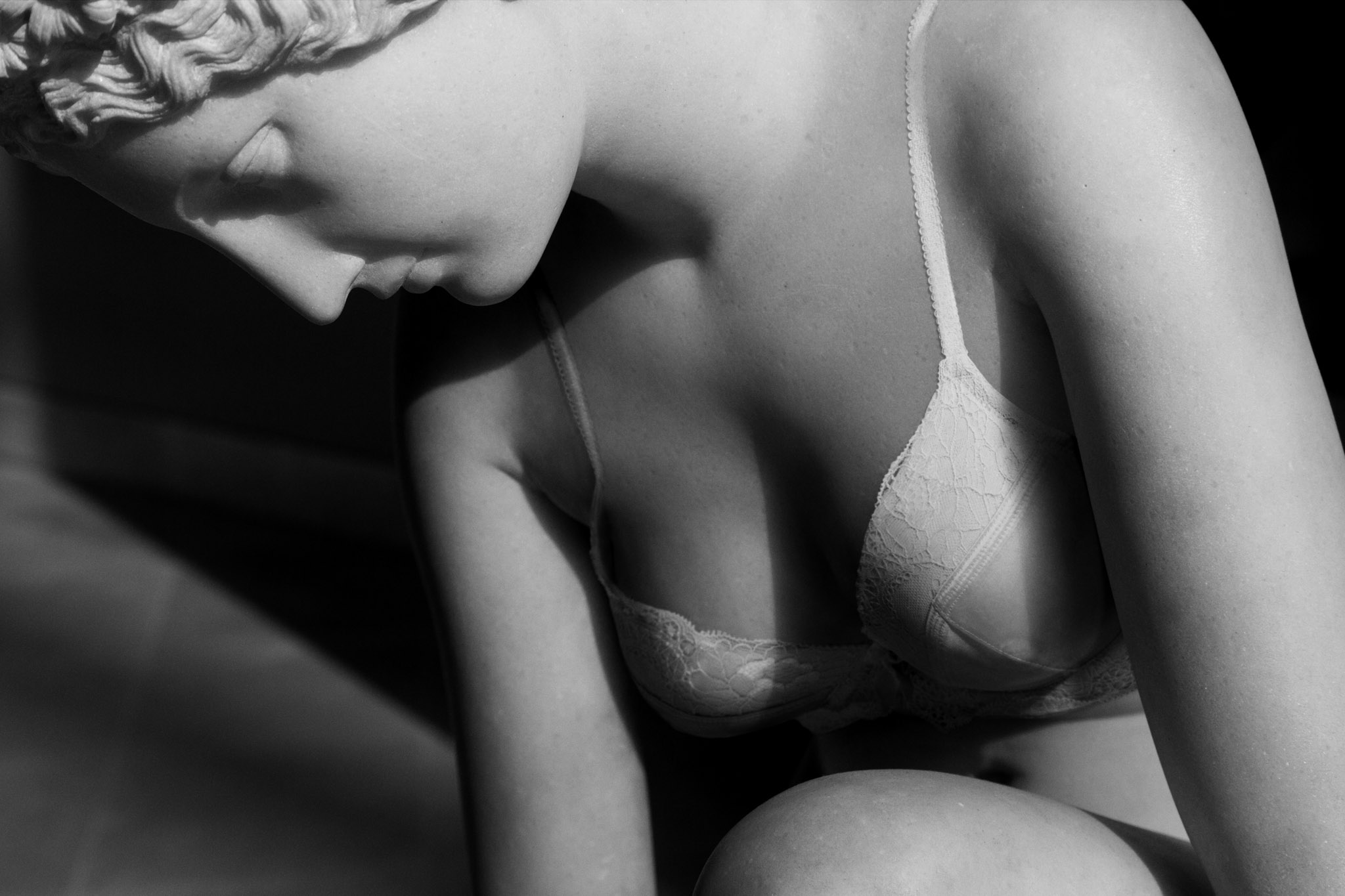
any moment. I was surprised
again.