

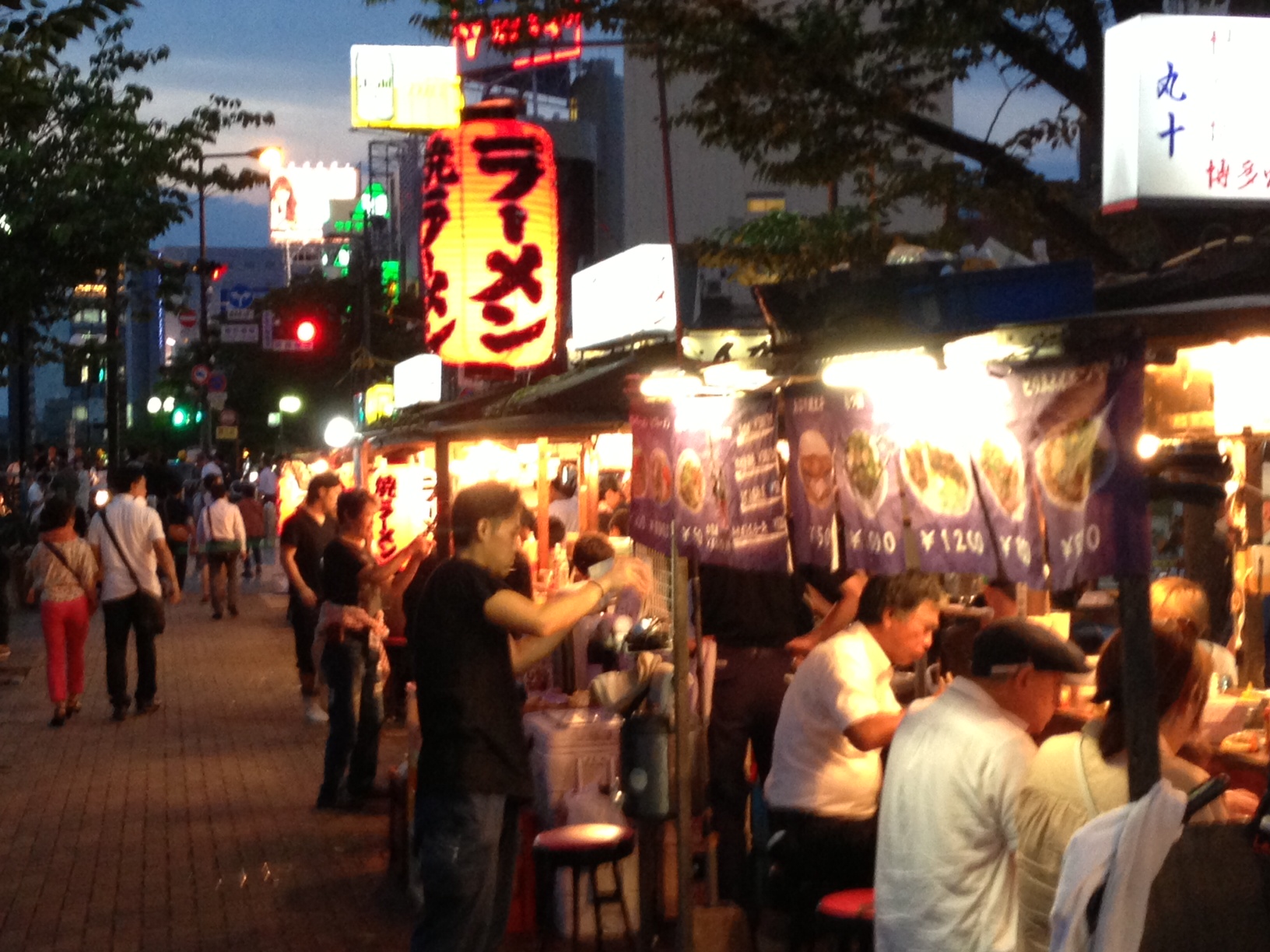
About 150 stalls — 40 percent of the national total — line up here. The night spot is more popular with traveling salarymen and tourists than with locals. Hard-boiled tonkotsu ramen (noodles cooked even firmer than “kata”) or drinks — order what you like.
This is about Fukuoka’s yatai. Mainichi Fukuoka Kaikan, managed by Mainichi Building Co., which runs Palaceside Building, is in Tenjin, Chuo-ku, Fukuoka; just across the Naka River is “Kyushu’s largest entertainment district, Nakasu.” The Naka, flowing into Hakata Bay, makes a sandbar as the name says — about one kilometer northeast–southwest by 200 meters, narrow; at night some 3,500 restaurants and adult shops light up. Along the Naka stand Hakata’s famous stalls. Fukuoka also has rows on Showa-dori and in Nagahama.
This month a Fukuoka City Yatai Basic Ordinance was made to put stall business in order. The aim is to have stalls keep the rules; chronic violators can be ordered “off the field.”
Stalls are a big tourist resource, yet complaints from residents about occupying the road and bad smells never stop. The city and Fukuoka prefectural police tightened rules from the mid-1990s. Banning “name lending” especially cut stalls from over 400 in 1965 to 156 by April 2011. Feeling the crisis, Mayor Takashima Soichiro
even appointed a twenty-something secondee from the Internal Affairs Ministry as “yatai section chief,” and they chose a legally strong ordinance to tighten guidance.
Behind friction with locals is a voice in Nakasu’s bar streets: “Tenjin and Nakasu are Kyushu’s dearest land; operating without paying rent is unfair.” Some stalls overcharge tourists almost to gouging, or leave the stink of drunks’ street-peeing and leftovers uncleaned. With this ordinance, I hope they at least look for a way to live together.
Colleagues at Mainichi Fukuoka Kaikan whom I asked for stall photos — did they head straight to the stalls that night? Or get absorbed into one of Nakasu’s 3,500 shops? I forgot to ask.