

In the heat I was walking around Jimbocho when I found a kissaten in a back alley that still smelled of the Showa era. Coffee shops suit a student town. In the 1970s, Garo’s famous song “Gakuseigai no Kissaten” (you know it, don’t you?) was set on this street. Here are two popular shops.
The first is Radio (Kanda-Jimbocho 1-3) — photo above. Among many well-known houses, this one opened in 1949 (Showa 24). For years it was loved as a “chanson kissaten”; under a new generation, jazz now plays as BGM as well. It is also famous as the first shop in Japan to serve Wiener coffee — coffee topped with whipped cream. Wiener coffee is still one of the popular items.
Radio means “brick” in Spanish. In the Great East Japan Earthquake the brick wall and sign collapsed; the wall you see now is after the repair. The lower half is mossy old brick, mixed with newer brick on the upper half.
From evening it becomes bar time, and grown-up hours begin. The novelist Gosa Takeshi, who has ties to Jimbocho, is said to have waited here for the Naoki Prize announcement — a story that shows how writers and cultural figures have kept loving the place.
The second is Saboru (Kanda-Jimbocho 1-11) — photo below. It is just off Jimbocho Crossing, and well-known writers and celebrities use it too. The log-house interior of cherry wood is warm under lamp light. Regulars’ graffiti covers the brick walls, and you feel how long the shop has been loved. On the
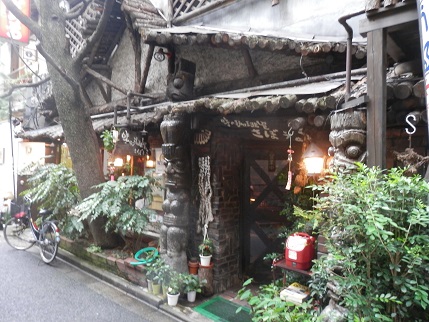
mezzanine wall, handwritten matchboxes from the Showa 30s are displayed; you never tire of looking at them.
Fans come to both shops from far away. Why not sit on Radio’s counter perch, where so many notables sat, or settle in at Saboru, and let your thoughts wander over the history of this street.