

The 84th Intercity Baseball Tournament (hosted by The Mainichi Newspapers and the Japan Baseball Federation) is in the home stretch: semifinals on the 22nd, the final on the 23rd.
As a former Ibaraki resident, I went to cheer for Hitachi Works of Hitachi City in the first game on Saturday the 20th. Facing Panasonic of Kadoma, Osaka Prefecture — win and you're in the best eight — we scored steadily and led 4-1 through five, and I was sipping good beer from the morning, expecting an easy win, but in the sixth we took a painful walk-off grand slam, gave up more runs, and closed within one run but fell short. A truly heartbreaking game.(;´дゞ´)
Intercity cheering is not to be missed. Cheerleaders are fine, but above all the courtesy and respect toward opponents — the essence of amateur spirit. On the sports corner of TBS "Sunday Morning" on the morning of the 21st, commentator Isao Harimoto praised how, when teams cheer each other before a game, the receiving team's cheer captain lines up and bows deeply for minutes to accept the cheer. Guest Hirochika Ishige (Choshi High — Komazawa Univ. — Prince Hotel — Seibu Lions) also spoke along the lines of "Watching that Intercity cheering made me decide to join a corporate team."
Despite the name "Intercity," most teams are corporate, so many wonder whether outsiders besides employees and affiliates should come — but for better or worse, in company-town-like places, the sense of representing the region runs strong in both team and residents. Hitachi is the classic example. Among this year's 32 teams, many carry a city name under the company name, but the company and city names match in
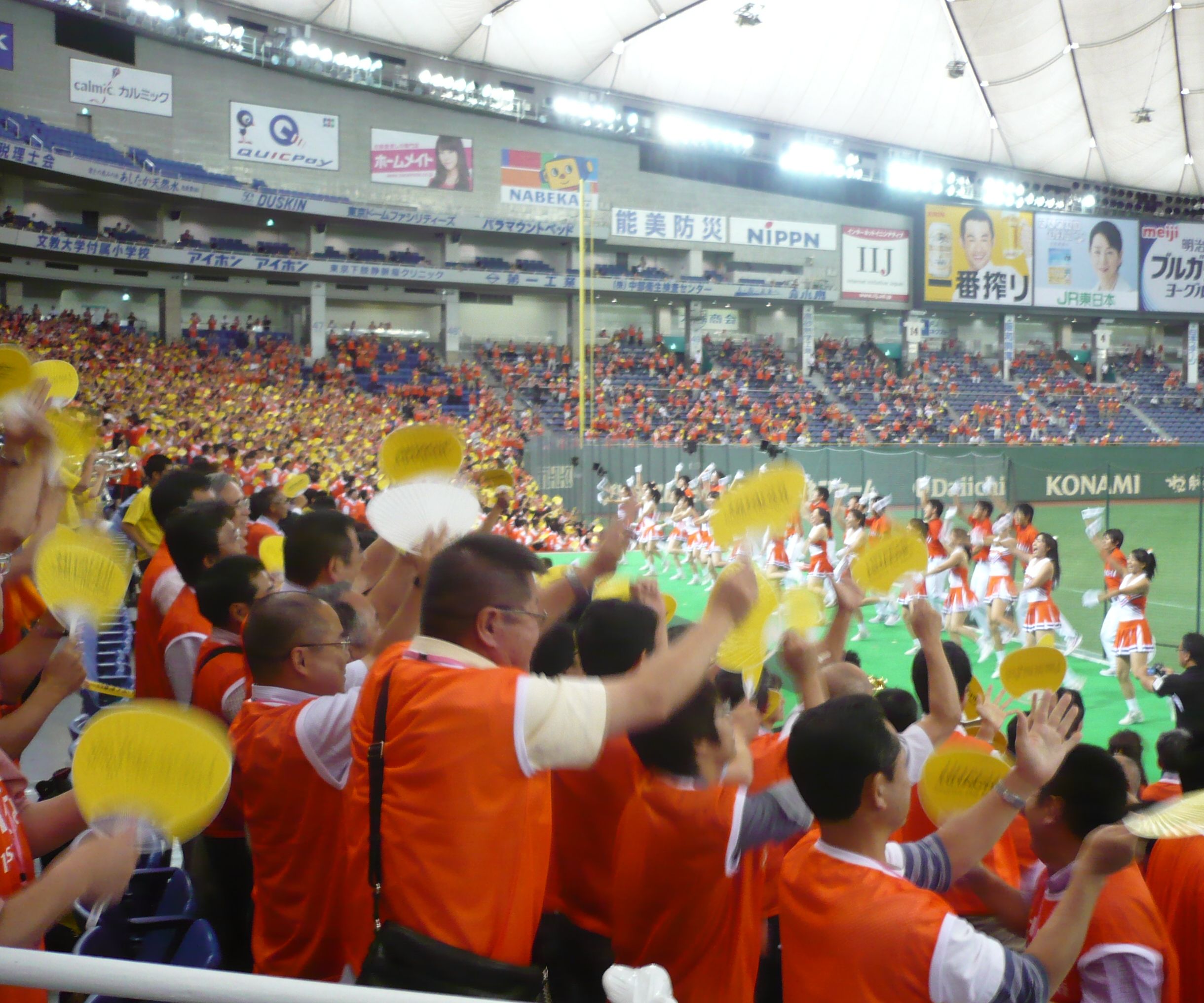
practice only for Hitachi (Tokyo Gas in Tokyo Prefecture, if you stretch it ...). Hitachi City has no citywide summer festival; Intercity is the substitute — the festival itself. So cheering groups arrive en masse on chartered JR trains and buses. The first game on the 17th was an evening start, yet more than ten thousand in matching orange ponchos filled the outfield back screen and shook the Dome; some take a "bullet tour" straight back by bus. On the 20th, fewer than the opener but still a ten-thousand-scale crowd filled half the outfield= photo upper right. Some years they spill past the back screen into the enemy outfield, I hear.
A word on cheerleaders. More than thirty years ago
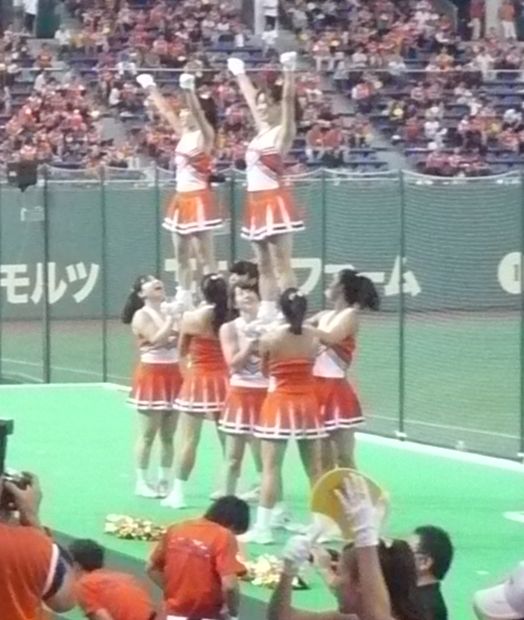
, when I first watched corporate baseball in Kyushu, many companies treated cheerleaders as a "required course" for new female hires; some surely did it reluctantly. Today, ordering "You will be a cheerleader" might be power harassment. Employee cheer squads have dwindled — JR East still has conductors as cheer captains.
Instead, many rely on university cheer or cheerleading clubs. It is part-time work and a valuable source of activity funds for students. I will not spoil dreams by naming which university serves which company, but most hire the same school every year, so both sides know the routine and work in sync. Hitachi too, as in the photos at upper left and upper center, had students from a certain six-university group energize the stands. (I could not get close shots to keep out the odd "photo kid.")