

Bounty from the land. Product From Tokyo. Even within an hour's commute from central Takebashi and the like, farmland still remains in places.
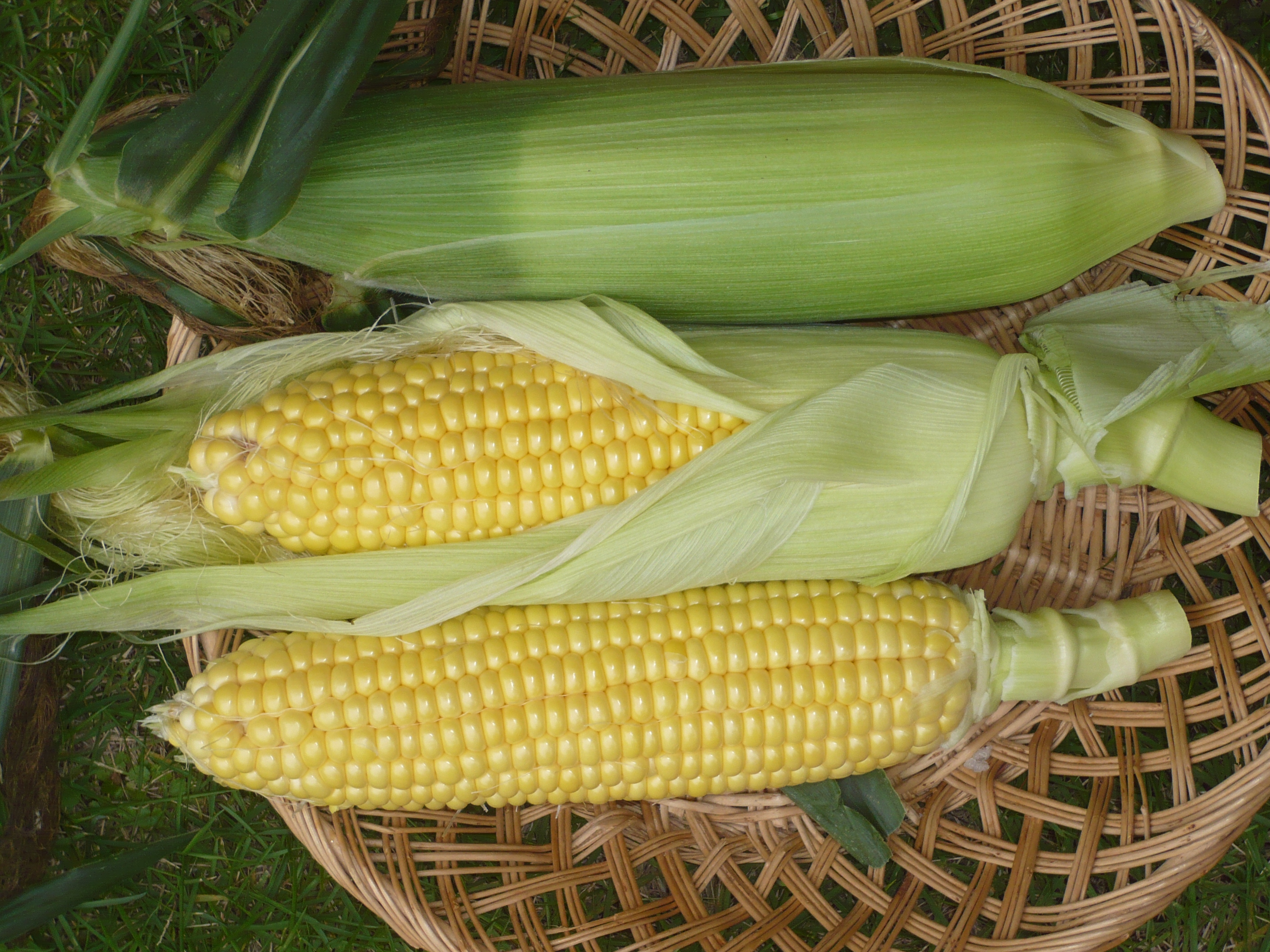
Photos upper, upper left and lower left — the corn is from Setagaya Ward, near the Kan-jo Expressway. Last weekend a nearby farmer picked in the morning and sold at a direct market — first of the season. About thirty people lined up for the 9:30 start; toward the back it was nerve-racking, but we got three ears. 150 yen each!! Word of mouth seems to boost popularity every year.
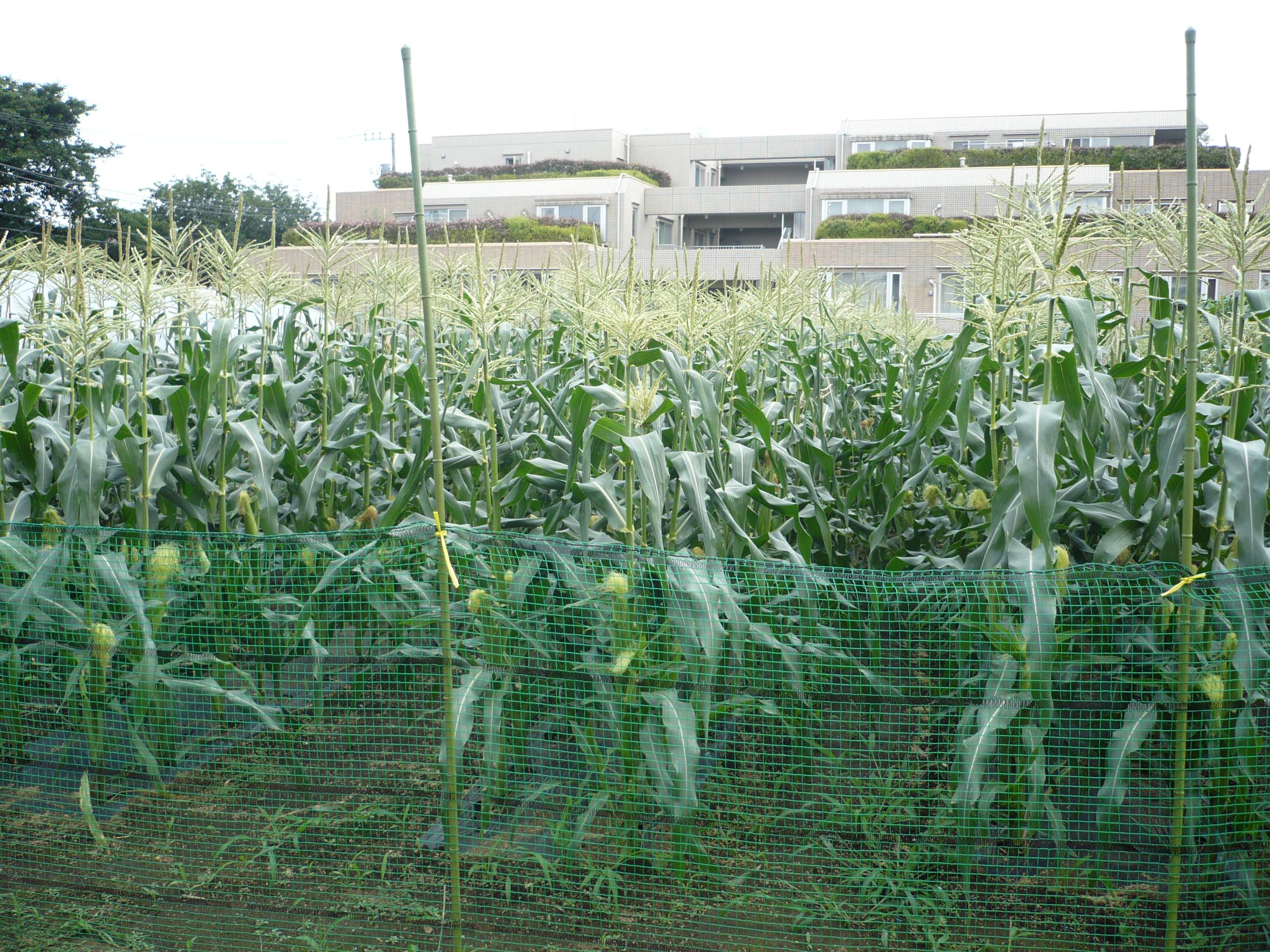
This color and sheen. For weeks I had watched the field =photo lower right= wondering "soon?" — so it felt long-awaited. We boiled them; three of us, one each, meant to taste at lunch — everyone polished them off in no time(≧∇≦). So sweet you simply cannot stop midway.
Besides corn, this season brings tomatoes, cucumbers, eggplant, green beans and more. Especially plump edamame is delicious. Sales run only for spring, summer and autumn vegetables, but it is a luxurious reminder that vegetables grow in soil.
I looked up Tokyo agriculture. JA Tokyo Chuo-kai summarizes: farmland equals 3.5% of the metropolis — 7,600 hectares (7,300 field, 300 paddy); Tama 5,800, 23 wards 650, rest islands (2011). In the 23 wards: ①Nerima ②Setagaya ③Adachi ④Edogawa. Farm households (2010): 13,099; farm workers 12,965 — aging is severe, as you'd expect. Agricultural output (2010) is
27.5 billion yen; vegetables 15.5 billion — over half — then flowers 4.9 billion, fruit 2.8 billion, livestock 2.1 billion and so on.
MAFF publishes prefectural self-sufficiency rates; in 2010 Tokyo was 1% on a calorie basis — worst, naturally — Osaka and Kanagawa 2% tied for second. Single digits only in these two prefectures. On a value basis: Tokyo 4%, Osaka 5%, Kanagawa 13% — not bad. Tokyo's output share is 0.3% nationally vs. 0.2% farmland — holding its own. Growing high value-added crops efficiently, I suppose.
Don't underestimate Tokyo agriculture.(^m^)