

Sorry — I splurged a little.
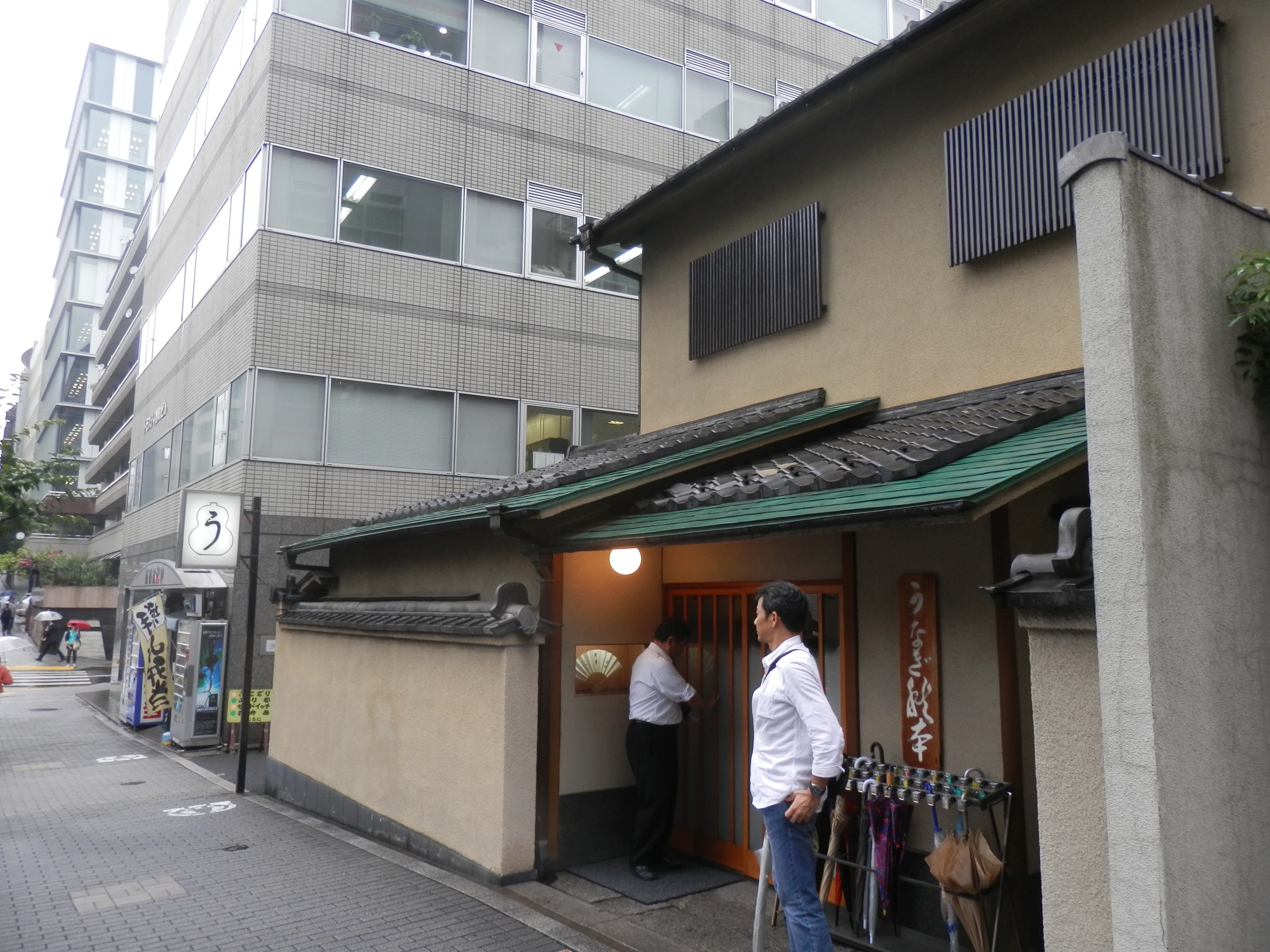
From Takebashi Station, where Palaceside Building stands, I changed subway lines to Kojimachi Station, exited No. 3, walked one minute, then about 100 meters north from the Kojimachi 4-chome intersection. The landmark is a sign with only the character "u" inside a gourd — the long-established Unagi Akimoto. A sukiya-style shop full of atmosphere, hard to believe it's in the middle of the city.
With the motto "split fresh, steamed fresh, grilled fresh," the shop is known for unaju and kabayaki made from carefully selected domestic eel finished in a secret sauce passed down since founding. It earned one Michelin star three years running in Michelin Guide Tokyo Yokohama Shonan 2011–13; the entrance sign is in the brush of Kon Toko... With 105 years of history, the copy writes itself.
I had unaju. Four tiers — matsu, take, ume, tsuru — and I splurged on "ume" (¥3,500) plus liver soup (¥200). It comes in a two-tier box with rice and eel separate. The lacquerware is Wajima-nuri, no wonder it feels refined.
Lift the lid and behold — eel glowing candy brown. Steamed plump and grilled; handle the chopsticks carefully or the flesh falls apart. The slightly sweet, elegant sauce matches perfectly — "this is eel" spreads through the mouth. It really melts. My stomach flipped over in satisfaction.
But worrying reports keep coming about how long we can keep eating eel
. In February the Ministry of the Environment listed Japanese eel as endangered; today's (June 24) reports say the International Union for Conservation of Nature (IUCN), which maintains the authoritative Red List of threatened wildlife, may list Japanese eel as endangered, with experts meeting in the UK July 1–5 to discuss.
Not long ago I saw an article on Fisheries Agency data: domestic farmed glass eel totaled about 12 tons as of end-April, down another 25% from a poor previous year. Almost all eel consumed in Japan is farmed, so fewer fry means higher prices. Distribution peaked at 160,000 tons in 2000 and fell to 37,000 tons in 2012; fry purchase prices rose from about ¥300,000 per kg through 2006 to about ¥2.6 million this year. Retail prices keep climbing.
There are also reports of research to identify spawning grounds and farm from eggs (currently farming starts after catching fry). Researchers, please keep at it — protect the common person's little luxury.