

Hydrangeas are blooming in the East Gardens of the Imperial Palace, south of Palaceside Building. They are the star players of the rainy season. You see them here and there; this time I photographed them after entering through Hirakawa Gate, circling along Hirakawa Moat and Inui Moat on the right, then along Hasuike Moat, just before the site of the Pine Corridor. Purple, blue, pink, white, and yellow hydrangeas and lacecap hydrangeas compete in refined beauty rather than gaudy color.
Preaching to the choir, but lacecap hydrangeas are native to Japan. The true flowers are the small clusters in the center; the showy outer parts are "decorative flowers." Stamens and pistils have degenerated and no longer function as flowers. What look like petals are enlarged "sepals." These traveled from China along the Silk Road to Europe in the late 18th century; breeding progressed until decorative flowers covered the whole head — that is the hydrangea, also called Western hydrangea.
Re-imported to Japan in the Taisho era, they drew little attention for a while — but after being planted in the garden of Meigetsu-in in North Kamakura after the war, people began to notice their charm; they spread nationwide and became a beloved early-summer sight everywhere. Meigetsu-in is famous as the "Hydrangea Temple," but many temples nationwide are known as "ajisai (hydrangea) temples."
The etymology of ajisai may come from "gather (azu) true (sa) indigo (ai)." Generally, hydrangea color turns more blue in acidic soil and more red in alkaline soil; in volcanic Japan, blue = indigo predominates — perhaps that led to the name.
Incidentally, the kanji for “hydrangea” (紫阳花) came from a name the Tang poet Bai Juyi gave another flower, mistakenly applied to hydrangeas in the Heian period — yet the characters have a nice atmosphere, don't they?
Hydrangeas have several flower meanings
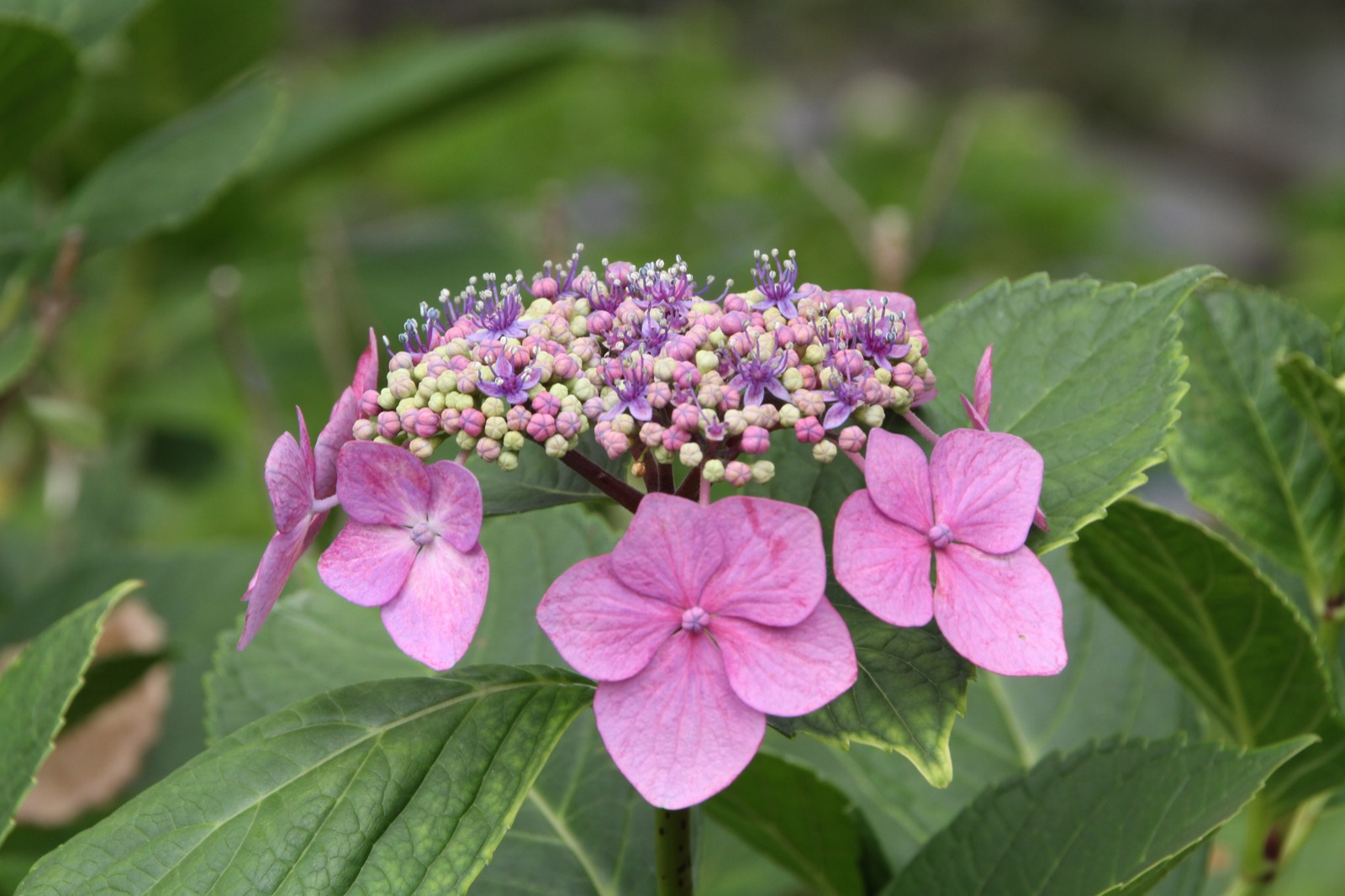
— the popular one seems to be "fickleness." In France, where alkaline soil yields reddish blooms, it means "energetic mother." Some florists in Japan recommended it for Mother's Day by association. Lacecap hydrangeas mean "modesty" — they do yield a step in showiness to hydrangeas. Up close, though, they have plenty of character.