

The moai display at Marunouchi Building, close to Palaceside Building, runs through the 28th. The greatest mystery of this lost megalithic civilization is how they were transported.
Most moai are said to have been lined up along the coast, but tuff — the material — is not found near the shore, so they must have been cut from mountains inland and carried. How they were moved has sparked long debate. Rope and pull, hang from an inverted V of wood like a pendulum, load on wooden sleds and roll over logs — many methods have been proposed, but many are about 3.5 m tall and 20 tons, with giants up to 10 m and 80 tons, so enormous labor must have been required.
Yet the island preserves a legend that "the statues walked." Say "don't be ridiculous" and the conversation ends — but focus on tradition and a different idea emerges.
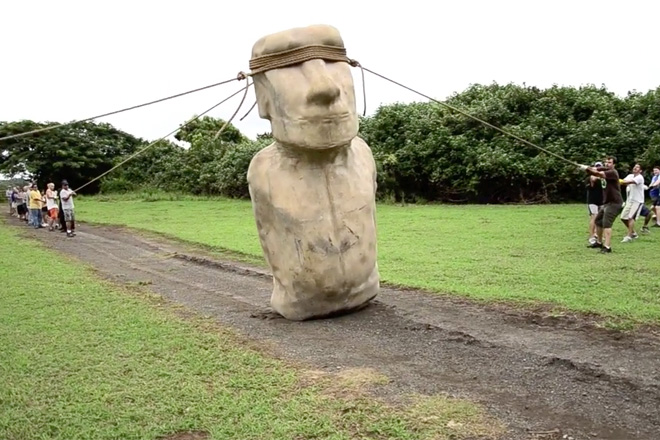
In the digest of National Geographic Japan, July 2012, that I introduced the other day (http://special.nikkeibp.co.jp/ts/article/ac0b/139205/201207/index.html), I described Terry Hunt of the University of Hawaii's theory of walking moai upright, swaying left and right. The magazine cover showed that imagined scene=photo lower left= — ropes from three sides, front, back, and both sides, swaying slightly left and right while advancing; they succeeded in moving them with far fewer people than "carrying"=photo lower right=. (See YouTube "https://www.youtube.com/watch?v=YpNuh-J5IgE")

The method featured on TBS "The World's Amazing Discoveries!" on January 16, 2010, in "Reviving Easter Island Legend," was even more startling (top photo). Engineer Tetsuya Nagai devised it and runs his own site, "How to Make a Walking Moai" (http://www.tegakinet.jp/moaij.htm).
As in the top photo, wood is arranged in an A-frame so the moai floats slightly, and the moai is suspended. The sequence below is from Nagai's site. ① Extend the lower part of the wood beyond the moai and push the forward-leaning moai from behind; ② the moai lifts on the wood and tilts as if sliding; ③ momentum carries the lower part of the moai slightly forward; return to ①, the wood's base lands and the moai leans forward again — repeat, and by "its own power" it moves forward, goes the reasoning.
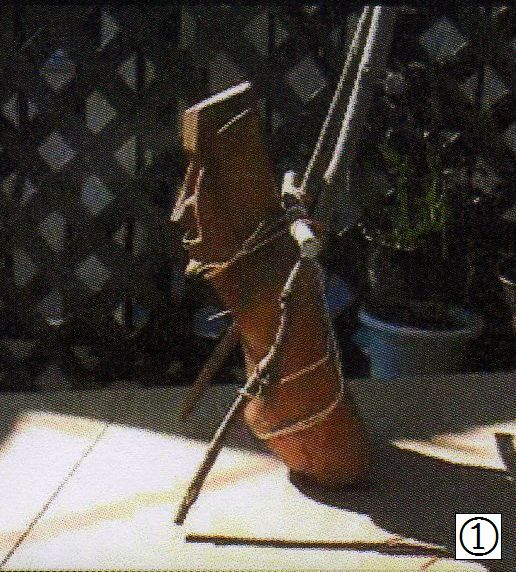
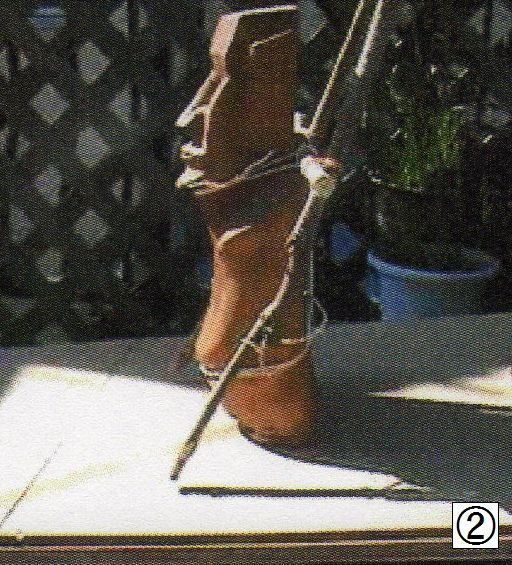
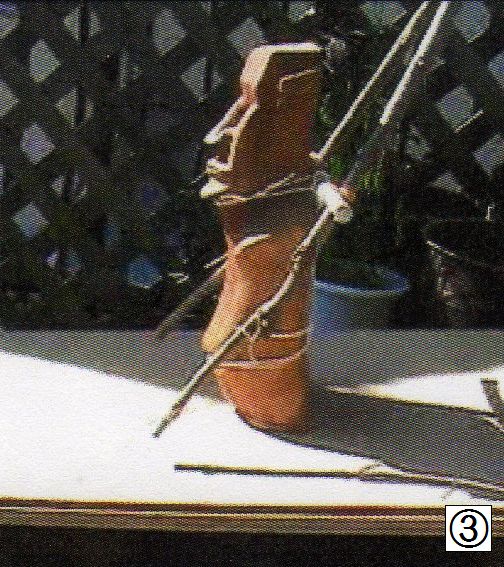
On the TBS program they experimented on site with a life-size moai replica. It moved several meters, they say. Success — or not quite?
People will keep taking on the mystery of moving moai, no doubt.