

Tomorrow the 20th, in Marunouchi at the heart of Tokyo — close to Takebashi — a moai statue from Easter Island, Chile, in South America will make its debut. Titled "Moai: Living for the Future." The venue is the first floor of Marunouchi Building, with panel displays as well. At the adjacent Marunouchi Oazo on the first floor, there is also a photo exhibition.
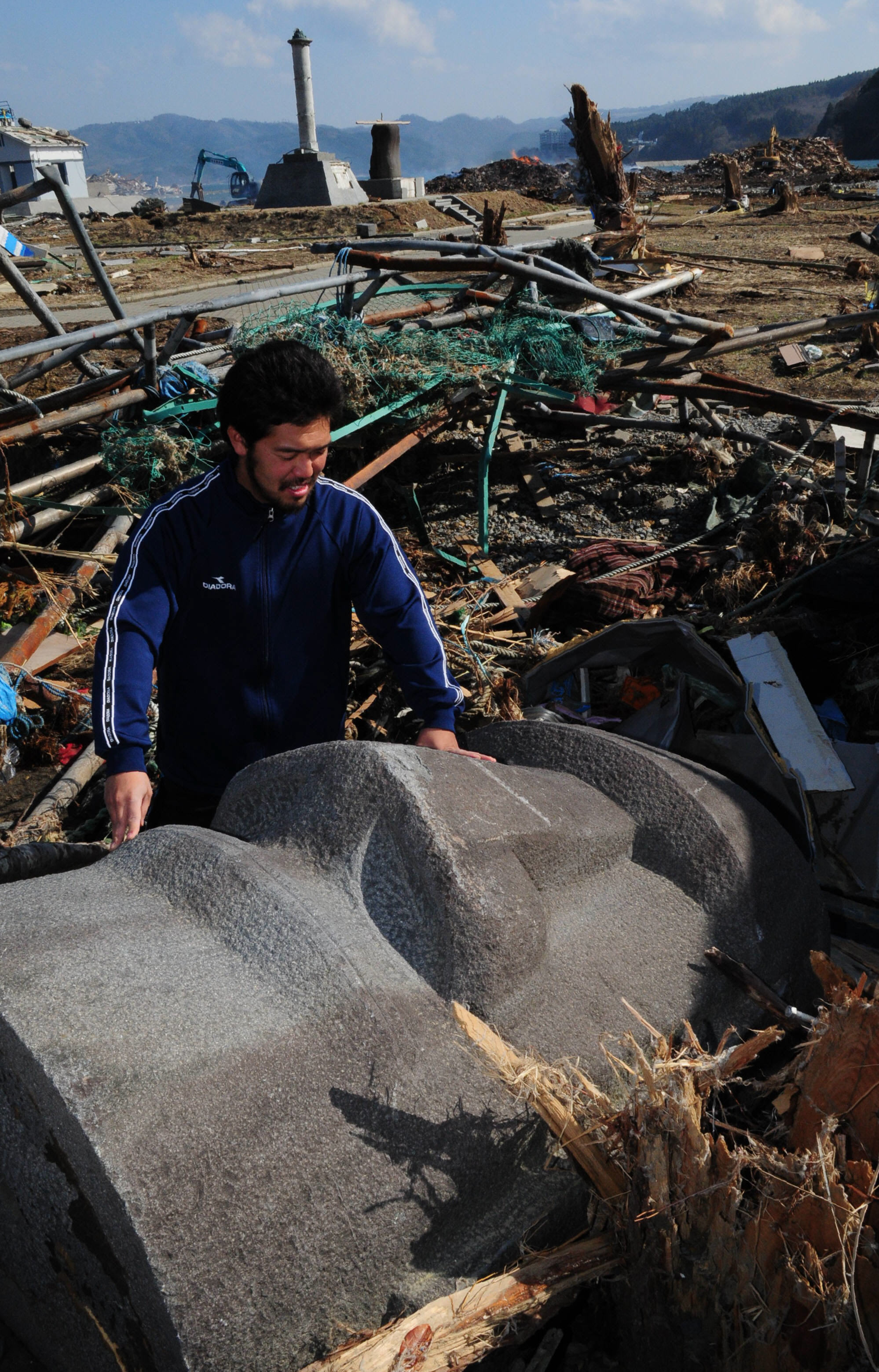
This statue carries the weighty meaning of supporting areas affected by the Great East Japan Earthquake. There was the 1960 Chile earthquake, whose tsunami struck Japan's Sanriku coast; in former Shizugawa Town, Miyagi Prefecture (now Minamisanriku Town), 41 people lost their lives. To mark the 30th anniversary of that recovery, in 1991 Chile sent this moai as a symbol of reconstruction, disaster prevention, and friendship between two earthquake-prone nations — but it was damaged in the tsunami of the Great East Japan Earthquake, and its head was washed away=photo lower= (from the Mainichi Shimbun society page of April 17, 2011). Last March, when Chilean President Piñera visited Japan, he went to Shizugawa High School and "faced" the recovered moai=photo upper= (from the Mainichi Shimbun Miyagi edition of April 2, 2012). There he promised the donation of a new moai — the statue on display this time. After being shown in Osaka as well, a handover ceremony is scheduled for May in Minamisanriku Town.
The statue is about 3 meters tall and weighs about 2 tons. While the 1991 statue was made from stone from mainland Chile, this one uses stone from the island, crafted on the island with the cooperation of local artisans.
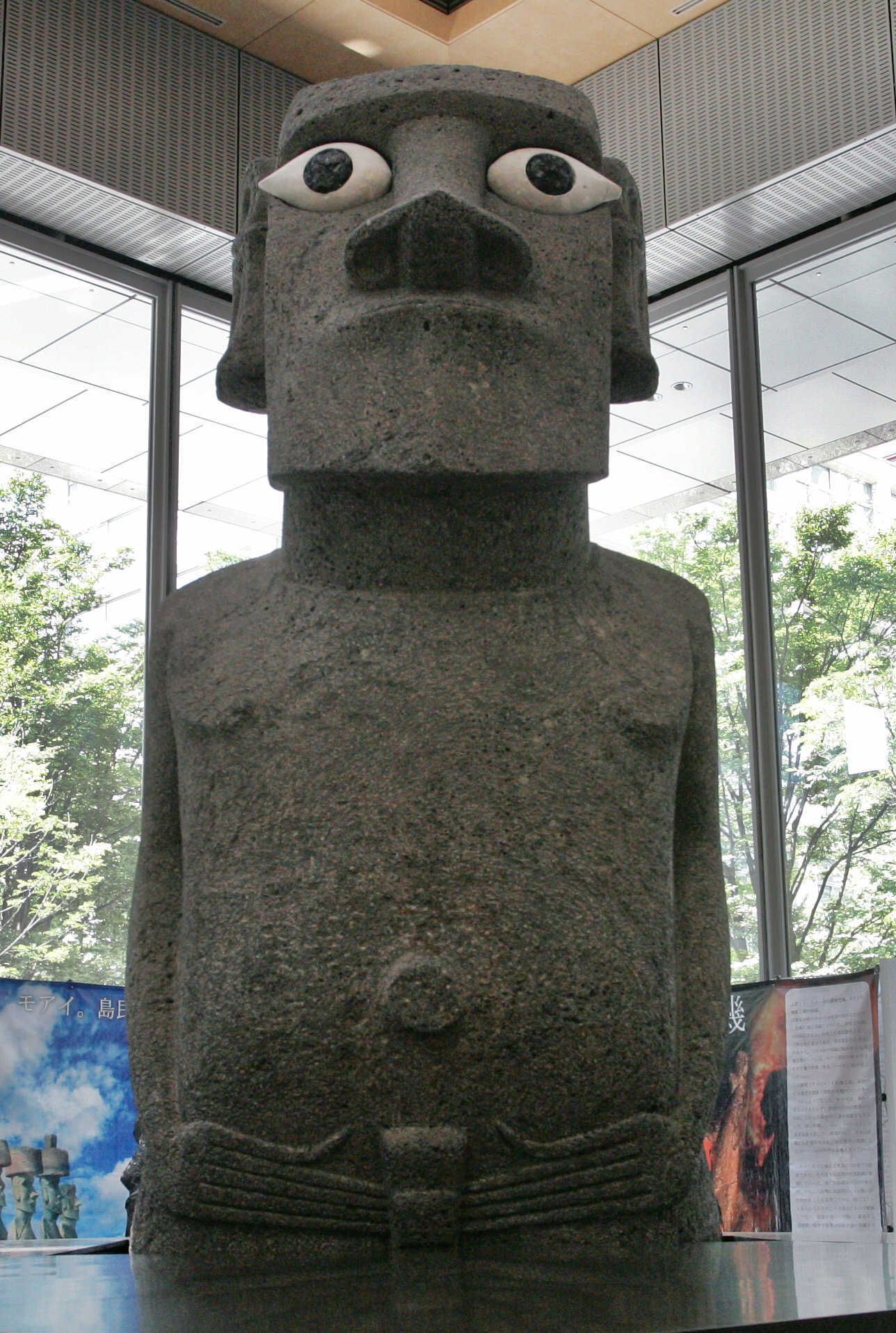
In fact, there was also a moai display at Marunouchi Building in 2007, commemorating the 110th anniversary of the Japan–Chile Treaty of Amity, Commerce, and Navigation. It was about the same size as this one, but eyes made of coral were set in place=photo lower=. Because it differs from the moai we usually see, it may look like a fake — but this, they say, was the original form. However, there are no coral reefs near Easter Island, so islanders must have obtained coral through trade. What routes did they travel? This island and its moai hold many such mysteries — but that story will have to wait for another day.
Display hours are 13:00–20:00 on the 20th, and 11:00–20:00 from the 21st through the 28th. "Exhibition of Moai Statues Made with LEGO® Bricks by Junpei Mitsui" will run at the same time. Mitsui founded the University of Tokyo LEGO Club and, in 2011, became the youngest and first Japanese among 13 people worldwide recognized by the LEGO Group as "LEGO® Certified Professionals" with "world-class LEGO® brick building skills for ordinary people" — a global superstar. Besides a display of Mitsui's moai (about 60,000 pieces), on the 23rd there will also be workshops to build moai with LEGO® bricks (two sessions at 13:00 and 14:30, 20 people each on a first-come basis — numbered tickets from 11:00).