

In a recent blog post on winter snow crab, I introduced various tags certifying origin, including the "Tottori Matsuba Crab" tag. Look closely and there is small print below. It reads "Inshu washi with chitosan"=photo top.
Chitosan is refined from crab and shrimp shells and used in health foods (foods for specified health uses) "for people with high cholesterol," as well as cosmetics and, as a material, in fibers and films. Sakaiminato, a major crab port, is said to be Japan's top chitosan producer. These are specialty tags: Inshu washi—a Tottori specialty—coated with that chitosan.
"Inshu washi," also called Inaba paper, is handmade washi produced in eastern Tottori (Inaba Province) from mitsumata and kozo. The prefecture website says the origin is unclear, but paper thought to have been made in Inaba is preserved in Shosoin documents from the Nara period, and the Engishiki (compiled 905–927) records paper presented to the court from Inaba. In the Edo period it flourished as domain official paper and for common use; in Meiji, imported bleaching technology boosted production, but after the war copiers and changing lifestyles devastated office tissue and shoji paper. New products include painting paper and craft paper; especially handmade high-grade painting paper now boasts Japan's largest output. It is praised nationwide for smooth writing—you can write two sheets in the time one sheet takes on other washi, with less ink consumption—earning the saying "Inshu never runs out of brush." Recently, traditional techniques are also being applied to three-dimensional paper and functional washi.
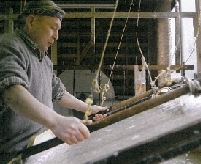
According to the site "Nihon Bunka Iroha Jiten," papermaking scoops pulp with a screen (sugeta), shakes it to entangle fibers, and repeats scooping to reach the desired thickness=photo bottom, from the Inshu Washi Cooperative website. Painting paper weighs 8 monme 5 bu (about 31 g) per full sheet; master craftsmen are said to produce stacks of a hundred sheets with identical weight and thickness—a feat of skill.
According to the Tottori Prefecture Agriculture, Forestry and Fisheries Department, Ozu Washi in Nihonbashi Honcho 3-6-2, Chuo Ward, Tokyo (http://www.ozuwashi.net/index.php) handles much Inshu washi. Nearest stations include Hibiya Line Kodemmacho and Ginza/Hanzomon Line Mitsukoshimae. It is just a short hop from Takebashi at Palaceside Building.