

A five-minute walk from Palaceside Building brings you to the Chiyoda Ward Library (1-2-1 Kudan-Minami, Chiyoda-ku, 9th floor of the ward office), where "Library Book Exhibition VOL.59: From Edo Shogunate Go and Shogi Masters to Popular Games" ends its shogi display today, the 28th; go begins on the 29th (through February 25; closed the fourth Sunday).
Among the shogi exhibits was an interesting item: Shogi Iroha Jizu by Masatame Maruyama (Shogi Geppōsha, B6 bound collection of curved tsume, Showa 2 = 1927). The Akashiya Bookstore list (Kanda Jimbocho 1-8, Chiyoda-ku) priced it at 10,000 yen. It is a tsume shogi book, said to be a classic of curved tsume (kyokuzume). Kyokuzume is a playful form where initial piece placement or checkmate shape carries meaning—letters or shapes. Types include initial-shape kyokuzume (opening layout carries meaning), aburidashi (checkmate shape carries meaning), and three-dimensional kyokuzume (both opening and checkmate carry meaning).
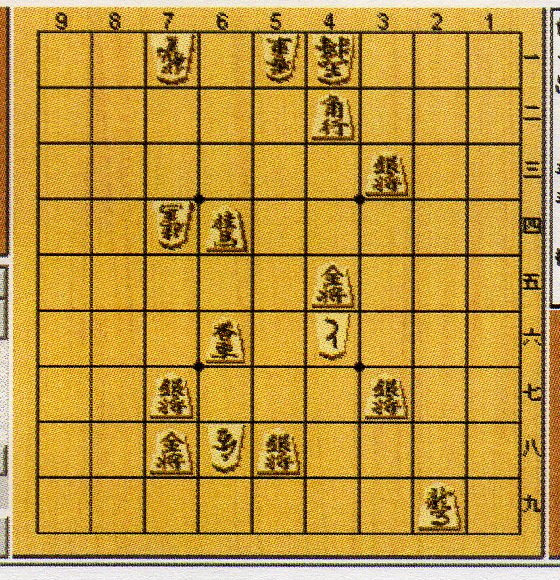
See the photos for examples. The checkmate at top forms a neat "I" character; bottom shows the initial position (no pieces in hand for sente). Both are aburidashi from the book—23-move mate with lance drop at 5-6. The site "Tsume Shogi Fifty-Sound Chart" (http://park.geocities.jp/aburida_c/index.html) has many such kyokuzume. There is a page for each iroha character; this work is introduced first for "I," with the note that Shogi Iroha Jizu completes all forty-eight iroha characters plus "kyo" in sets of initial-shape kyokuzume and aburidashi—an astonishing collection. The site "Selected Masterpieces of Classical Short Tsume Shogi" also introduces Maruyama's works (http://bcaweb.bai.ne.jp/sokikai/1_cover/046.html).
The All Japan Tsume Shogi Federation (site: http://park6.wakwak.com/~k-oohasi/zentumeren/) is active, along with various sites and books. The ultimate tsume book Compendium of Four Hundred Tsume Shogi Masters: One Problem Each was produced; part can be read online (http://toybox.tea-nifty.com/memo/2011/07/post-7183.html). It presents many masterpieces with introductions to their creators—a fresh reminder of shogi's depth.