
During the February 26 Incident of 1936 (Showa 11), the stock market was also closed. There were 11 exchanges nationwide including the Tokyo Stock Exchange; aside from some morning trading, all halted afterward. With martial law in the capital, that was only natural. Trading resumed on March 10, when the Hirota cabinet was formed.
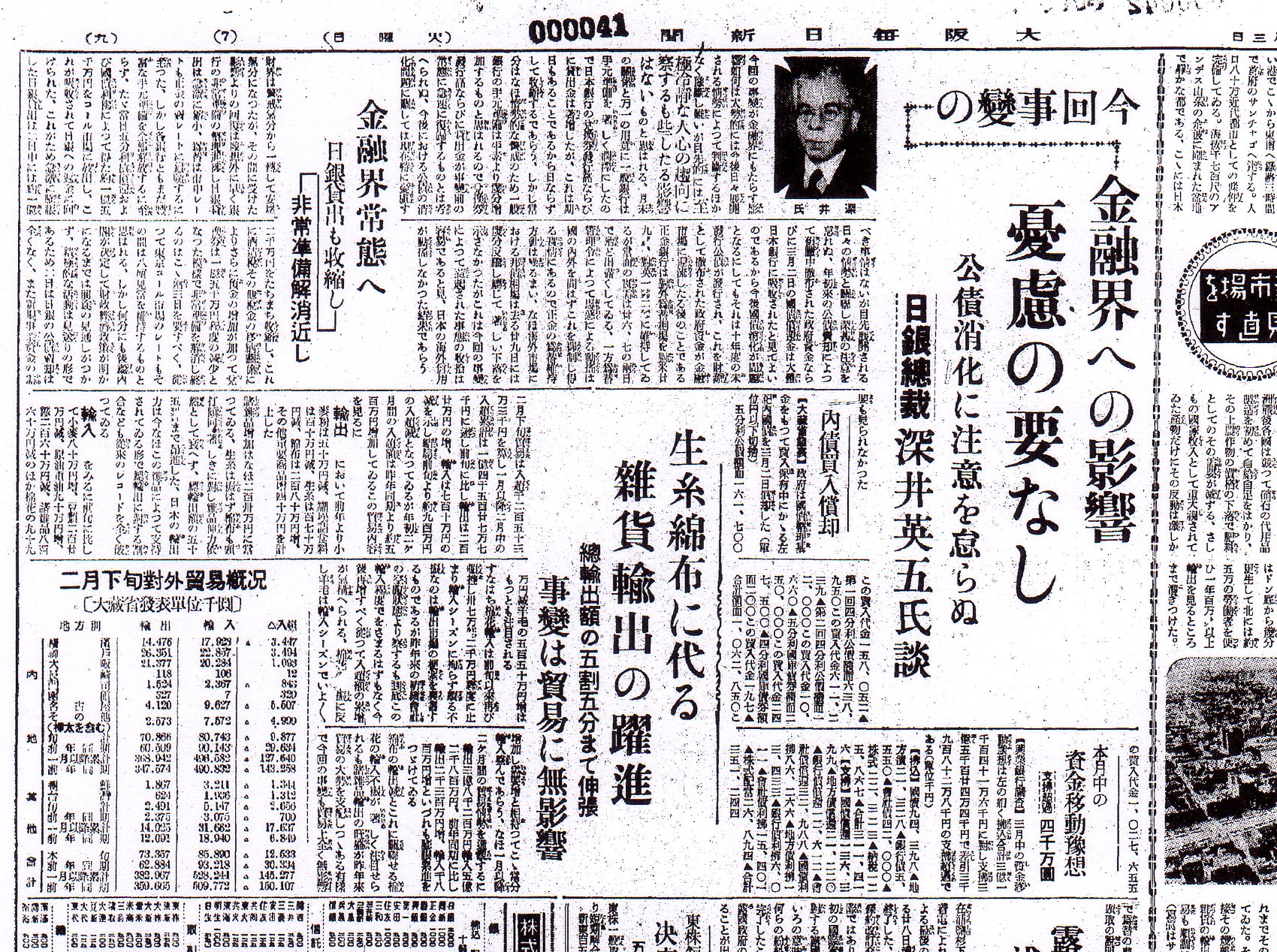
The long market closure apparently involved technical settlement issues. Besides cash trading, there were short-term and long-term clearing trades (margin trading), and when trading stopped, disputes arose over how to handle items whose settlement dates had arrived—reported in the predecessor Tokyo Nichi Nichi Shimbun and Osaka Mainichi Shimbun (head office = Palaceside Building). Of course, with the country on the brink of civil unrest, the greatest reason for the prolonged halt was fear that reopening rashly would trigger a crash and chaos.
Following the papers, the March 3 business page carries Governor Fukai Eigo of the Bank of Japan's statement prominently=photo bottom. Headlined "This incident—impact on financial circles; no cause for concern," it emphasized that "ordinary banks have made their cash positions notably ample" and that funding was fully secured. It somehow recalls a senior official after a major accident saying "there will be no immediate impact"...
Finance Minister Baba Keiin's remarks on December 25 of this blog, hinting at active fiscal policy, were probably also a desperate signal to the market.
The March 11 morning edition reported trading's resumption. The headline read "Speculative and high-dividend stocks plunge"=photo top. "Plunge" is quite a word. A comparison table of major stocks before and after the halt showed leading textile issues: Kanebo 225 yen 50 sen ⇒ 207 yen, Teijin 72 yen 20 sen ⇒ 66 yen; among others Nissan 73 yen 50 sen ⇒ 67 yen 50 sen, Tōden 63 yen 70 sen ⇒ 58 yen. Within that, "some munitions stocks bought on favorable views of national defense buildup" stood out—Nisseki held nearly flat at 57 yen 70 sen ⇒ 57 yen 50 sen.
The stock market sometimes anticipates the times. In hindsight, that day's market may have foreshadowed a dark future.