

As reported recently, the "Kanda Curry Grand Prix (GP) 2012" was held in Kanda, the "Curry Town" ten minutes from Palaceside Building, on October 27 and 28, drawing more than forty thousand visitors—easily surpassing last year's thirty thousand. The top three shops were decided by popular vote (see the organizer's website at http://kanda-curry.com/).
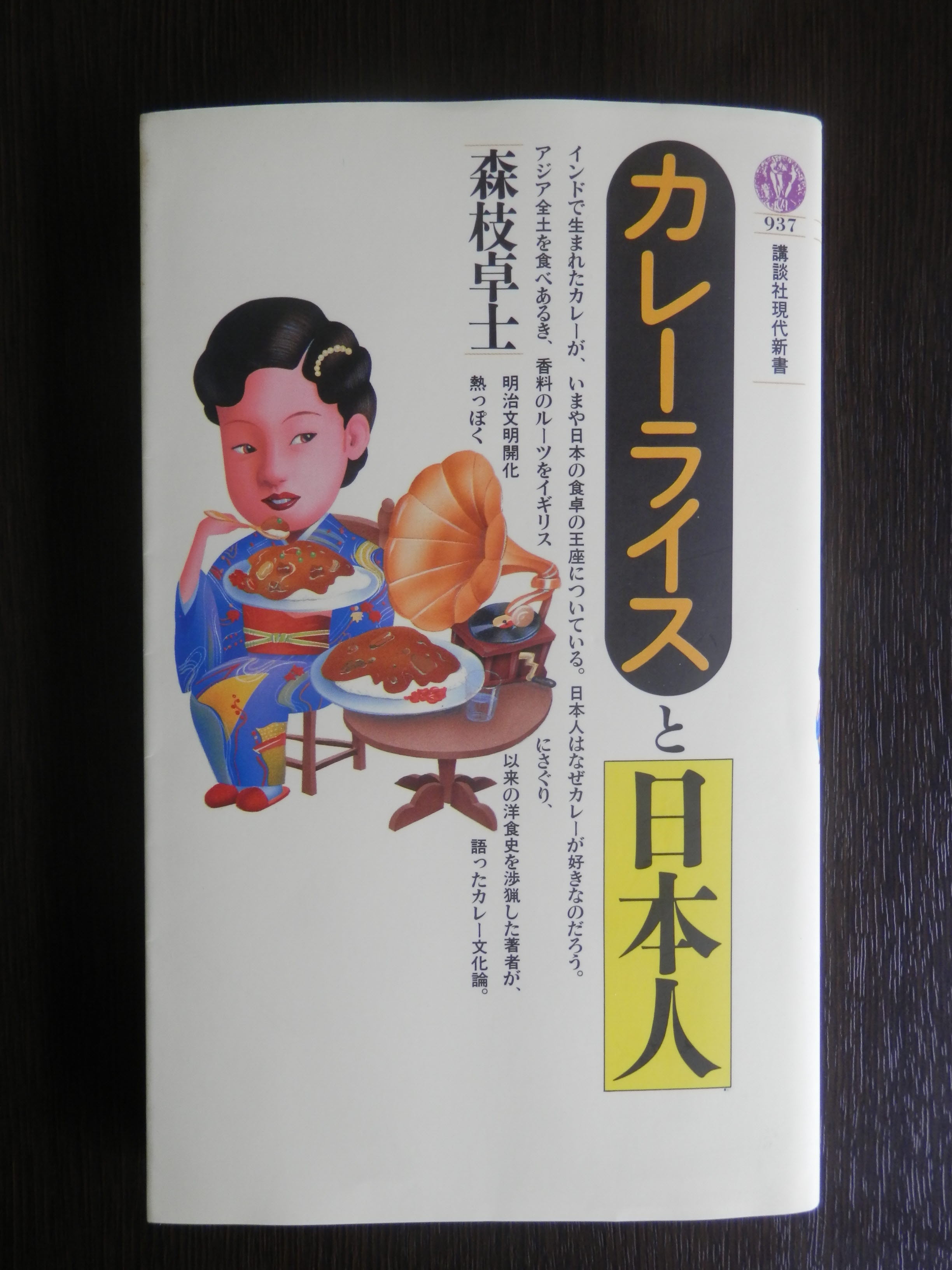
Many books discuss curry. Curry Rice and the Japanese (Takushi Morieda, Chūkō Shinsho)=photo bottom was quite enjoyable, so I introduce it here.
In India spices are ground fresh; in Britain, which colonized India, powder mixes for convenience became "roux." C&B curry powder reached Japan in the Rokumeikan era, the author finds. The oldest documented curry in Japan, he reports, is "frog curry" in the 1872 (Meiji 5) book Guide to Western Cooking=photo top, from Curry Rice and the Japanese. By Meiji 10, the famous Western restaurant Mikawaya advertised "rice curry 12 sen 5 rin." Early "toppings" besides frog included bamboo shoots, mushrooms, and lotus root; the author's "authentic Japanese-style" curry with potato and carrot appears only in the 1915 (Taishō 4) Practical Home Menus and Recipes (Miyoshi Nishino)—after which army rations and "national dish" status followed. Other books largely share this timeline as accepted wisdom. The author writes that curry symbolizes Japanese culture—"formed by actively taking in outside influences, not staying within national essence alone."
Yet another theory rewinds history four hundred years. When Christian daimyo Ōtomo Sōrin, Ōmura Sumitada, and others sent the Tenshō youth mission to Europe in the sixteenth century, they are said to have brought curry spices from India to Japan—a claim promoted in Ōmura's home city of Ōmura, Nagasaki Prefecture, as the "root town of curry" for local revitalization (evidence is thin; the city website mainly introduces a community group).
The Curry GP page also briefly covers "the history of curry in Japan," including Dr. William Clark of "Boys, be ambitious!" fame. Clark, vice-principal of Sapporo Agricultural College (now Hokkaido University), discouraged rice but made an exception for rice curry. Some disagree: The Curry Narrative (Yoshiko Yoshida, Chikuma Shobō) notes that Hokkaido University records show only a September 1877 delivery of curry powder after Clark left, questioning the Clark anecdote.
Japan, awash in such trivia in books and online, is truly a curry paradise.