
In 1878 (Meiji 11), more than 260 soldiers revolted at the Imperial Guard barracks near Takebashi, where Palaceside Building stands—the "Takebashi Incident." I recently introduced Hisae Sawaji's nonfiction Fire Burns in My Breast on the subject.
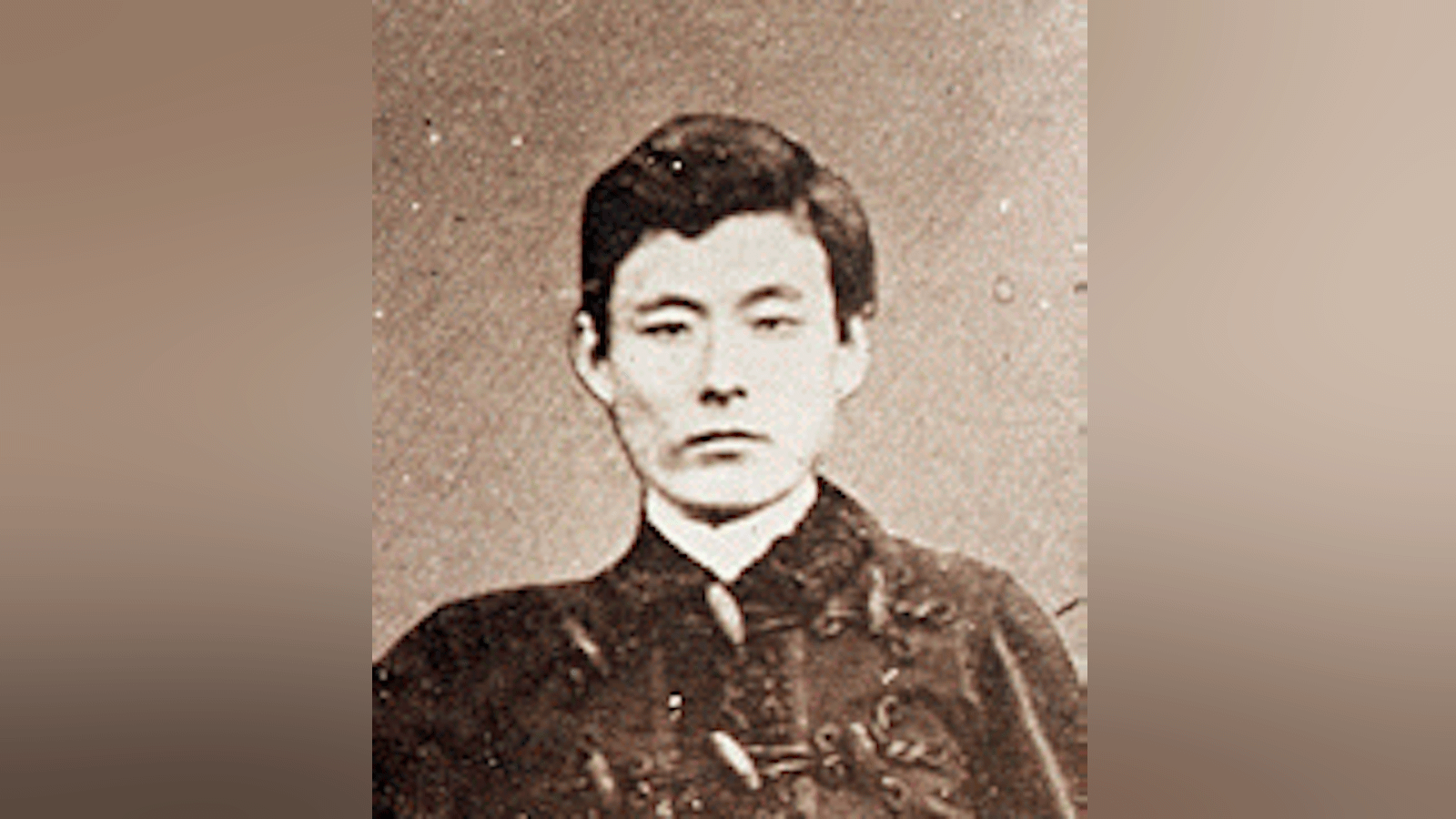
The revolt was triggered by dissatisfaction over rewards and treatment after the previous year's Satsuma Rebellion (bonuses going to senior officers while NCOs and rank-and-file faced pay cuts). Soldiers rose to petition the Emperor directly. In the book, Sawaji focuses on one figure: Lt. Col. Ryūnosuke Okamoto (1852–1912), commander of the 1st Reserve Artillery Battalion=photo top.
The core mutineers were Imperial Guard artillery, but other units were involved; Okamoto was suspected of leading—or inciting—the soldiers.
Okamoto of Wakayama's Kii domain was linked to Muneakira Mutō (1844–97) of the same domain. A shogunate loyalist who joined the Shōgitai in the closing days of the shogunate, he was spotted by Mutō during Kii domain reforms after the Restoration and entered the Army reportedly through Mutō's influence.
Mutō, later known for efforts to revise unequal treaties and appearing in textbooks, was in prison at the time of the Takebashi Incident. He was implicated in the "Risshisha Incident" in Tosa (Kōchi)—an alleged plot to rise in support of the Satsuma Rebellion (released 1883, later rehabilitated through ties with Hirobumi Itō and others). Sawaji speculates Okamoto sought to use the revolt to suppress the soldiers' petition in exchange for lightening Mutō's sentence. In fact Okamoto escaped execution and was merely dismissed from the Army, walking free.
The truth remains in darkness, but Okamoto's later life was equally turbulent. He became a student at Yukichi Fukuzawa's home and studied at Keio (perhaps through Mutō's friendship with Fukuzawa?), and later went to late Joseon Korea, becoming involved in the assassination of Empress Myeongseong (1895).
His subsequent career also seems full of intrigue—too much for a quick study. It makes one want to look deeper.
Returning to the Takebashi Incident: the mutiny itself was clumsy in command and control—perhaps precisely why Okamoto and others could manipulate it. Even without Sawaji, historical events make one curious about the figures moving behind the scenes. Needless to say, Sawaji's stance is marked by warm sympathy for the rebel soldiers used by such men.