
Cross Takebashi from Palaceside Building's west entrance — the Takebashi Gate once stood here. A monument marks the spot beside the moat — leafy and dim this season.
Once inside Edo Castle — no public roads toward Chidorigafuchi. Fifteen gates ringed the inner bailey; Takebashi Gate was built in 1620. (The outer line linked Akasaka, Yotsuya, Koishikawa, Asakusabashi.)
After Meiji, outer gates like Otemachi and Daimyo-koji were removed for urban planning; many palace gates remained — but Babasaki and Takebashi were demolished as traffic obstacles. Pity.
Edo Takebashi lay ~10 m south (toward Otemachi), existing when Ieyasu entered Edo in 1590. Named for a bamboo bridge — or perhaps a Hojo retainer nearby. The 1602 "Alternate Keicho Edo Map" calls it "Inner Passage Bridge," mainly for access to the women's quarters — did Kasuga-no-Tsubone cross it?
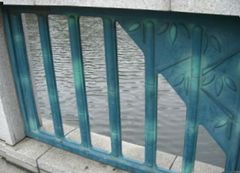
Today's bridge (1926, post-Kanto quake) was rebuilt in 1993 with white, black, and cherry granite. Did you know the railings mimic bamboo?
We walk and look daily yet miss so much — this Palaceside neighborhood is a treasury of history. More walks to come.