
COVID-19 infections have not stopped. Emergency restrictions have been lifted and everyday life is gradually returning, while wider telework and other changes in how we work are called the new normal.
Offices are devising all sorts of ways to avoid the "three Cs" (closed spaces, crowds and close contact). A simple method, often seen, is hanging vinyl from the ceiling between neighboring desks. If the vinyl is flammable, though, a fire could race along it in a flash — a risk that has been pointed out.
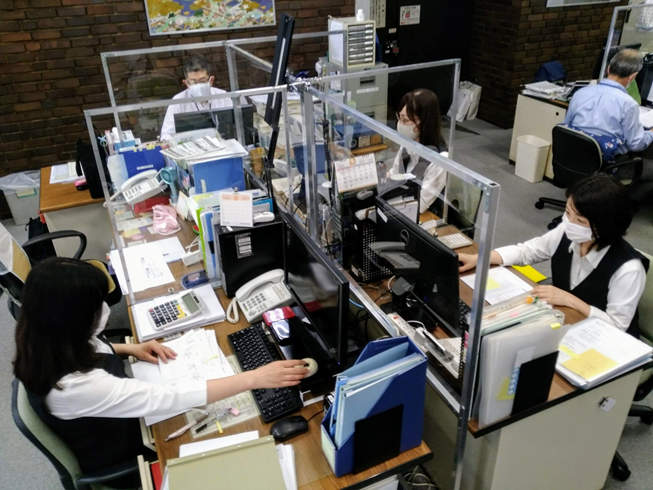
Mainichi Building Co., which manages the Palaceside Building, has installed handmade screens: acrylic panels (2 mm thick) set in aluminum frames. A small one sits on the reception table at the fifth-floor office entrance where staff greet visitors =photo above. The bottom 15 centimeters or so is left open so documents can be passed. Between facing desks in each section, and between neighboring desks, we are also installing screens 140 centimeters high from the floor =photo below. They are transparent, so the photo may be a little hard to read, but you should be able to see the silver aluminum frames. Acrylic's great feature is clarity so high you barely know whether it is there.
Acrylic is combustible, of course, but it does not catch fire as easily as a vinyl curtain. More important, hanging curtain-like material from the ceiling can interfere with fire detectors and sprinklers — a Fire Service Act issue — whereas these screens leave air flowing above the acrylic, so they are fine.
A handy employee made them in-house. Only material costs were incurred. Desktop screens on online shops can run from several thousand yen to more than 10,000 yen for a size that spans a desk width. Functions and the rest cannot be compared simply, but they were quite inexpensive.