
On Wednesday, April 8, an outreach blood donation by bus is scheduled in front of the Palaceside Building west entrance. The worry is COVID-19; the government is said to be set to issue a "state of emergency" as early as the 7th, but as of the 6th we intend to hold the drive as planned. (Photo above is September 2018)
Reception is 10–11 a.m. and 12:15–4 p.m. Drawing blood itself takes about 10 minutes, but with the physician's interview and the rest, plan 30–40 minutes from check-in to finish.
As you can imagine, donations have dropped sharply because of COVID. According to the Japanese Red Cross website, February results met 100 percent of need in weeks 1 and 2, then 94.5 percent in week 3 and 90.6 percent in week 4. Later figures are unpublished, but a further drop is certain. A state of emergency would make things still tighter.
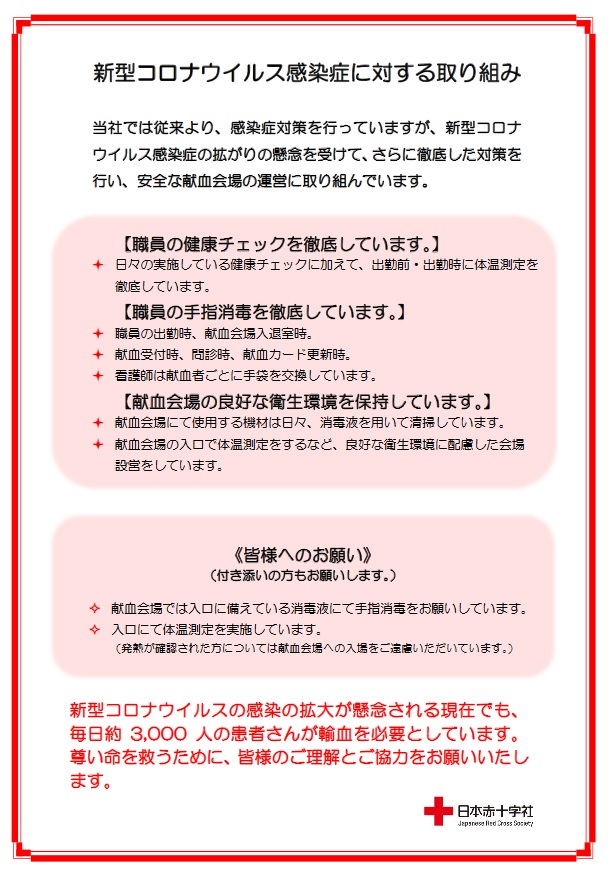
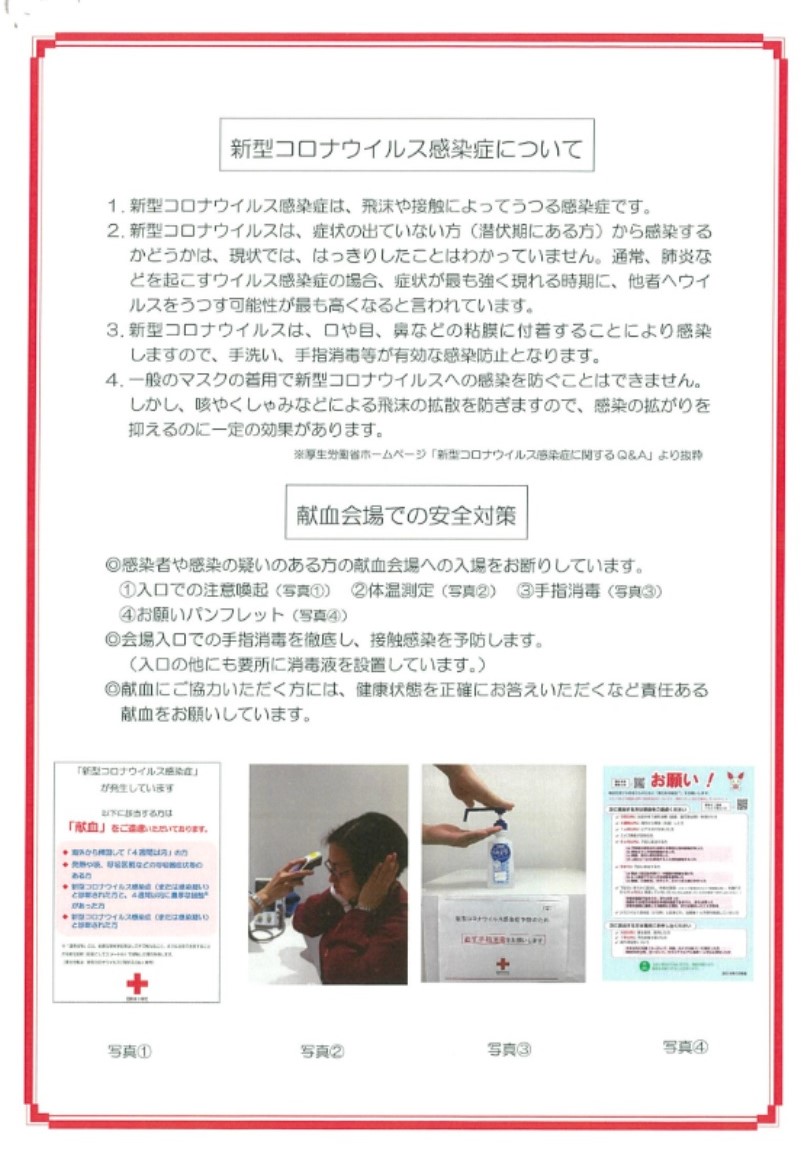
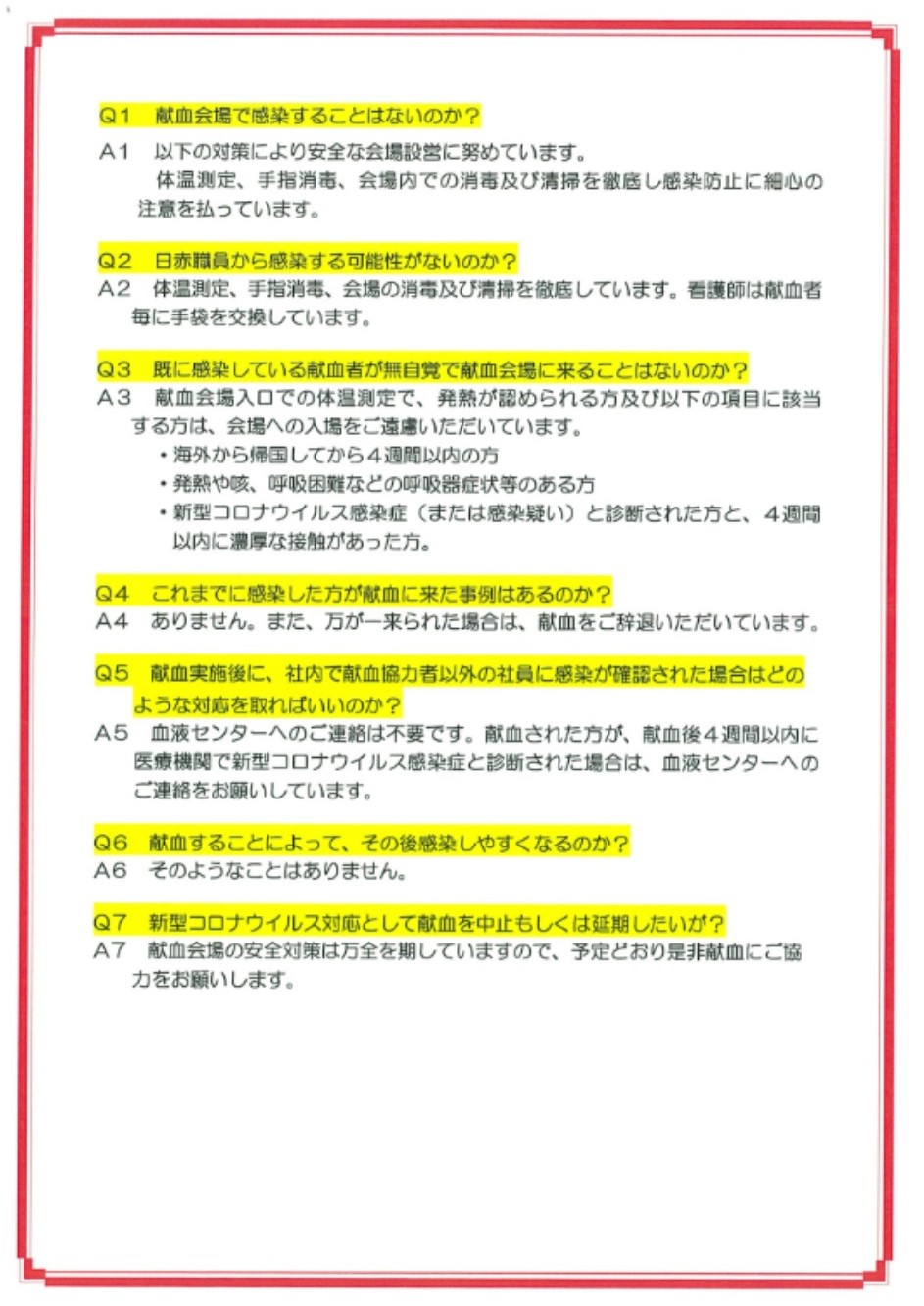
Some will worry about infection. We received a document from the Red Cross. It is attached at the end; besides thorough disinfection and cleaning of the venue, nurses change gloves for each donor, and at the entrance they take temperatures and disinfect hands — close attention, they say.
It is a time like this — and that is exactly why we ask for many people's help.
Below are the usual notices and cautions for donating.
Those who help later receive by mail (free) results for 15 items including ALT (GPT), γ-GTP, cholesterol and glycoalbumin.
The Red Cross says donors need at least four hours of sleep (fatigue from lack of sleep can cause a transient drop in blood pressure and feeling unwell after donating). People donating in the morning are asked to eat breakfast (a light meal is fine).
Some medicines can disqualify you, but some — for example certain antihypertensives (no heart complications, blood pressure in a roughly normal range) — allow donation even if taken that day. Please ask.
People who "have received a transfusion or organ transplant," "returned from overseas within four weeks," or "had dental treatment with bleeding within three days" cannot donate. In particular, anyone who may have been exposed to HIV, or who wants a test, must never donate.
Past donors should bring a donor card or donor handbook; others, identification such as a staff ID.
For other questions, please ask at the desk on the day.