
On November 8 the Palaceside Building held its annual Fuigo Festival. It is a traditional rite praying for the safety of fire, and at the end it is customary to give mandarins to those present; eating them is said to keep colds and measles away. We prepared a box and handed them out =photo above.
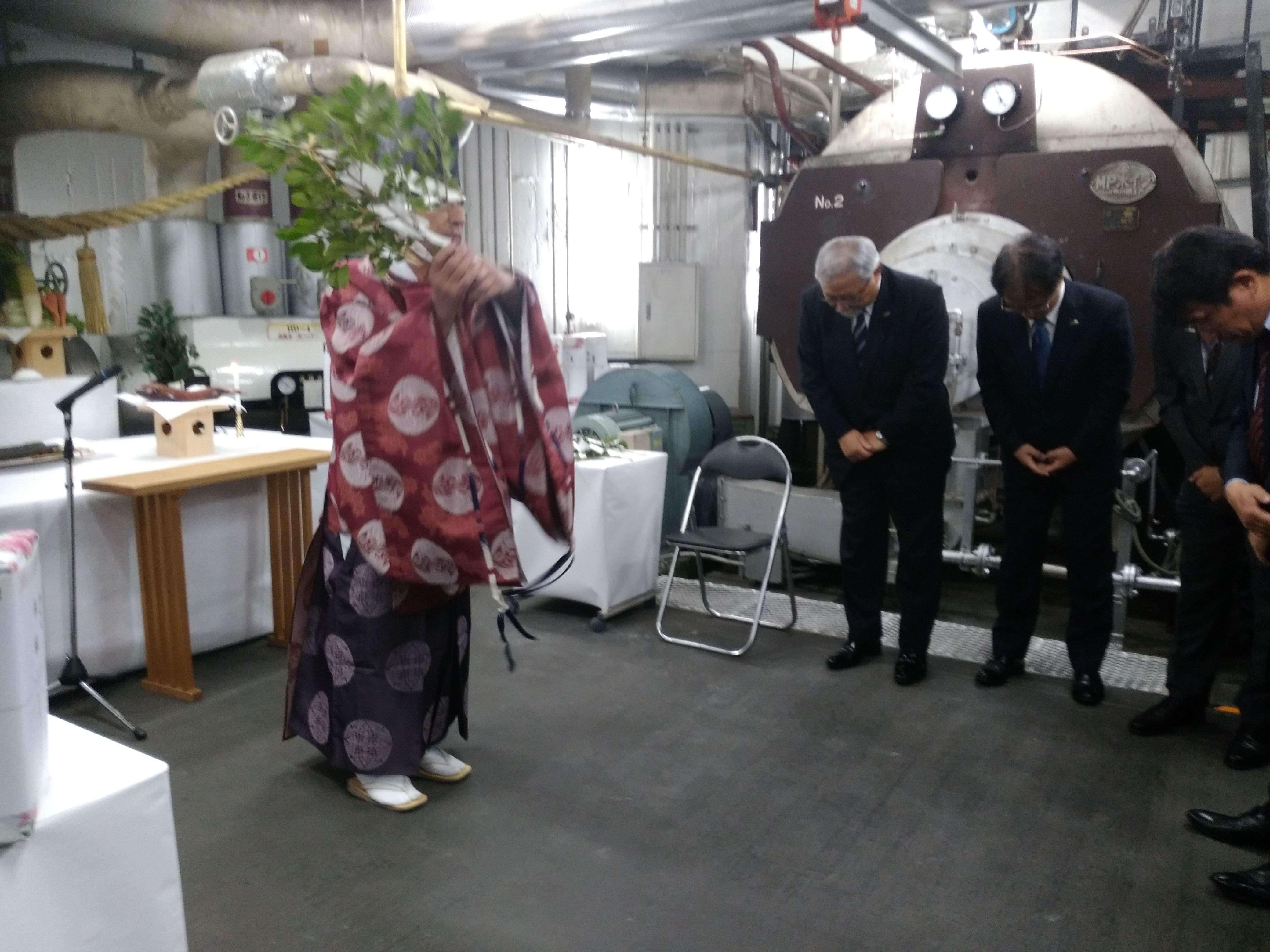
For the festival an altar is set in a corner of the boiler room, above the rooftop floor of the east elevator tower; a priest from Tsukudo Shrine in Kudan offered norito and performed a purification =photo at the end (altar at far left in the photo; a boiler is visible at far right). Then about 100 people — building staff, contractors and partner companies — offered tamagushi. After the ceremony a simple naorai was also held.
"Fuigo" is also written "吹子," a blower once indispensable for smelting and working metal. Wind was sent in to raise the fire and reach the high heat needed to melt metal. It began with leather bags sewn from hides and evolved into airtight boxes whose pistons pumped air back and forth.
November 8 for Fuigo Festival was originally a lunar date. Especially from the Edo period it flourished in Kyoto and Edo: on festival day people in fire-using trades rested, visited Inari shrines for ofuda, purified the bellows, hung shimenawa, offered rice, sacred sake, rice cakes and mandarins, and prayed for safe work. From evening they scattered leftover offerings of rice cakes and mandarins at the gate for neighborhood children. The trades were smiths and foundry workers. It spread to other fire-using businesses and, after modernization, became a yearly safety prayer wherever there are boilers and the like.
Why Inari, originally a farming and grain deity, became the guardian of fire trades has several explanations; the natural reading is that Inari became a god of fire for cooking grain and then of occupations that handle fire. The Palaceside Building uses boilers, so we have continued the safety prayer since opening 53 years ago.
So why mandarins? In the Edo period they were fairly luxury goods. On the other hand, acidic mandarin trees were a "natural enemy" for metalworkers, who did not plant them in the garden, and chances to eat them day to day were few. I have heard the theory that, precisely because it was a rest day, they offered them and ate their fill.
Fuigo Festival mandarins are also said to be tied to Kinokuniya Bunzaemon, a great Kishu merchant of the Edo period. In his twenties, though Kishu had a bumper mandarin crop, storms blocked shipment to Edo and prices collapsed; Bunzaemon bought them cheap, risked his life crossing the stormy Pacific, reached Edo safely and sold high. Those mandarins, the story goes, were actually for Edo's Fuigo Festival. Truth unknown, but it sounds somehow plausible.
May this year be spent safely and in good health.