

Typhoon No. 19 left a deep mark. We offer our heartfelt sympathy to those affected.
Central Tokyo seems not to have reported very large damage, but there are many small things. In front of the Palaceside Building, too, a street tree had snapped and fallen =photo above. The spot is as you leave the west entrance
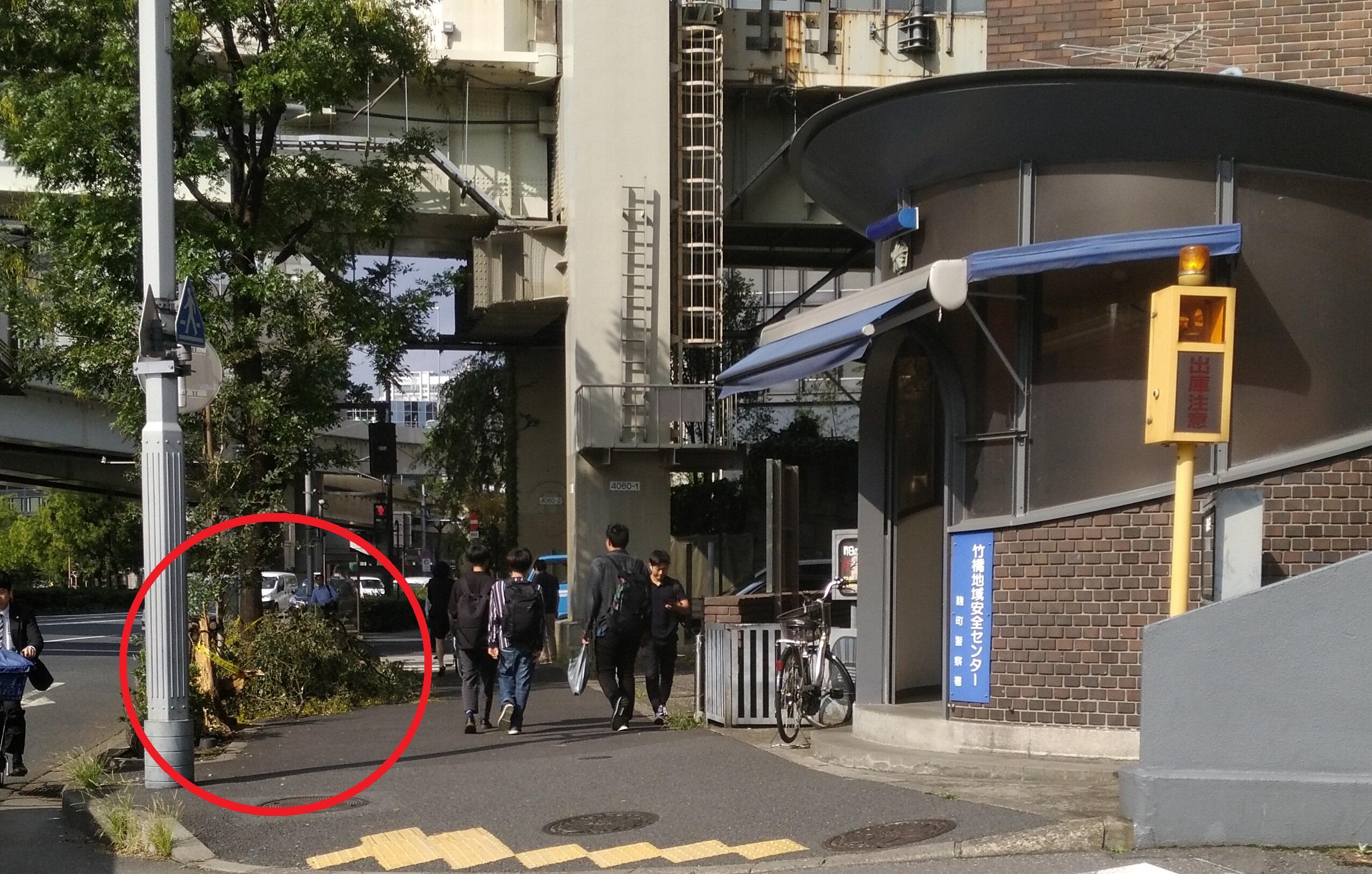
toward Jimbocho. It is in the planting in front of Kojimachi Police Station's Takebashi Community Safety Center (the former Takebashi koban) =photo right. This is not a high-rise canyon, but what kind of wind threaded the nine-story Palaceside Building, other buildings and the expressway? Nature's force is beyond imagining.
This avenue is managed by the Tokyo Bureau of Construction; the tree planted appears to be enju (pagoda tree), a deciduous legume. It had distinctive fruit =photo below.
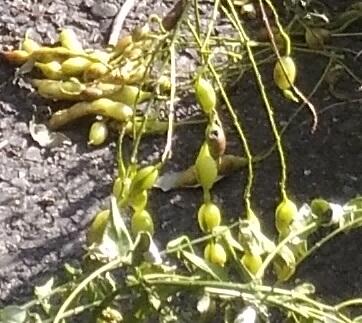
Enju is native to northern China and is said to have come to Japan long ago as a medicinal tree. Besides making shade with summer foliage, it is relatively strong against pollution, so it is planted as a street tree in many places. In English it is called both "Chinese scholar tree" and "Japanese pagoda tree"; the scientific name is "Styphnolobium japonicum." Native to China yet "japonicum" in the name — perhaps it was mistaken for a Japanese native because it has been planted here since old times.
The Palaceside Building takes part in Tokyo's Fureai Road Program so roads stay pleasant to use, and we plant and manage about 50 crape myrtles along some 200 meters of the Imperial Palace-side sidewalk of Uchibori-dori; including that stretch, enju planted as the main street tree is under Tokyo's management. A contractor who tends the building plantings found it on the 13th and contacted the responsible city office. Yellow "no entry" tape has also been put up for safety.
We pray for the earliest possible recovery of the disaster areas.
When the fallen tree will be removed is unknown. Tokyo as a whole surely has much damage, so while it remains, please take extra care when you pass.