
Central Tokyo was hit by a sudden violent rain on the morning of the 24th; then the sun came out, humidity jumped and the day turned muggy. The end of the rainy season seems to have been put off until the 25th or later, but like Kyushu–Shikoku–Kansai–Hokuriku, which declared the break on the 24th, Kanto feels as if tsuyu is over too. (This mood may only hold in the city center — please forgive us.)
Anyway, the rain stopped and we felt we had seen the sun after a long time. At lunch we slipped out of the Palaceside Building
and visited the East Gardens of the Imperial Palace (Edo Castle) for the first time in a while.
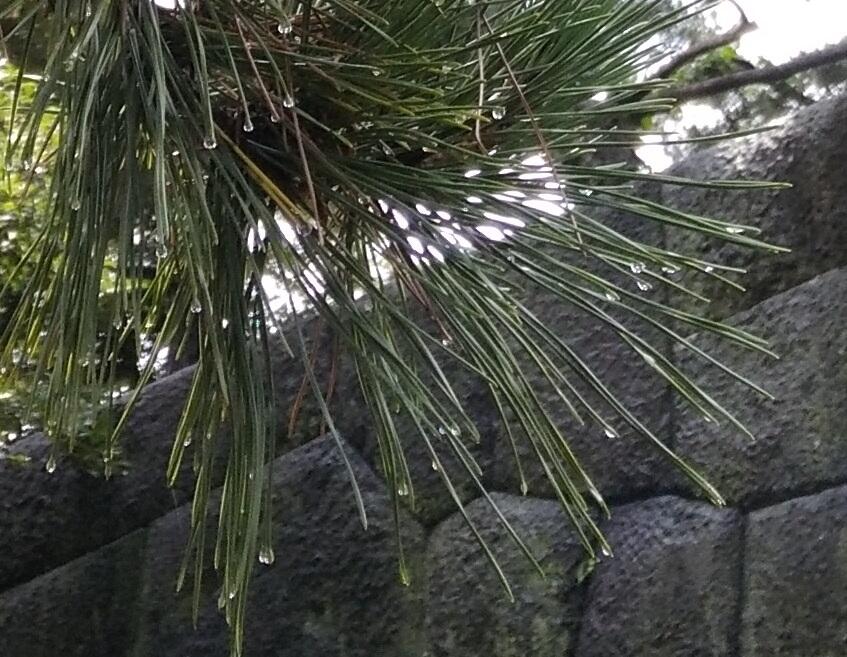
Entering Hirakawa-mon, raindrops from a little earlier still clung to pine branches =photo left, and the shade felt cool, but as we walked, feeling humidity rise fast in the sun, sweat soon broke out.
This time we visited the "old fruit-variety garden" introduced on the Imperial Household Agency website "East Gardens flower news" (http://www.kunaicho.go.jp/event/hanadayori/hanadayori-top.html). It sits at the south end of the broad lawn on the Honmaru site (now closed for construction), after you pass Hyakunin Bansho, Naka-no-mon and Obansho and climb the slope; as the name says, it gathers old fruit trees. Split into east and west plots, the east has five Japanese pear (Rosaceae) varieties, four peach/plum (same) and five citrus (Rutaceae); the west has five persimmon (Ebenaceae) and three waringo (Rosaceae)
.
Among them some had set fruit and taken color. The top photo might look like a tomato, but it is not. It is yakan (peach/plum), grown in Hokuriku. Right now is the fruiting season.
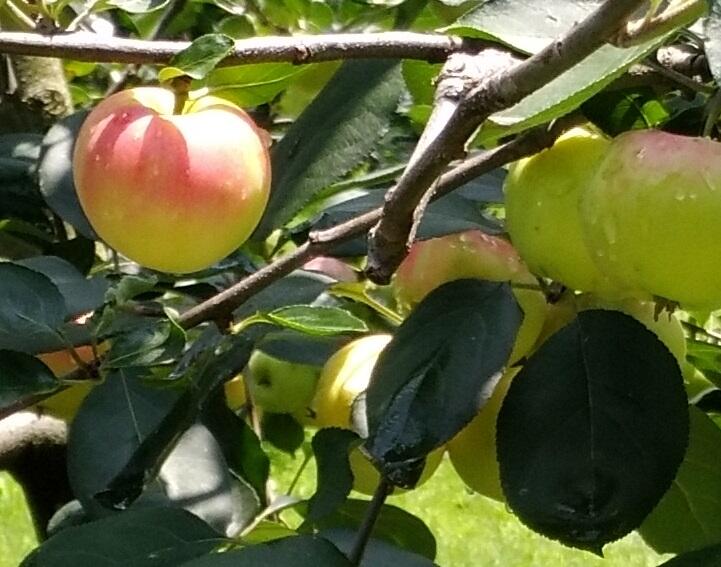
Photos right, above is Kaga Hanzaurai (waringo); written in kanji as "Kaga-han zairai," it was grown in Ishikawa Prefecture. Photos right, below is Manzaemon (peach/plum), grown in Kagoshima Prefecture.
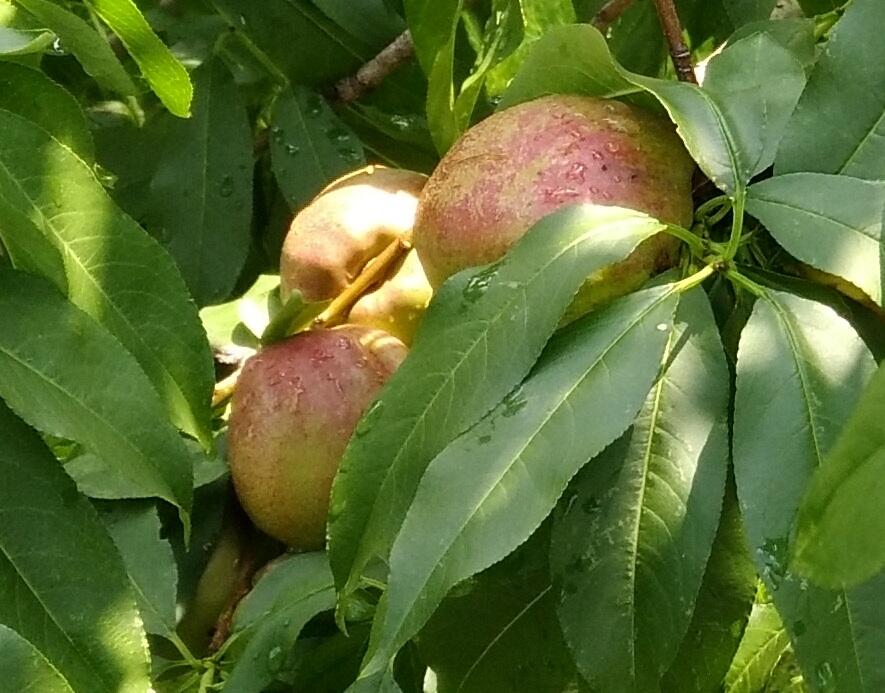
These two have an August fruiting season, so they can be enjoyed a while longer.
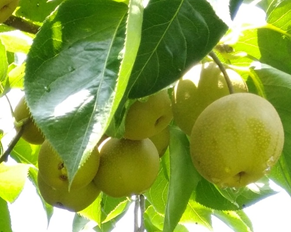
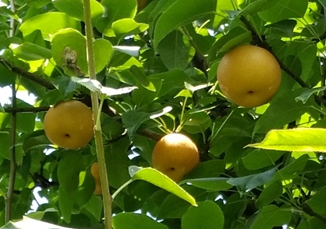
Japanese pears were also fruiting little by little. The last two are Ruisan-nashi (Ruisan pear) =photos below, left= and Rokugatsu-nashi (June pear =photos below, right). Grown in Niigata and Kanto (Gunma) respectively, fruiting in October and August, so Ruisan-nashi in particular is early. Whether that relates to the heavy rain or not...
The old fruit-variety garden was created at the wish of the Emperor Emeritus, planting old edible varieties cultivated in the Edo period on the castle site so visitors can enjoy them. Among them, in 2008 the Emperor Emeritus planted three citrus varieties and the Empress Emerita three Japanese pears; in 2009 the Empress Emerita planted two waringo and two persimmons.