

The new book introducing notable architecture around Japan, "Japan's Modernist Buildings the World Envies" (Chikyumaru, 157 all-color pages, 2,500 yen before tax), takes up the Palaceside Building. The blurb: "the peak of functionalism that visualizes architectural function to every corner."
The book =photo right is the cover works from the idea that "Japanese mo
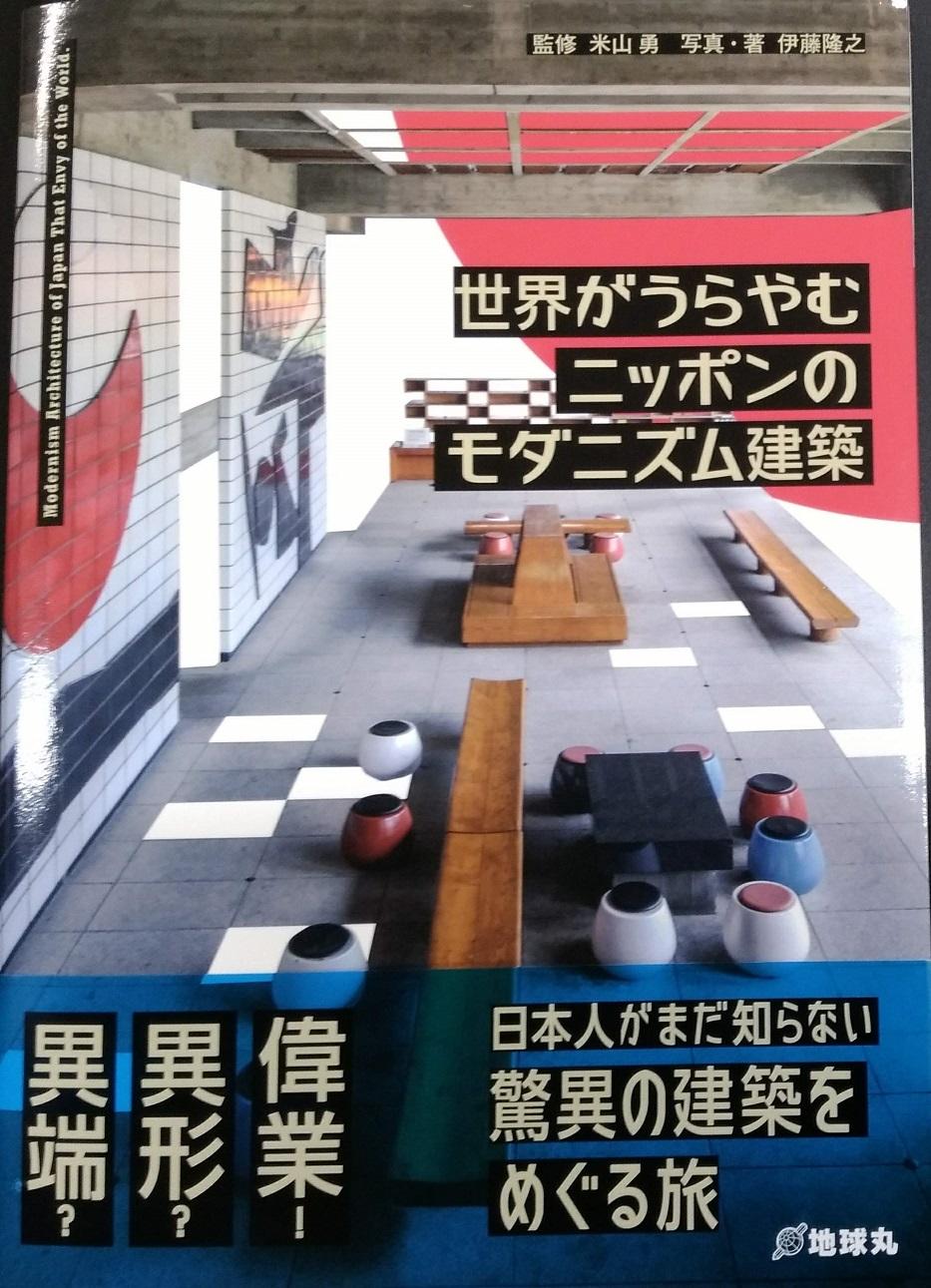
dernist buildings of the postwar high-growth years through the 1970s, using industrial materials such as steel, glass and concrete and unbound by traditional styles, are drawing attention not only in Japan but worldwide." Under architectural historian Isamu Yoneyama of the Edo-Tokyo Museum, it introduces 40 buildings.
On the Palaceside Building it explains that "though born as modernist architecture that put economic efficiency first, not aesthetics, aluminum-cast horizontal louvers that control sun through large glass, and cutting rain gutters short to cut cost while deliberately showing falling rain, visualize every corner of function by showing everything as it is." Each building has a "Yoneyama's view" blurb; for this one we were glad to read "it is no exaggeration to call it the peak of the 'functionalism' modernism holds as a shared ideal; a building that sharpens Corbusian functionalism."
Nine photos large and small — the familiar east-entrance marble stairs, elevator halls, Stairs of Dreams, rooftop garden — fill four pages with the building's charm.
Besides the Palaceside Building
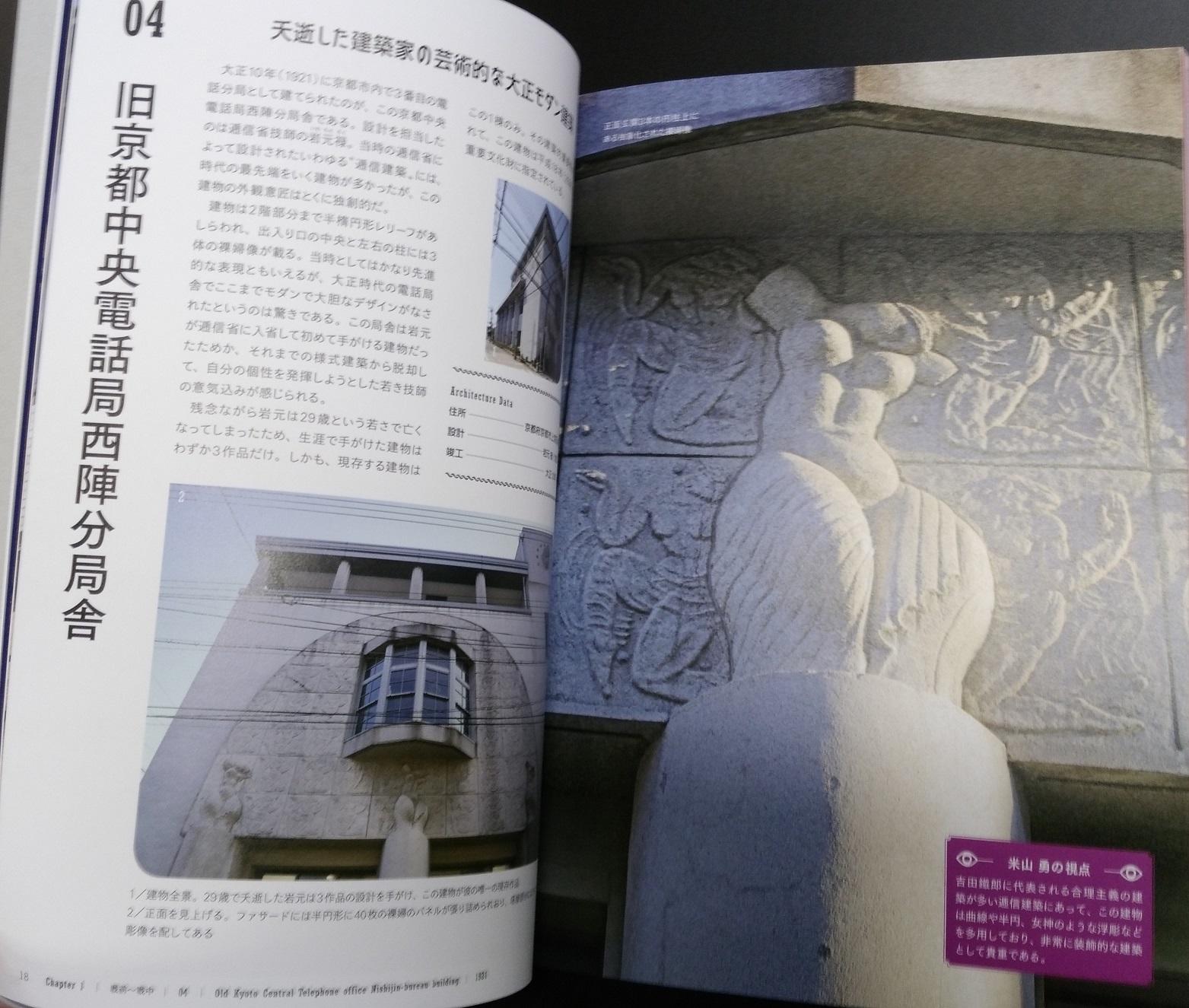
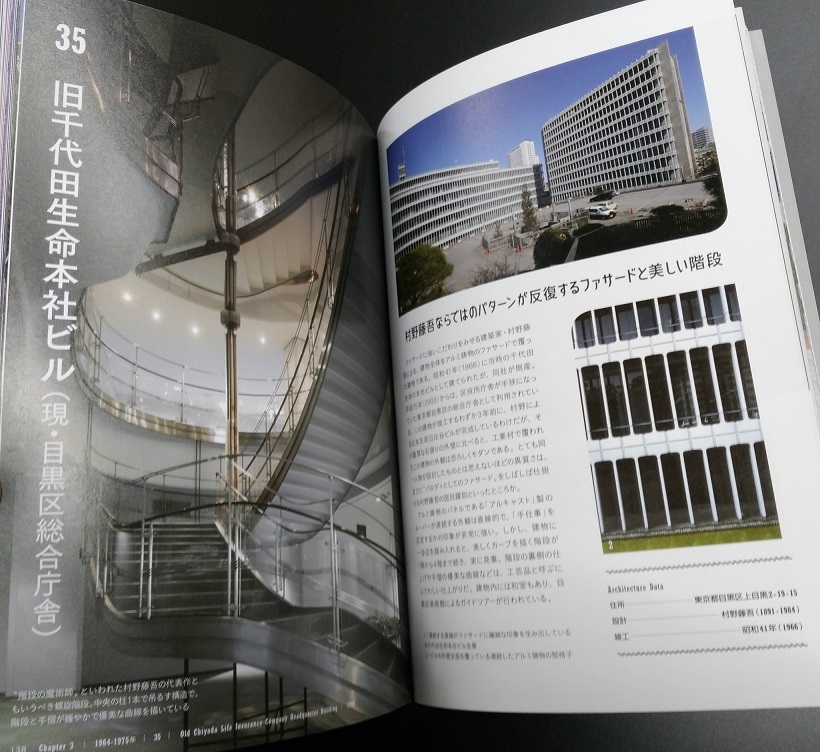
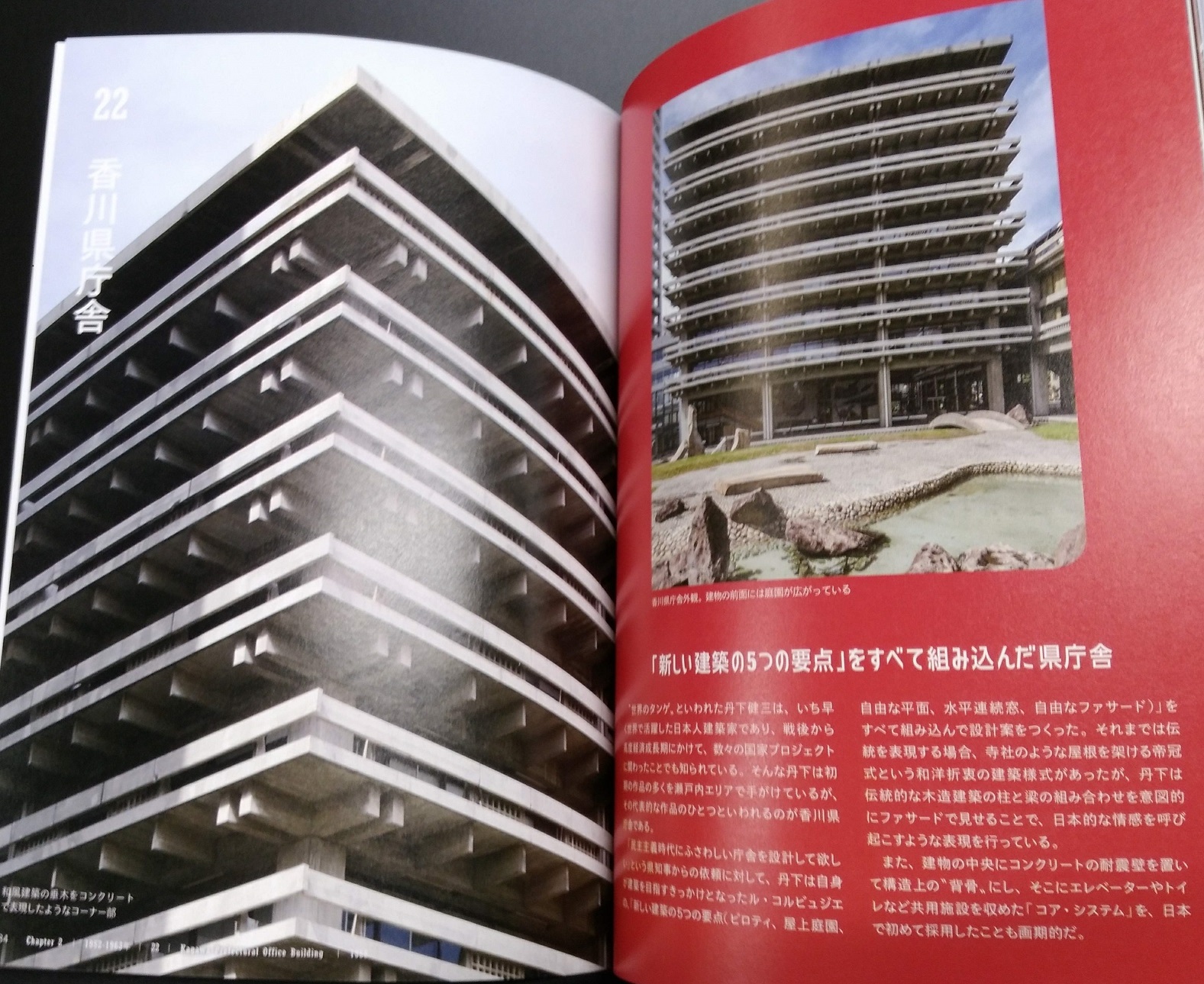
, many are museums, libraries, halls, religious buildings, schools and sports facilities around the country, including the National Museum of Western Art and Yoyogi National Gymnasium; a pursuit of artistry is naturally conspicuous. So office buildings are not many. Main examples: former Kyoto Central Telephone Bureau Nishijin branch (national Important Cultural Property, design Rokuro Iwamoto, completed 1921; same below) =photo left; Osaka Gas Building (Takeo Yasui, 1933); Hashima City Hall, Gifu (Junzo Sakakura, 1959); former Chiyoda Life head office (Togo Murano, 1966, now Meguro Ward hall after the ward bought it) =photo below left; Kagawa Prefectural Office (Kenzo Tange, 1958) =photo below right; Kasumigaseki Building (Toshiro Yamashita, 1968); Shinwa Bank head office (Seiichi Shirai, 1967–75) and other famous works.
Each is fine or distinctive — a pleasure to look at. Still, in the combined force of history and tradition plus design plus function, we think the Palaceside Building is first.
How would you rate it?