

The Palaceside Building held its annual Fuigo Festival on November 8. It is a traditional rite praying for the safety of "fire." =photo above. (Can you see the boiler at the far left of the photo?)
"Fuigo" (bellows), also written with another character for "blower," was indispensable for old metal smelting and working. To get the high heat needed to melt metal it sent wind to raise the fire. From sewn hide bags it evolved into boxes that send air by a piston.
The festival was handed down as an event on the 8th of the 11th lunar month when bellows craftsmen visited Inari shrines, purified the bellows and prayed for safe work. Occupations were smiths and casters. It spread to trades that handle fire, and after modernization became a yearly safety prayer wherever there are boilers and the like.
The Palaceside Building uses boilers, so it has continued from opening 52 years ago. Places that still do so, especially downtown buildings, seem few. The Palaceside Building is now a rare case.
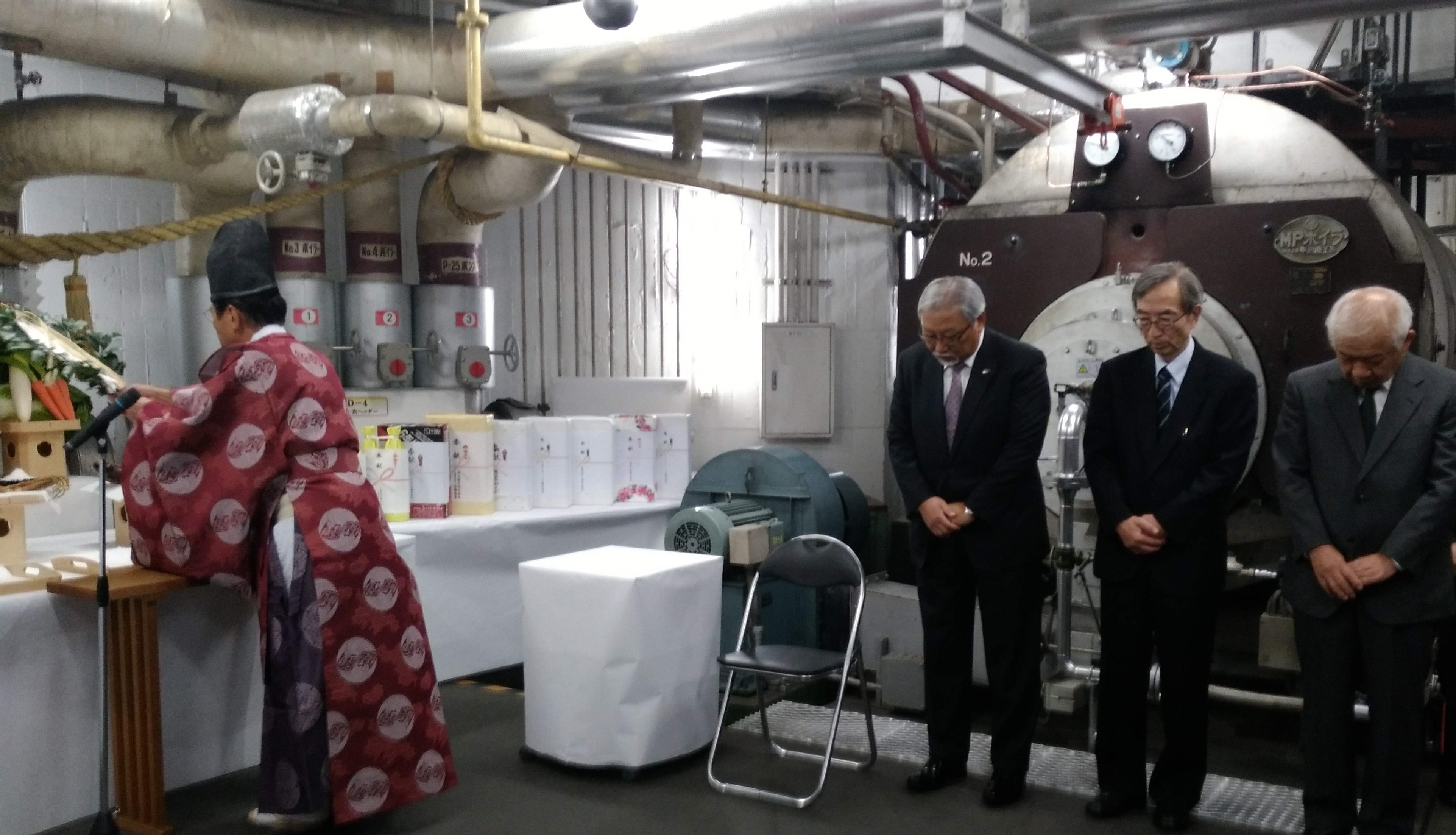
For the festival an altar is set in a corner of the boiler room above the east elevator-tower roof; a priest from Tsukudo Shrine in Kudan offered norito =photo below. Then about 100 attendees — building staff, contractors and partners — presented tamagushi. After the ceremony a simple naorai was held.
Altars for such rites vary in shape and layout, but offerings have rules. Rice, sake, offerings, salt and water — five kinds — are required. Offerings comprise sea, mountain and field: sea is sea bream, kombu, squid; mountain is fruit; field is vegetables. See the top photo. Besides a large bream, kombu and squid you can see mandarins, apples, persimmons, carrots, daikon and napa. In the center sake, rice, salt and water are clearly visible.
Together the participants prayed in earnest to spend this year safely and in health.