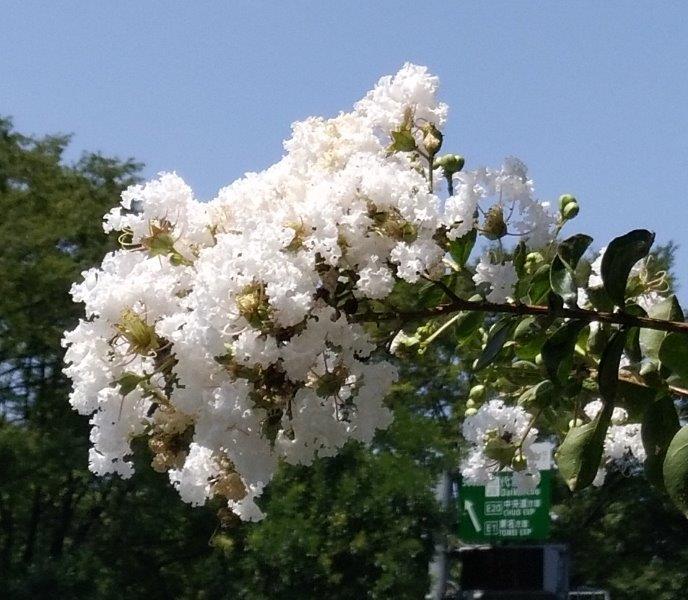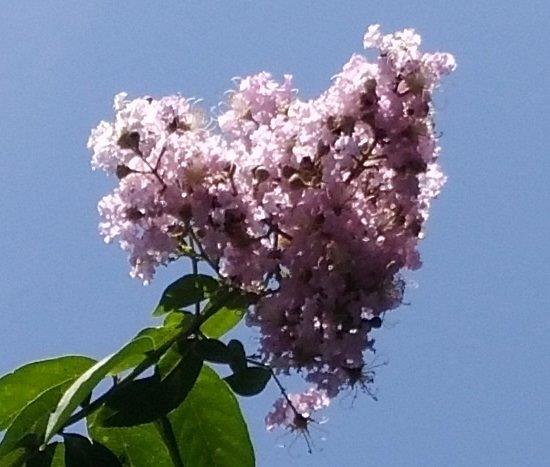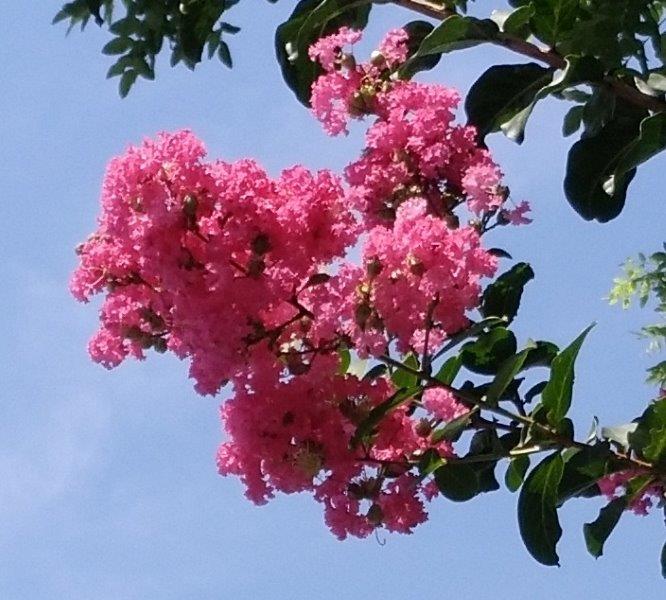

A signature summer flower is crape myrtle (sarusuberi). Along the sidewalk of Uchibori-dori in front of the Palaceside Building, some 50 crape myrtles over 200 meters are again in bloom this year in pink, red and white (photo above).
The Palaceside Building takes part in Tokyo’s “Tokyo Fureai Road Program,” which aims to keep streets pleasant to use, and manages this row of trees. It began in fiscal 2002, so this is the 17th year. Some of the trees planted at the start have grown weary. This environment is hardly ideal for plants. Apart from a strip of soil barely a meter wide, the ground is paved, and the roots spread under concrete. The air, with car exhaust, is not good either.
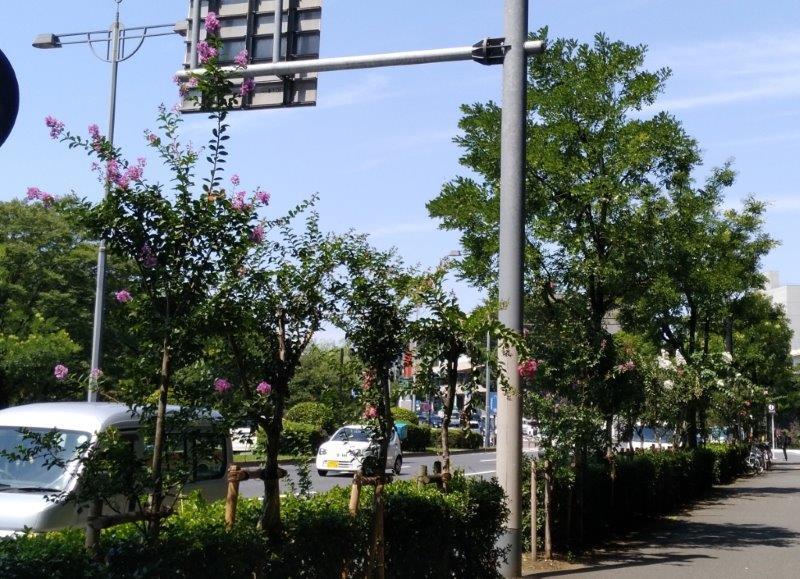
So from the end of last year through February this year, the Palaceside Building replaced ten crape myrtles that showed clear damage. The replacements are mainly on the west side, nearer the subway stairs (photo at right). They are still short and young-looking, but they are flowering properly.
Crape myrtle leafs out rather late among many trees, yet once it starts it blooms for a long time — roughly 100 days from July through September, which is how it got its Japanese name. Of course a single blossom does not last three months; after one flower falls, new ones open in succession on the same tree, so it seems to keep blooming. For a street tree, that long season is a gift to those who plant it.
The variety of colors is another pleasure. White (photo below left) and pale purple or pink (photo below center) are common, but the Japanese name includes “crimson,” so perhaps the deep hue is the original. A peach, or reddish purple (photo below right). They fall roughly into these three colors. Which is your favorite?