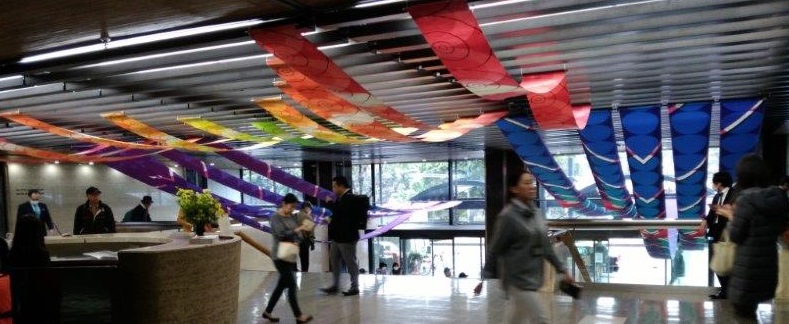

Colors as bright as a greeting to spring fill the first floor and first basement of the Palaceside Building. The wax-resist (roketsu) dyeing display that began on March 22 has almost the air of a performance.
The works hang in the hall just inside the east main entrance (photos at right and below) and in the atrium of the central concourse that runs east–west through the building on the first floor and first basement
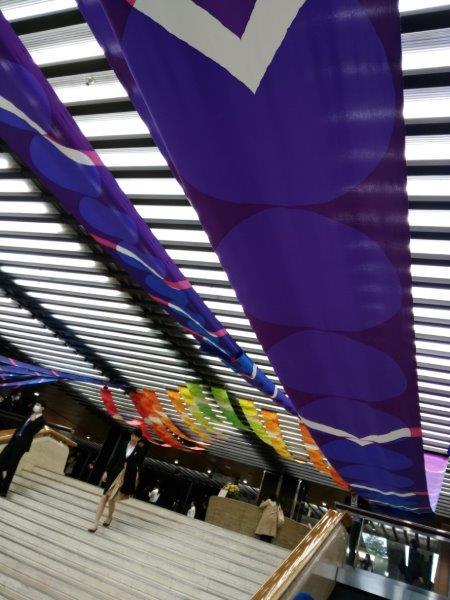
(photo above).
Roketsu dyeing draws patterns on cloth with melted wax and removes the wax after dyeing. The traditional method has been handed down from the Tempyo era to today; there are said to be examples among the Shosoin treasures.
On view are works by Kyoto-based dyer Akihiko Okada: dozens of lengths of honken tsumugi about 40 centimeters wide and several to 30 meters long. We have not counted exactly, but there may be about 50 in all, dyed in colorful reds, blues, greens and yellows.
The concept is “to create works that seem to flutter in the wind, not in a closed room but in an open architectural space suited to modern life.” He hoped to show them in the Palaceside Building, famous as a postwar landmark; a 2009 show at the sister Mainichi Newspapers Building in Osaka helped bring this event about.
Cherries have begun to bloom; the Chiyoda Sakura Festival, moved forward from March 29, started lighting and other programs on the 24th; Inui-dori at the Imperial Palace is open to the public from the 24th through April 1. These colorful roketsu pieces heighten that spring mood. After seeing the cherries around the palace, please drop by the Palaceside Building.
The display runs through April 7.