

The autumn comprehensive fire drill of the joint fire- and disaster-prevention management council of all Palaceside Building tenants was held on the 13th on the roof and elsewhere. It is a regular event in the seasons of the national fire-prevention campaigns (this time March 1–7) each spring and autumn. This time 417 people from 92 tenant and building-related companies and groups took part.
At 2:30 p.m. a building announcement in Japanese and English that “an upper-6 earthquake has occurred” started the drill. Each tenant took first steps: shelter under desks, check fire sources when the shaking stops, emergency inspection and a grasp of damage. Then a fire was assumed on the fourth basement; initial extinguishing failed and it spread, so an evacuation advisory was broadcast. Hearing it, each tenant used emergency stairs and other routes down to the first floor.
After that they gathered on the roof and each tried items from a prepared menu
.
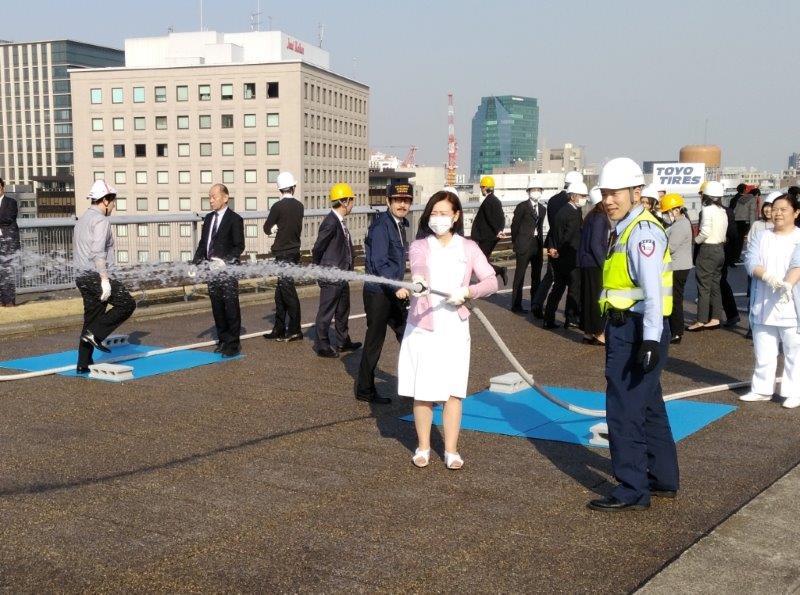
Water-discharge training had two kinds: full indoor-hydrant discharge (photo at right) and initial extinguishing with a fire extinguisher (topmost photo); some people did both.
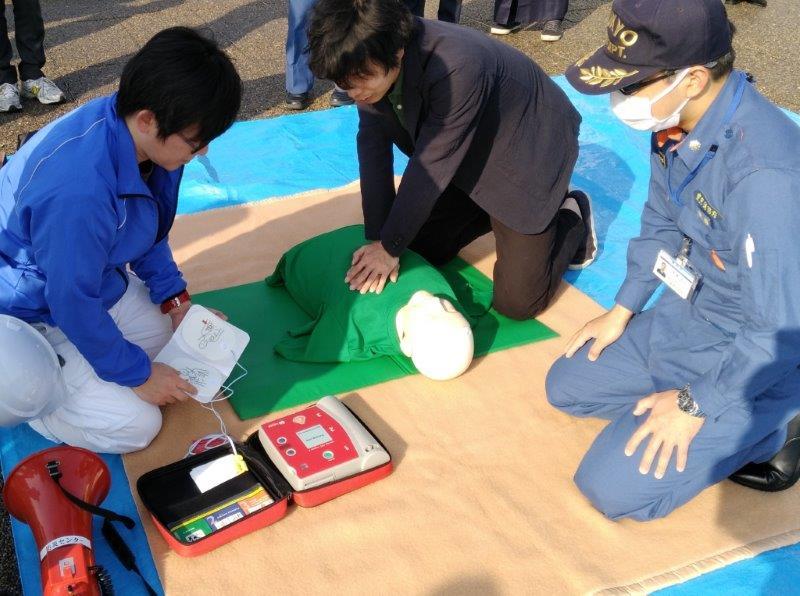
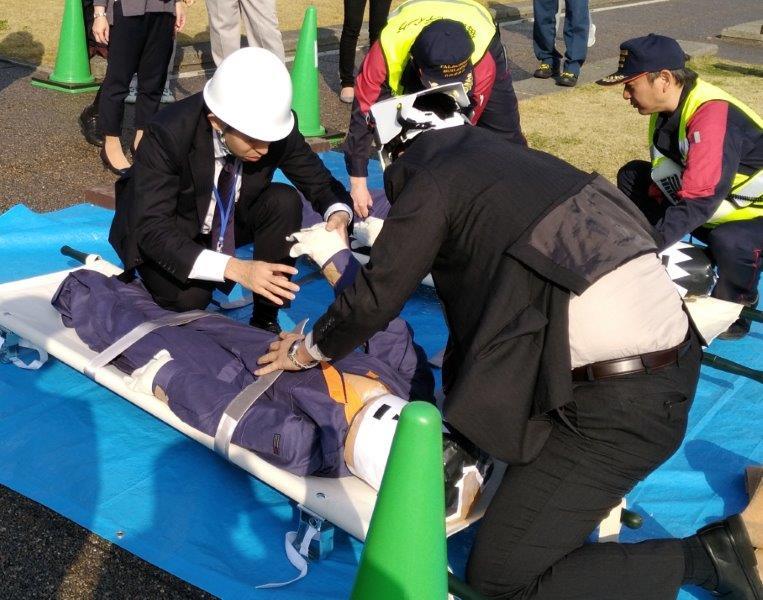
Under guidance from Kojimachi Fire Station staff they also worked hard at CPR with an AED (photo at left above) and stretcher rescue with a human-weight dummy (photo at left below).
In front of the west entrance, a “earthquake experience vehicle” (once called a “shake car”) borrowed from Chiyoda
Ward let people feel a magnitude-7 shake.
The drill ended in about an hour. Finally Kojimachi Fire Station’s prevention section chief Abe offered comments, urging that “training is not something you can skip because you did it before; repeating it matters.”
Tokyo that day reached 17.5°C. Participants worked with
enthusiasm, and some broke a light sweat. Truly well done.