
In the recent heavy snow in Hokuriku, some 1,500 cars were stranded on National Route 8 in Fukui Prefecture — a reminder of how hard snow can be. A timely display, “For safe driving on snowy roads,” is in the show window in front of Mainichi Hall at the west end of the Palaceside Building’s first basement (photo above). It runs only through the 23rd, so it will soon end. If you have not seen it, please come soon.
The display is part of a series that followed the “bridge aging panel exhibition” introduced on this blog on February 1
, organized by the Ministry of Land, Infrastructure, Transport and Tourism. “Aging” ran through February 7, then “preventing falling objects” from the 8th to the 13th (not covered on this blog); this is the third installment.
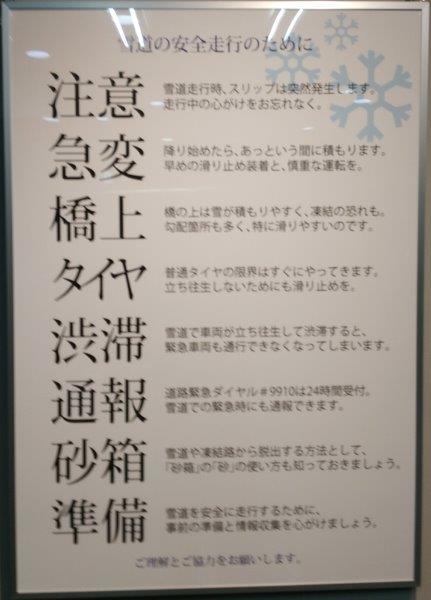
The “snowy roads” display has nine panels; it is best to read from the left. The first is a kind of overview, briefly explaining eight keywords for snow-road safety and what they mean (photo at right). To the right, one panel each for “caution,” “sudden change,” “on bridges,” “tires,” “congestion,” “reporting,” “sand boxes” and “preparation.”
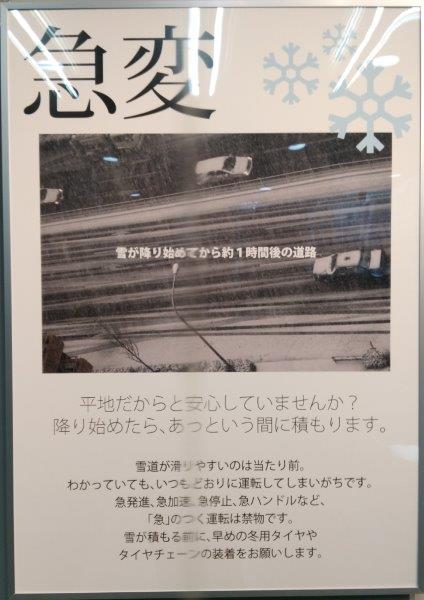
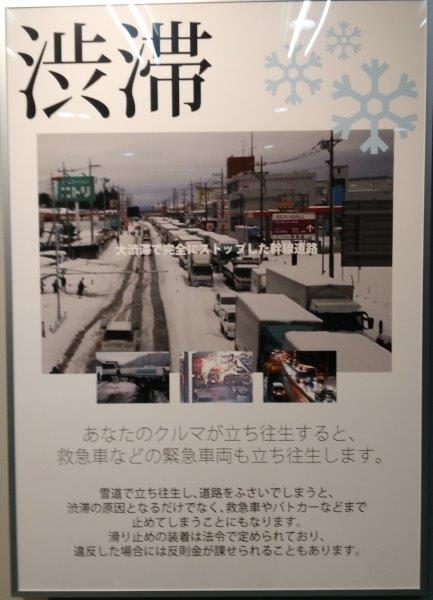
We will not go into detail, but “sudden change,” for example, says “Are you at ease because it is flat ground? Once it starts, snow piles up in no time” (photo below left). The “congestion” panel reads “If your car is stranded, ambulances and other emergency vehicles are stranded too” (photo below right). “Sand boxes” we did not know, having no snow-country experience; they are said to be placed on sidewalks and planting strips near bridges and slopes on snow-country national roads, free to use as grit when it snows.