
A panel exhibition that conveys the reality of aging bridges and aims to raise wide interest is on in the free space beside the east entrance on the first floor of the Palaceside Building (photo above).
The spot is usually an empty space with only a simple rope, used only for events. In the city center, where rent is tens of thousands of yen per tsubo, it can feel wasteful, but this kind of “slack” is also important to a building’s value.
In this free space, just the other day, we held a show of prize works from the Fuji-themed New Year calligraphy contest “Fujisan Kakizome 2018”
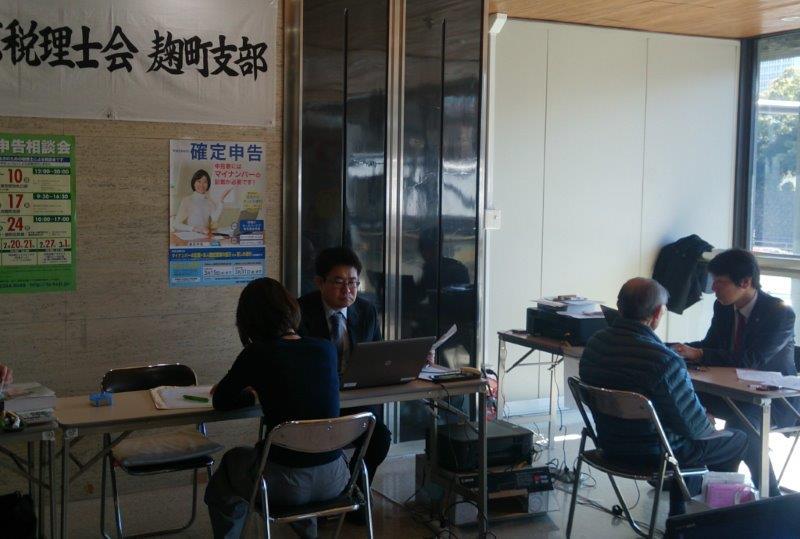
(organized by The Mainichi Newspapers and others). Then on Wednesday, February 14, through Friday the 16th, the usual free tax consultation for filing season (hosted by the Kojimachi Corporate Association and the Tokyo Certified Public Tax Accountants’ Association Kojimachi branch) will be held (photo at right is last year’s session). That many people can use the space well is a pleasure for the building too.
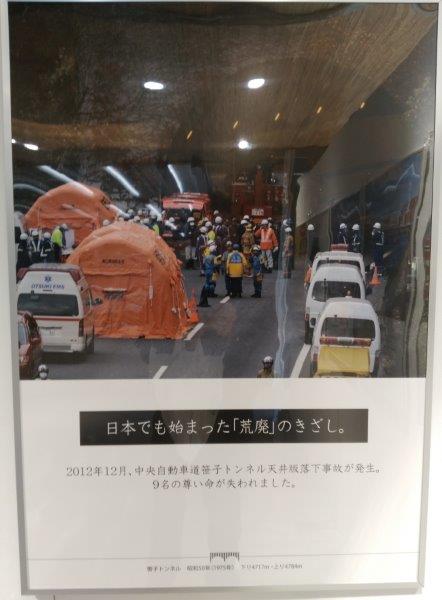
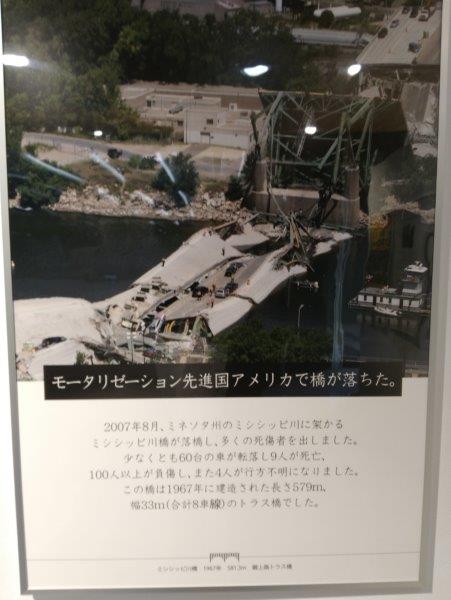
The bridge-aging panel show is organized by the Ministry of Land, Infrastructure, Transport and Tourism. Many remember the Sasago Tunnel accident on the Chuo Expressway (December 2012), when the ceiling fell from aging — not a bridge. This time, besides that accident (photo below left), there are photos of the Mississippi River bridge collapse in Minnesota (August 2007), when 60 cars fell, nine people died, more than 100 were injured and four went missing (photo below right).
According to the exhibition text, social capital such as roads and bridges was built intensively in Japan’s high-growth years from the 1950s through the early 1970s; that infrastructure is “aging,” and damage to road bridges in particular is becoming conspicuous. Of 3,202 bridges in Tokyo inspected, 524 (about 16%) need early repair.
The show explains “preventive maintenance”: inspect bridges nationwide once every five years by close visual check, confirm soundness, take measures as needed and extend life. There are also panels arguing that in an aging, depopulating society, bridges must be “consolidated” by importance. Some repairs are given up and the bridge abolished. We cannot leave broken (or breaking) bridges to children and grandchildren. The responsibility of the present generation feels grave again.
After this spot through Tuesday, February 13, tax consultation occupies the 14th–16th, so the show moves to the glass showcase in front of Mainichi Hall at the west end of the first basement, planned through late February.