

A little while ago, on November 8, the Palaceside Building held its annual Fuigo Festival, praying for safety with fire (photo above). (Can you see the boiler in the far left of the photo?)
“鞴” is read “fuigo” and also written “吹子.” It is a blower once indispensable for smelting and working metal. Wind was driven in to raise a fire hot enough to melt metal. From stitched hide bags it evolved into pistons in airtight boxes that push air. Large foot-operated ones are called “tatara.”
The Fuigo Festival was, on the eighth day of the eleventh lunar month, an occasion for artisans who used bellows to visit an Inari shrine, purify the bellows and pray for safe work. It spread beyond smiths and casters to trades that handle fire, and after modernization became a yearly safety prayer wherever there are boilers and the like.
At this building the festival sets an altar in a corner of the boiler room above the roof of the east elevator tower; the priest of Tsukudo Shrine near neighboring Kudanshita recites norito. Then about 80 attendees — building people, contractors and partners — offered tamagu
shi.
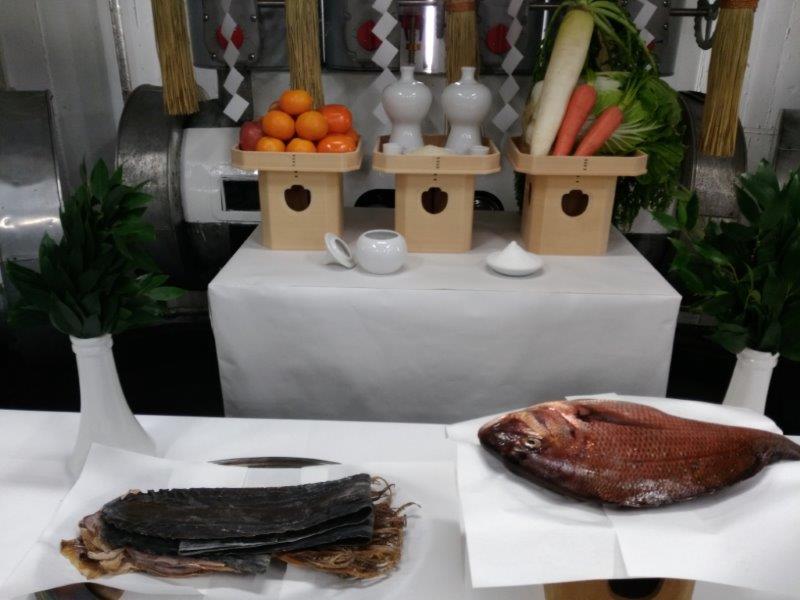
On the altar we properly offered a large sea bream, kombu, vegetables, fruit and sacred sake (photo at right).
After the ceremony a simple naorai was held; the festival’s custom is to give mandarins to participants as they leave. Eating them is said to keep off colds and measles; in the past mandarins and rice cakes were given to neighborhood children at the shrine gate. Why mandarins? Generally vitamin C, perhaps. Even before vitamins were known, experience said they were “good for prevention.” (Mandarins can cool the body, so it seems better not to eat them after you already have a cold.)
May this year be spent safely and in good health.