

Palaceside Building has appeared in Video Topics, a collection of videos on the internet portal Yahoo! (URL: https://videotopics.yahoo.co.jp/video/vtps/133825)
A new series, “Shibui Buildings,” has begun in Video Topics’ “Original Videos,” and with Tokyo Kotsu Kaikan in Yurakucho it is featured as the first installment.
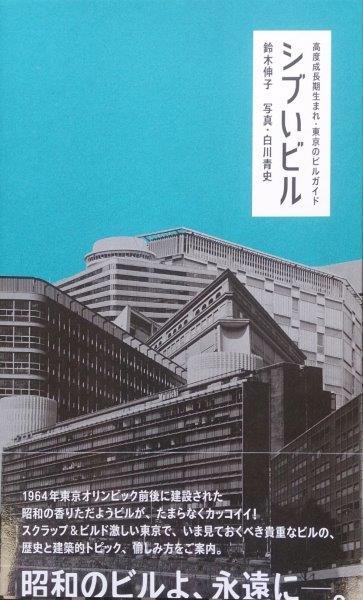
The images were supervised by Nobuko Suzuki, who writes and edits on cities, architecture, railways, town walks and food walks. Almost a year ago her book Shibui Buildings: A Guide to Tokyo Buildings Born in the High-Growth Years (photo at right) was published, and this video project is based on that book.
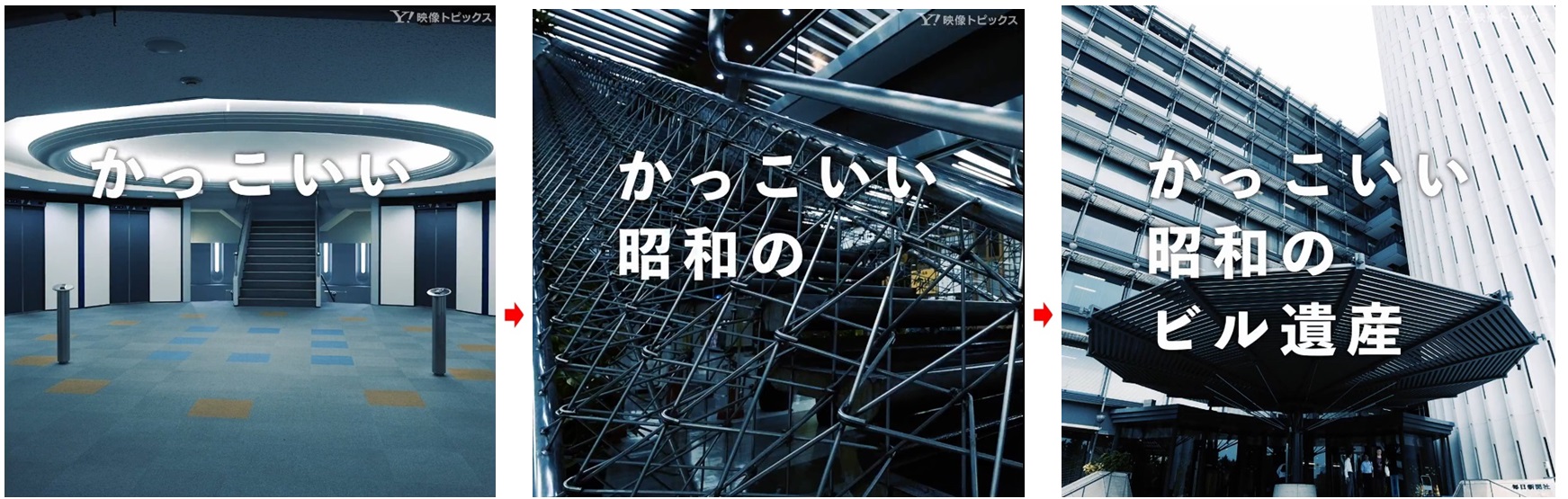
Let’s look at the images. The elevator hall, the Dream Stairs and the west-entrance umbrella (large canopy) appear in turn, and the words “cool,” “Showa” and “building heritage” flash by (photo below). Then the title=the topmost photo=arrives.
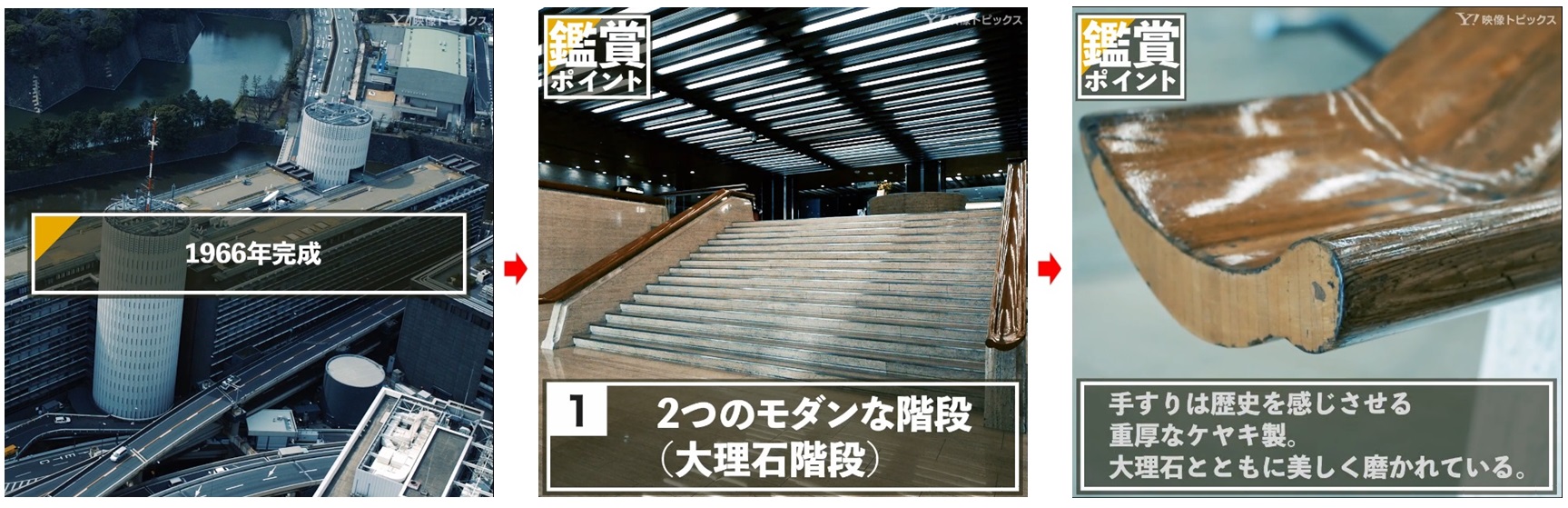
After the “preface” and an aerial shot following the title comes the “main text.” In four chapters, first, “two modern stairs”: ① the marble stair at the east entrance and ② the “Dream Stairs” linking the first floor and first basement in the central concourse.
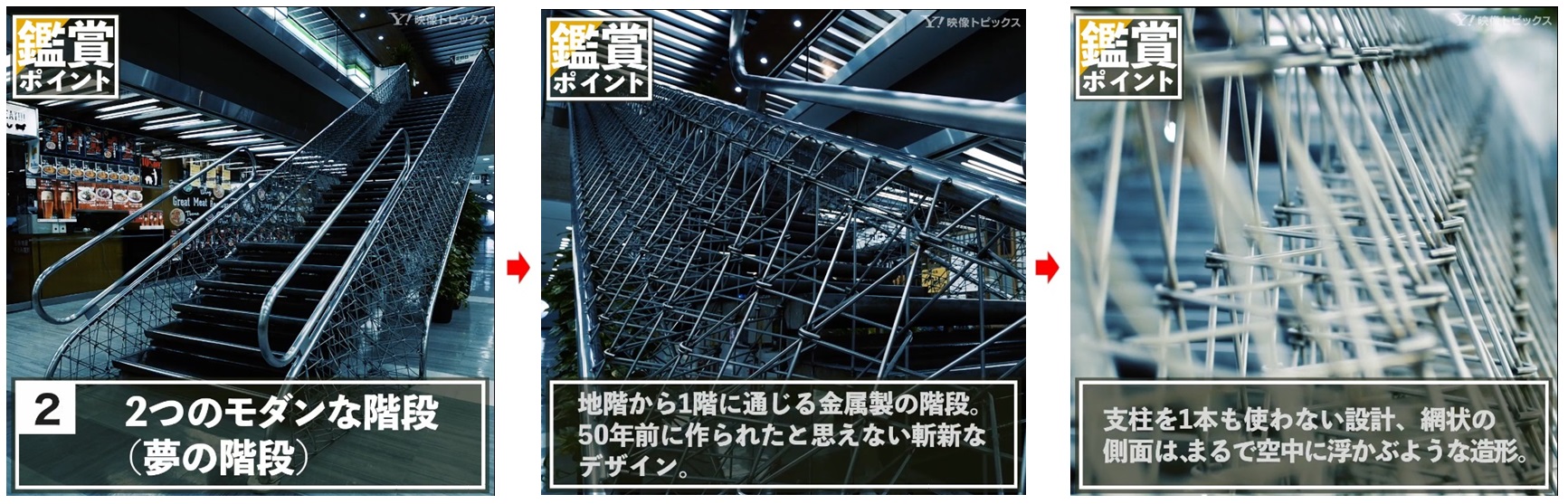
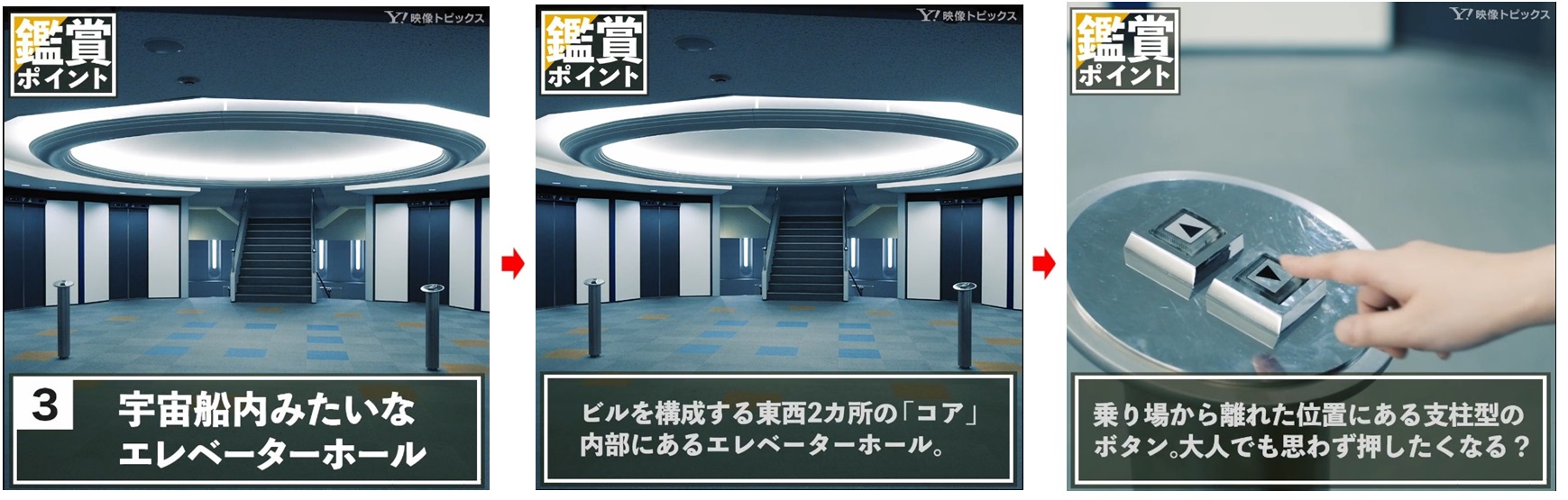
Next, ③ the spaceship-like elevator hall, with a close-up of the independently set call buttons.
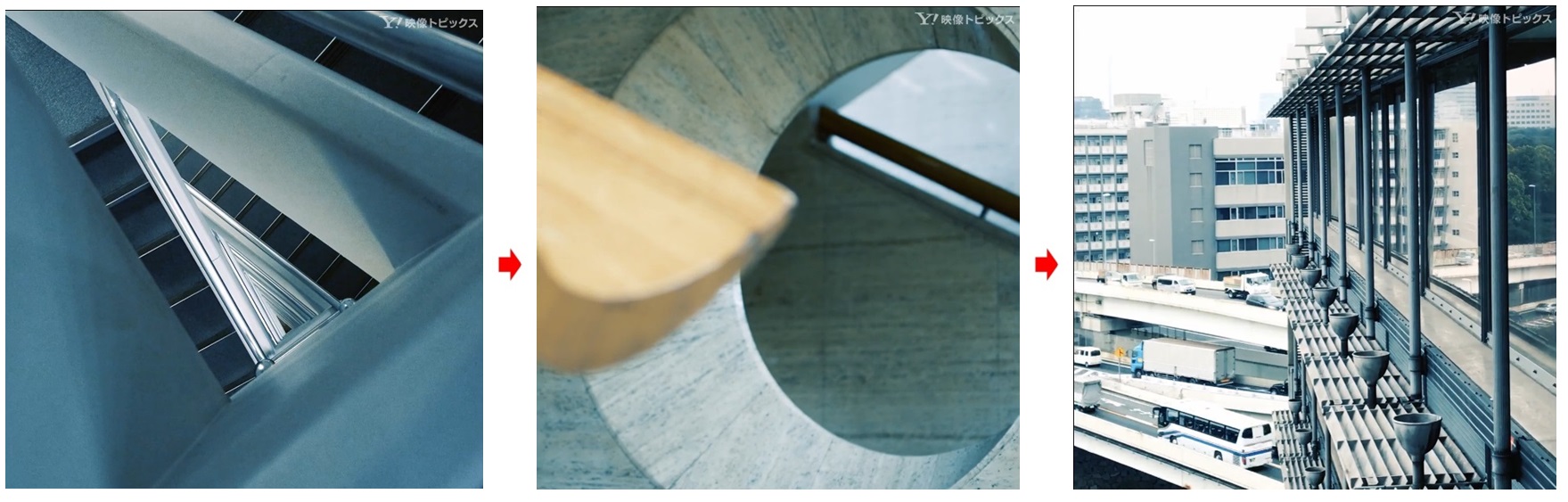
After linking the emergency stairs, the round cutouts in the marble wall that separates the men’s and women’s restrooms under the east first-basement stair, and the south-face cast-aluminum sun louvers, —
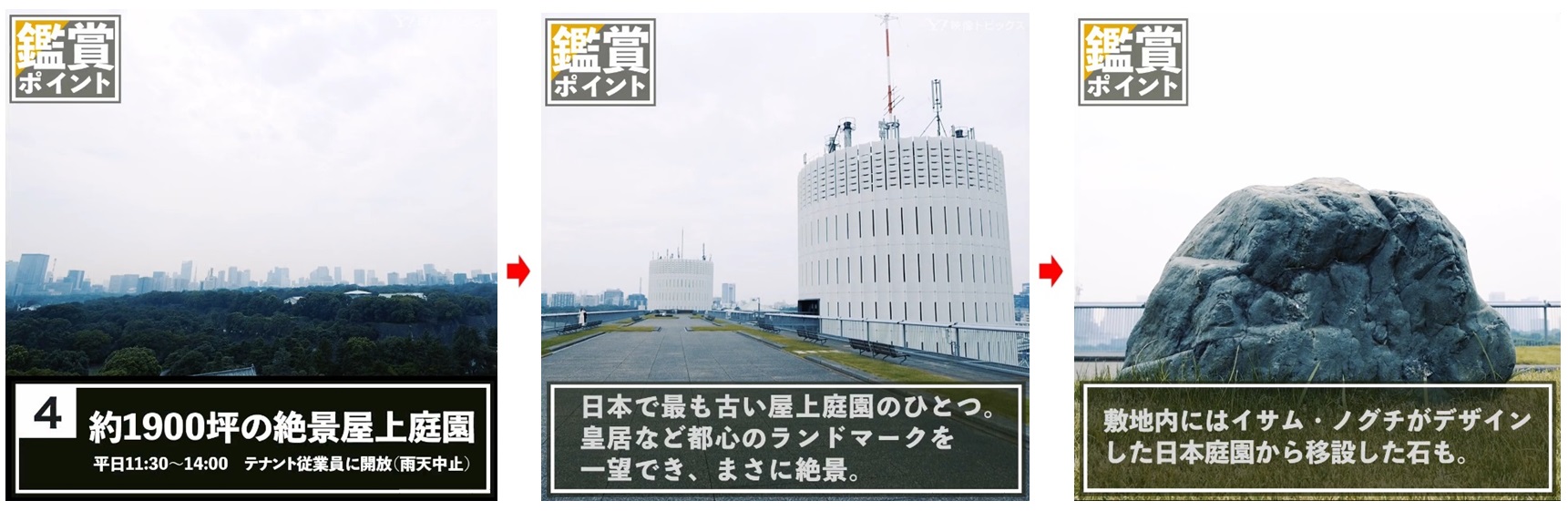
④ the famous rooftop garden, with an explanation of the “garden stones” too.
Below the video a proper caption is posted. The title: “An office building once hailed as finest in the Orient.” “Finest in the Orient” was the catch copy at opening in 1966, half a century ago. The text reads as follows.
An office building completed in 1966, facing the Imperial Palace. Owned by The Mainichi Newspapers.
Nobuko Suzuki, who featured the building in Shibui Buildings: A Guide to Tokyo Buildings Born in the High-Growth Years, calls it “a building that still feels new, hard to believe it is fifty years old.”
A design of two parallel east–west rectangular volumes with two white cylinders called “cores.”
Custom brick is used on the exterior; the mixed material feel is also a feature.
“When it was built it was a sight tour buses stopped at as ‘the finest office building in the Orient,’ Suzuki says.
In 1999 it was chosen among DOCOMOMO’s “20 selected modern buildings of Japan,” and architects still come to see it.
Why not walk this “masterpiece of modernist architecture” in front of the Imperial Palace, using the viewing points as a guide.
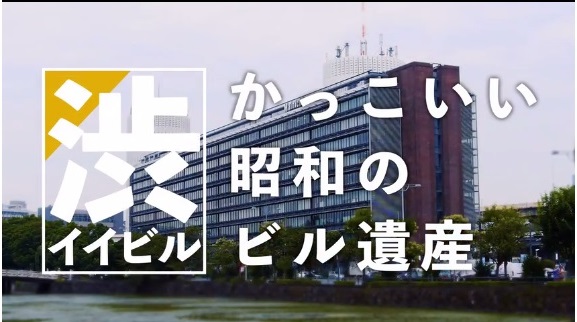
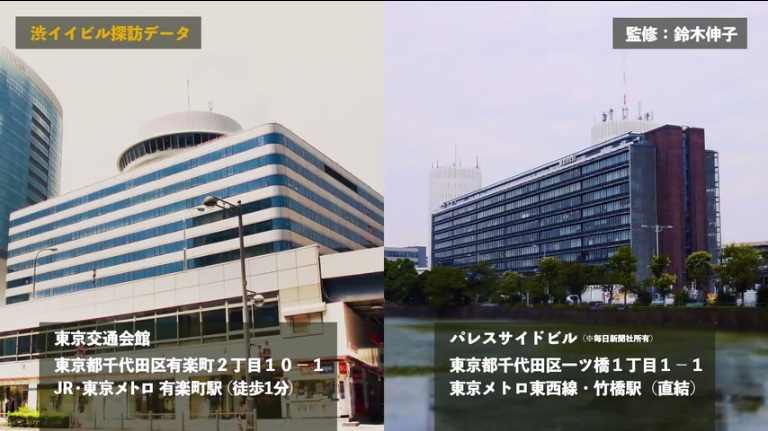
Yahoo! has also made a video promoting the concept of the “Shibui Buildings” series (the two photos above). (URL: https://videotopics.yahoo.co.jp/video/vtps/135662)
In the postwar high-growth years, Tokyo’s rapid urban development produced distinctive buildings one after another.
Those built around the 1960s and 70s are now being revalued as “shibui” and “full of flavor.” … Suzuki likens them to “beloved, shibui middle-aged men who have mellowed with the years.” This video titles Showa-flavored buildings “Shibui Buildings” and introduces their sights by point. Ahead of Tokyo 2020, redevelopment advances. In a changing city, now is the time to discover the charm of buildings that keep their presence unchanged.
The copy thus lists viewing points: ① beautiful craft work, ② shibui famous shops, ③ a retro near-future.
Each video is about a minute. Rather short — packed with information, impressive how much they fit in, so a little hurried. Please watch through once, then again, stopping here and there to look carefully.