

The "Fuigo Festival" is held on Nov. 8. The character 鞴 is read "fuigo." It is a rite in which smiths and founders who use bellows (fuigo) enshrine their guardian deity. Nov. 8, incidentally, was originally a lunar-calendar date.
Palaceside Building holds the Fuigo Festival every year. An altar was set up in a corner of a room on the 11th floor of the east core (elevator tower), where the boilers are, and about 110 people in all — building staff, contractors and partner firms — prayed for a safe year and thriving business. Because this year also marked the building's 50th anniversary, a priest from Tsukudo Shrine in Kudan was invited to recite norito =(photo above).
Fuigo is also written "吹子" and was a blower used in old metal smelting and working. It began as leather bags sewn from hide, and includes types that send air by reciprocating a piston inside an airtight box. Large ones worked with the feet are called "tatara."
The Fuigo Festival originally was an event in which artisans who used bellows visited Inari shrines to purify and celebrate the bellows. It later spread beyond smiths and founders to trades that handle fire, and today is also held as an annual safety prayer at places with boilers, such as public bathhouses. Recently, though, fewer buildings seem to hold the rite.
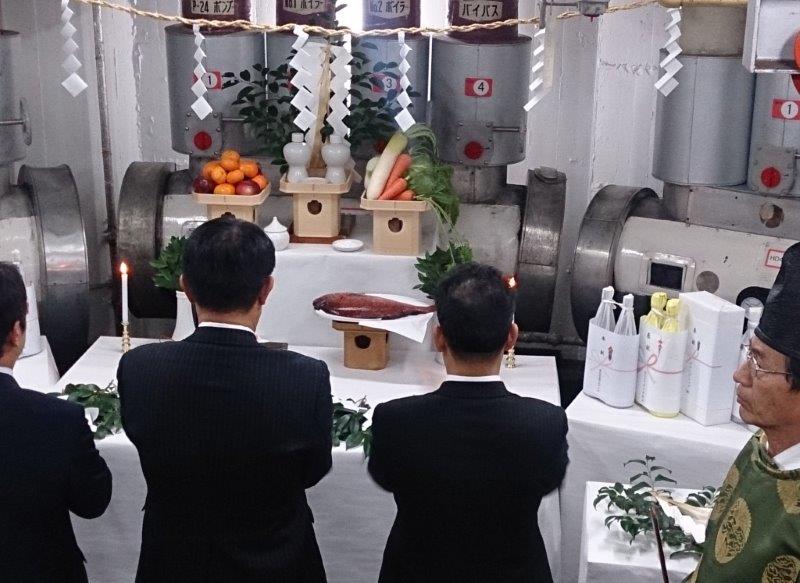
Ah yes — on the altar we offered a sea bream some 50 centimeters long, plus vegetables, fruit and sacred sake =see photo at right. Mandarin oranges are also said to go with the Fuigo Festival. The reason is not well known, but eating them was said to keep one from catching colds or measles, and in the past they were given with rice cakes to neighborhood children at shrine gates. Palaceside Building also distributed mandarins to those who attended.
May everyone connected with the building spend the year in health and safety.